The Development of AI in Autonomous Drones
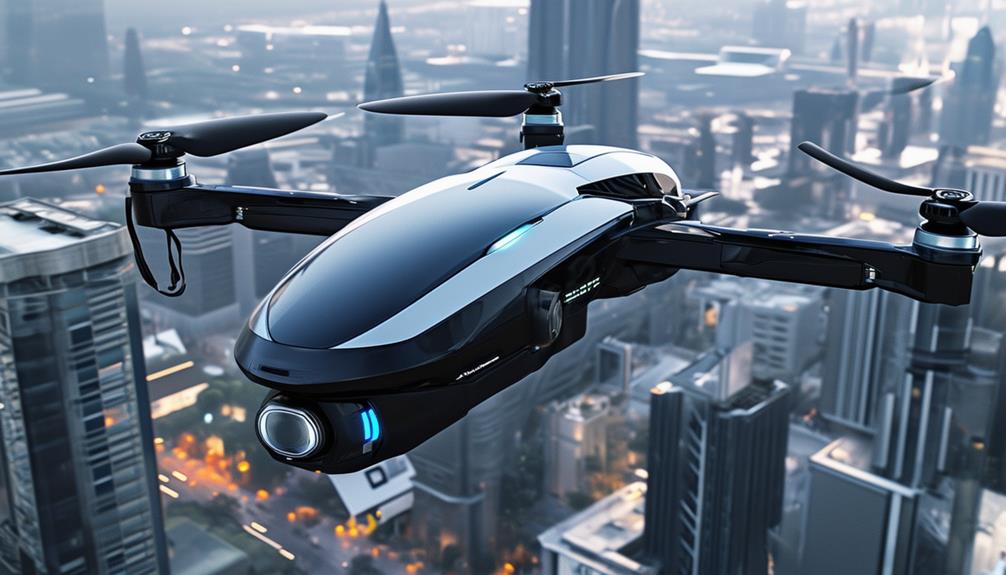
Imagine how AI in autonomous drones is revolutionizing various industries. These drones navigate complex environments, detect obstacles, and make decisions without human intervention through advanced algorithms that process data in real-time. This enables efficient operations in fields such as agriculture, logistics, and search and rescue. But what are the key components that make these drones so advanced? And how exactly does AI integration enhance their capabilities? As we explore these questions, you'll understand just how transformative this technology can be.
Overview of AI in Drones
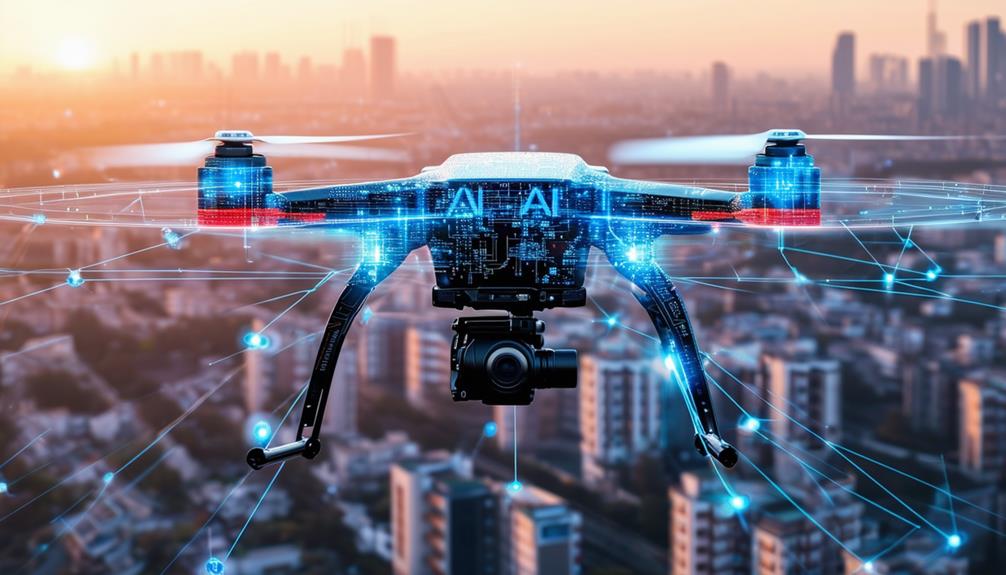
AI is revolutionizing drones by enabling autonomous decision-making and significantly enhancing their capabilities. With AI integration, drones evolve from simple remote-controlled devices into sophisticated machines capable of executing complex tasks independently. Machine learning algorithms are central to this transformation, allowing drones to learn from their surroundings, adapt to changing conditions, and make decisions without human input.
Research and development have led to major advancements in navigation and object detection algorithms. These improvements enable drones to navigate challenging terrains, avoid obstacles, and identify objects with high precision. For example, AI-powered drones excel in surveillance and reconnaissance missions, providing real-time data and insights crucial for both civilian and military applications.
These capabilities are constantly evolving. Ongoing AI development ensures that drones can undertake more complex tasks, such as coordinated actions in swarm technology. This enables multiple drones to work together seamlessly, tackling environments too challenging for a single drone. Ultimately, AI doesn't just enhance drones; it transforms them, opening new possibilities across various sectors.
Types of Autonomous Drones
When exploring the types of autonomous drones, you will encounter three primary categories: fixed-wing, multi-rotor, and hybrid drones. Fixed-wing drones are recognized for their extended endurance and range capabilities, making them ideal for applications requiring prolonged flight times. They are particularly efficient in covering large areas and are frequently used in agriculture and surveillance.
Multi-rotor drones, by contrast, offer stability, agility, and the ability to hover and take off vertically. These drones are optimal for tasks that demand precise maneuvering in confined spaces or complex environments, such as disaster management and inspection services.
Hybrid drones combine the features of both fixed-wing and multi-rotor drones, offering versatility in various operational scenarios. They can transition from vertical takeoff to efficient forward flight, adapting to diverse mission requirements.
The integration of AI algorithms significantly enhances the autonomous capabilities of these drones. Advanced decision-making abilities enable them to operate independently, even in complex environments. Leveraging AI, these drones can analyze data in real-time, optimize flight paths, and adapt to dynamic conditions, thereby revolutionizing industries and improving efficiency. Whether for long-range missions or precise tasks, autonomous drones are becoming increasingly indispensable.
Key Drone Components
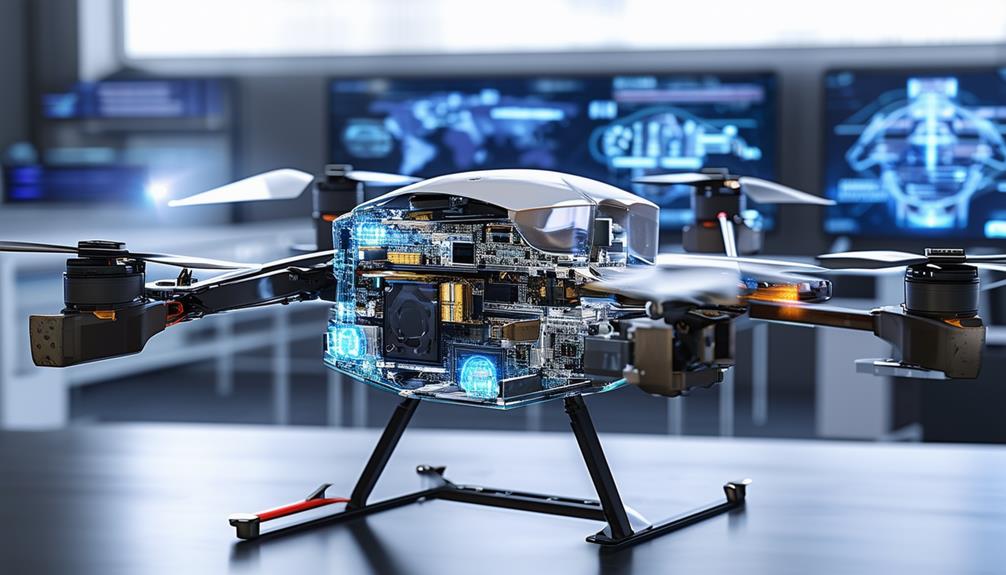
Understanding the types of autonomous drones sets the stage for exploring the key components that enable their advanced functionalities. At the core of drone technology are propulsion systems, which include motors and propellers that generate the required thrust for controlled flight and maneuvering. Fixed-wing drones rely on these systems to achieve long endurance and range, making them ideal for extended missions. Conversely, multi-rotor drones use their propulsion systems for stability, agility, and vertical take-off and landing (VTOL) capabilities, offering versatility in various operational environments.
Flight controllers are another critical component, ensuring stable flight, precise navigation, and seamless communication with ground control systems. These controllers manage the drone's autonomous operation by processing data from different sensors and executing commands based on AI algorithms. This integration allows drones to perform complex tasks with minimal human intervention.
AI and Drone Integration
Integrating AI with autonomous drones significantly enhances real-time data processing and responsiveness. AI-driven navigation systems enable drones to adapt precisely to changing environments. Additionally, advanced obstacle detection algorithms improve safety and efficiency in complex scenarios.
Real-time Data Processing
Integrating AI into drones enables instant processing of images, videos, and sensor data, facilitating swift and efficient decision-making. This real-time data processing capability is transforming the operation of autonomous drones, especially in critical situations such as search and rescue missions. By analyzing and interpreting complex data streams on the fly, drones can enhance situational awareness and make precise decisions without human intervention.
Here are the benefits of real-time data processing for autonomous drones:
- Immediate Analysis: AI algorithms enable drones to quickly process and analyze vast amounts of data, ensuring accurate and prompt responses.
- Enhanced Situational Awareness: Continuous data interpretation allows drones to maintain a comprehensive understanding of their environment, crucial for missions like search and rescue.
- Efficient Decision-Making: Real-time data processing empowers drones to make split-second decisions, enhancing their efficiency and effectiveness.
- Increased Autonomy: Real-time data processing reduces the need for constant human oversight, enabling drones to operate more autonomously.
Enhanced Navigation Systems
Building on the benefits of real-time data processing, AI integration in drones significantly enhances navigation systems, enabling autonomous piloting through advanced visual landmarks and sensors. With technological advancements in visual sensors such as lidar and thermal imaging, drones can now navigate complex environments with greater precision. These improvements are driven by AI algorithms that emulate the human visual system, allowing drones to recognize and utilize visual landmarks for autonomous navigation effectively.
The University of Missouri is spearheading a project supported by a $3.3 million U.S. Army ERDC grant to equip drones with these advanced capabilities. This initiative is crucial for scenarios like natural disasters where GPS signals may be unavailable. In collaboration with researchers from Saint Louis University, UC Berkeley, and the University of Florida, the project aims to integrate AI-driven navigation systems capable of generating sophisticated 3D or 4D imagery for mapping and damage assessment.
Here's a concise overview of the key technologies involved:
| Technology | Function |
|---|---|
| AI Algorithms | Enable autonomous navigation |
| Visual Landmarks | Serve as reference points for navigation |
| Lidar | Provides precise distance measurements |
| Thermal Imaging | Enhances navigation in low-visibility conditions |
| Human Visual System | Increases accuracy through AI mimicry |
These innovations are revolutionizing drone navigation, making them more reliable and versatile for various applications.
Obstacle Detection Algorithms
AI-powered obstacle detection algorithms have revolutionized drone navigation, enabling real-time identification and avoidance of obstacles. These sophisticated algorithms leverage various sensors, such as lidar and cameras, to collect comprehensive data about the drone's surroundings. This data is then processed to generate detailed 3D maps, allowing the drone to detect and navigate around obstacles with high precision.
By incorporating these algorithms, drones can efficiently navigate complex environments filled with dynamic obstacles, ensuring safe and reliable flight operations. The real-time processing of sensor data allows drones to respond swiftly to changes in their environment, significantly enhancing their flight autonomy. This rapid response capability is crucial for maintaining the safety, reliability, and efficiency of drones in various applications.
Key benefits of AI-powered obstacle detection in drone technology include:
- Real-time Data Processing: Instantly analyzes sensor data to avoid obstacles.
- 3D Mapping: Creates accurate 3D maps for precise navigation.
- Enhanced Flight Autonomy: Enables independent operation in complex environments.
- Increased Safety and Efficiency: Ensures reliable and efficient drone operations.
These advancements in AI algorithms are transforming drone capabilities, making them more autonomous and reliable across a wide range of scenarios.
Data Processing Advances
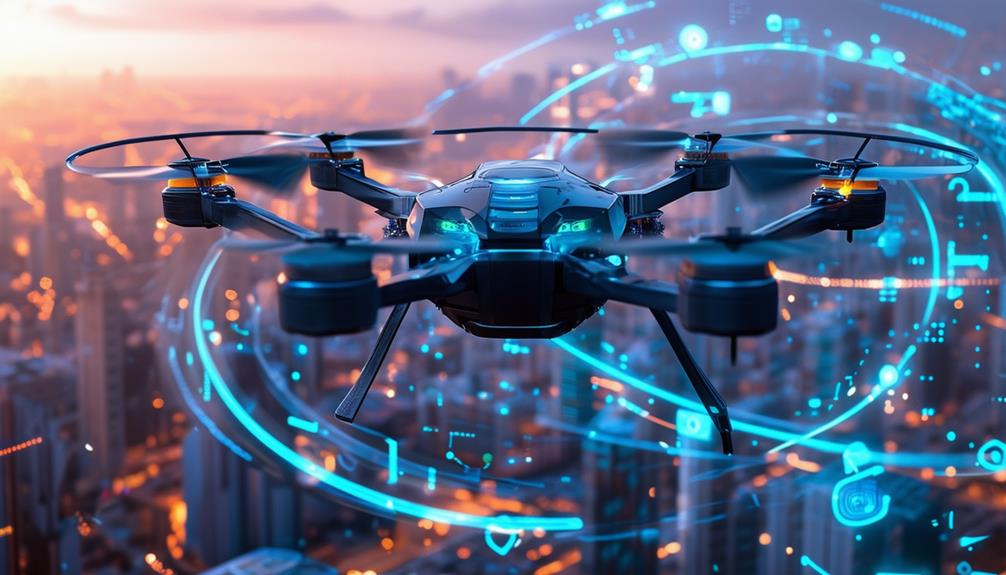
Recent breakthroughs have enabled drones equipped with AI to process vast amounts of data in real time, significantly enhancing decision-making accuracy and efficiency. This advancement allows drones to instantly analyze images, videos, and sensor data, thereby improving their object detection capabilities. Whether for navigation or surveillance, advanced AI integration optimizes drones' decision-making processes.
Real-time analysis empowers drones to interpret complex scenarios and adapt to changing environments autonomously. Imagine a drone navigating a busy urban area: it can detect and avoid obstacles, identify objects, and make split-second decisions to ensure a safe and efficient flight path. These capabilities are not just theoretical—they are being implemented today, thanks to continuous advancements in AI algorithms.
Furthermore, AI-powered drones excel in processing large volumes of data, which is crucial for mission planning and execution. Whether monitoring expansive agricultural fields, conducting search and rescue operations, or performing military surveillance, the ability to process data quickly and accurately renders these drones indispensable. The streamlined data processing capabilities of AI-driven drones enable them to perform tasks once considered too intricate, making operations more efficient and effective.
Agricultural Applications
Leveraging the real-time data processing capabilities of AI-powered drones, the agricultural sector now benefits immensely from optimized precision farming techniques. By integrating these advanced technologies, you can enhance various critical farming operations.
AI in drones offers:
- Crop Health Monitoring: Drones scan large fields to identify areas with nutrient deficiencies, diseases, or stress, allowing for timely interventions.
- Irrigation Optimization: By analyzing soil moisture levels and weather patterns, drones help design efficient irrigation schedules, reducing water wastage and enhancing crop yields.
- Pest Detection: AI algorithms enable drones to detect pests early, ensuring prompt and targeted pest control measures to prevent extensive crop damage.
- Agricultural Data Analysis: Drones collect and process vast amounts of data, providing actionable insights for informed, data-driven decisions to improve crop management.
Surveillance Innovations
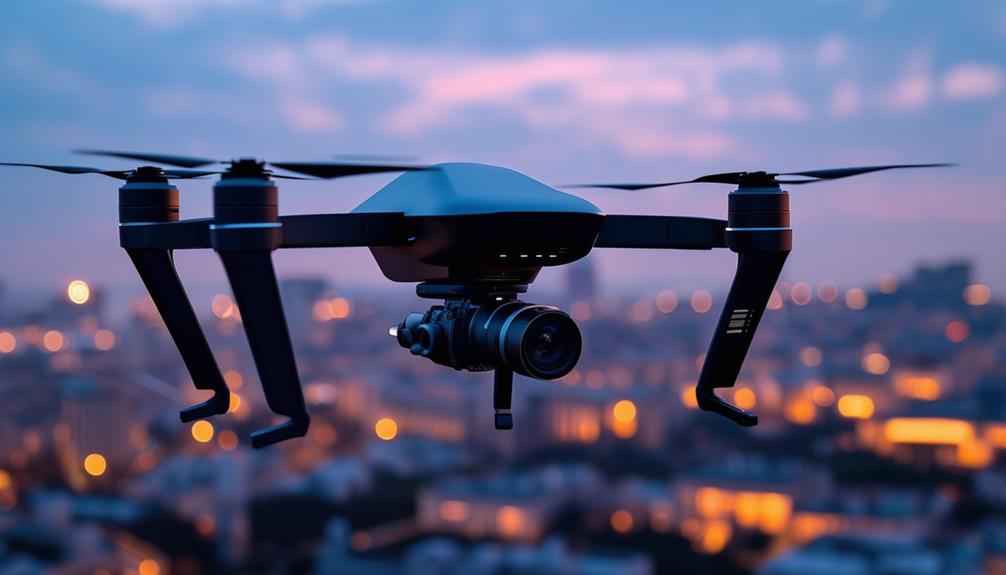
Autonomous drones equipped with advanced AI are transforming modern surveillance by enabling real-time object detection and tracking. These AI-driven drones enhance situational awareness for law enforcement and security agencies, facilitating the monitoring of critical areas and rapid response to emergencies. Utilizing sophisticated algorithms, these drones can automatically identify threats and detect anomalies, significantly boosting the efficiency of security operations.
Consider a scenario involving a security breach at a large facility. AI-powered drones can quickly analyze the environment, identify intruders, and track their movements, transmitting this data to law enforcement in real time. This rapid data collection and analysis not only improve response times but also increase the chances of apprehending suspects.
For security agencies, these drones present a substantial advantage. They can cover extensive areas without fatigue, offer continuous surveillance, and provide precise data for subsequent investigation. By automating the monotonous tasks of monitoring and threat detection, AI-driven surveillance innovations allow human resources to focus on more complex decision-making processes.
Logistics and Delivery
When considering logistics and delivery, it's important to recognize how AI-powered drones are revolutionizing the industry. These drones utilize advanced route optimization algorithms to determine the fastest and most efficient paths, significantly reducing delivery times and costs. Moreover, innovations in payload handling ensure that packages arrive safely and intact at their destinations.
Route Optimization Algorithms
Optimizing delivery routes using AI in autonomous drones significantly enhances efficiency by determining the most optimal paths in real time. Advanced route optimization algorithms enable drones to navigate various challenges, considering factors such as traffic conditions, weather, and package weight to ensure maximum delivery efficiency.
AI-powered drones offer multiple benefits:
- Reduced Delivery Times: AI-driven route optimization identifies the quickest routes, speeding up deliveries.
- Lower Energy Consumption: Efficient routing conserves energy, reducing both fuel usage and operational costs.
- Real-Time Adaptation: Drones dynamically adjust routes based on live traffic and weather updates.
- Operational Cost Savings: Optimized routes decrease wear and tear on drones, reducing maintenance expenses.
AI in route optimization revolutionizes the logistics and delivery industry by enabling faster, smarter, and more efficient operations. This technology not only facilitates quicker deliveries but also ensures precision and reliability, transforming the transportation and reception of goods. It represents a major advancement towards seamless and sustainable delivery solutions.
Payload Handling Innovations
Leveraging the efficiency of route optimization, AI-powered drones are transforming logistics through advanced payload handling capabilities. The challenges of sorting, loading, and delivering packages become streamlined with AI integration. Autonomous drones employ sophisticated algorithms to handle payloads, ensuring efficient sorting and loading of packages of varying sizes and shapes.
Advanced sensors are crucial to this process, enabling drones to detect and adapt to different payload requirements. This technology extends beyond mere transportation; it ensures precision and speed, significantly enhancing last-mile delivery efficiency. Picture a drone autonomously adjusting its grip to secure a fragile package or altering its flight path for the quickest delivery. These innovations result in faster, more reliable deliveries, thereby boosting customer satisfaction.
AI-driven payload handling also reduces human error, decreasing the likelihood of damage during transit. Streamlined operations not only shorten delivery times but also enhance the efficiency of logistics networks. By incorporating AI into autonomous drones, the future promises faster, more accurate deliveries that are precisely tailored to customer needs.
Search and Rescue
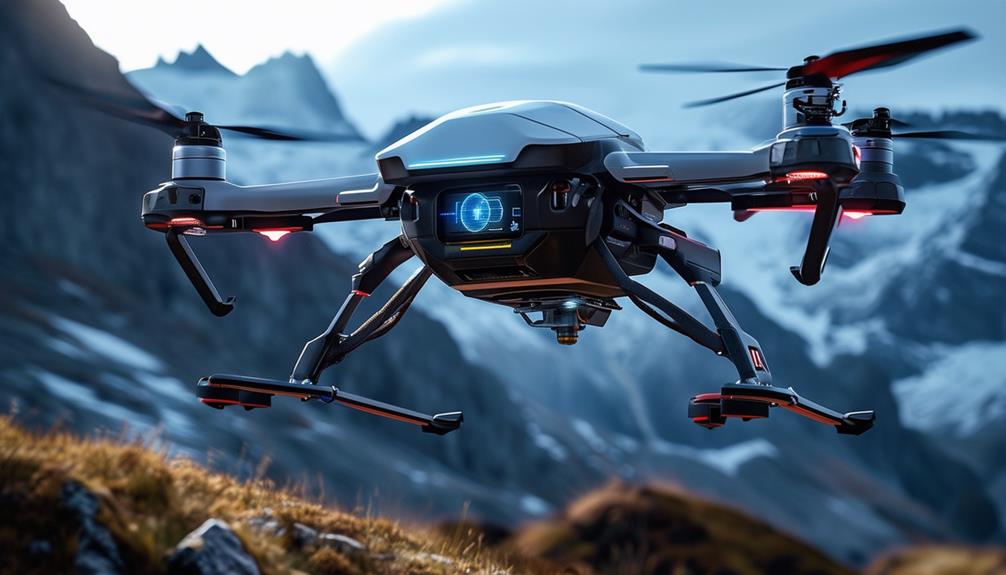
AI-powered drones are transforming search and rescue operations by autonomously navigating intricate environments to locate and assist individuals in distress. Leveraging real-time image processing and sensor data, these drones make rapid, effective decisions, significantly reducing response times and enhancing the chances of finding survivors.
Key advantages of AI-powered drones in search and rescue include:
- Autonomous Navigation: These drones independently traverse complex terrains, such as collapsed buildings or dense forests, without requiring manual control.
- Real-Time Image Processing: Equipped with advanced cameras and sensors, they process images and data instantly, identifying signs of life with high precision.
- Efficient Tracking: AI algorithms enable the detection and tracking of survivors in vast, chaotic disaster areas, ensuring no one is overlooked.
- Improved Response Times: Swift deployment and autonomous operation significantly reduce the time needed to reach individuals in need of help.
Ethical Considerations
When considering the ethical implications of AI in autonomous drones, it is crucial to address privacy and surveillance risks. Additionally, determining accountability for decisions made by these drones is essential. Ensuring transparency in their operations is vital for building public trust.
Privacy and Surveillance Risks
AI-powered autonomous drones pose significant privacy and surveillance risks that demand urgent ethical scrutiny. With AI algorithms enabling these drones to conduct surveillance operations with minimal human intervention, several pressing privacy concerns arise. It is critical to understand how these drones can gather vast amounts of data, leading to potential privacy infringements. Ethical considerations are essential as the use of AI in surveillance may blur the lines between improving security and violating individual privacy rights.
Key points to consider include:
- Data Privacy: AI-driven drones can collect and store large volumes of data, raising serious data privacy issues.
- Surveillance Risks: The ability of drones to conduct extensive and continuous surveillance operations poses significant surveillance risks.
- Privacy Concerns: Individuals may feel their privacy is invaded by drones capturing images and videos without explicit consent.
- Ethical Considerations: It is crucial to weigh the benefits of improved security against the potential for significant privacy infringements.
Balancing security needs with individual privacy rights is essential when deploying these advanced technologies. Failure to address these ethical considerations could lead to a loss of public trust and potential legal ramifications.
Decision-Making Accountability
Determining responsibility for decisions made by autonomous drones presents a significant ethical challenge. When AI systems in these drones make decisions, pinpointing accountability becomes complex. Who is responsible if a drone makes an error or causes harm? Is it the developer, the operator, or another party? This dilemma underscores the need for clear oversight and accountability frameworks.
| Challenge | Key Consideration |
|---|---|
| Liability | Who is legally accountable? |
| Ethical Dilemmas | How to address moral questions? |
| Transparency | Ensuring clear decision paths |
| Oversight | Monitoring AI-driven actions |
| Framework Evolution | Adapting to new technologies |
These challenges must be addressed directly. Ethical dilemmas arise when AI makes life-altering decisions, necessitating the establishment of clear lines of responsibility. Transparency in AI decision-making processes is crucial; without it, effective oversight is impossible, and accountability suffers.
Ultimately, the frameworks governing AI in autonomous drones must evolve to ensure that every decision made by AI can be traced back to a responsible entity. This evolution is not just critical for legal reasons but also to maintain trust in the technology. Without proper oversight, the ethical use of AI in drones remains questionable.
Conclusion
The integration of AI into autonomous drones has significantly enhanced their capabilities, making them smarter and more efficient across various industries. Advances in navigation, data processing, and obstacle detection have enabled drones to excel in tasks ranging from agriculture to search and rescue. As these technologies continue to evolve, they will unlock even more innovative applications. However, it is crucial to consider the ethical implications when incorporating these powerful tools into your operations. The future of AI in drones is both promising and boundless.
Related posts