The Birth of Artificial Intelligence: The Dartmouth Conference of 1956
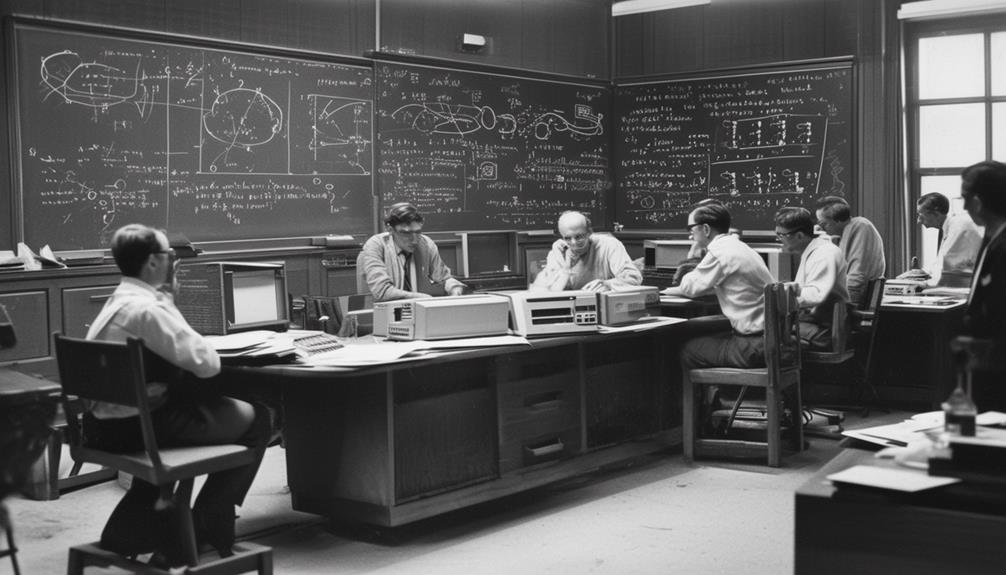
Imagine stepping back to the summer of 1956, when a small group of pioneering minds gathered at Dartmouth College to discuss a radical idea: the creation of machines that could think like humans. John McCarthy, Marvin Minsky, Claude Shannon, and Nathaniel Rochester spearheaded this groundbreaking conference, funded by the Rockefeller Foundation. What drove these visionaries to believe in such a futuristic concept, and how did their discussions shape the trajectory of Artificial Intelligence? What were the key debates and who were the critical attendees that influenced AI's infancy? Let's delve into the origins and ambitions of this pivotal event.
Origins of the Dartmouth Conference
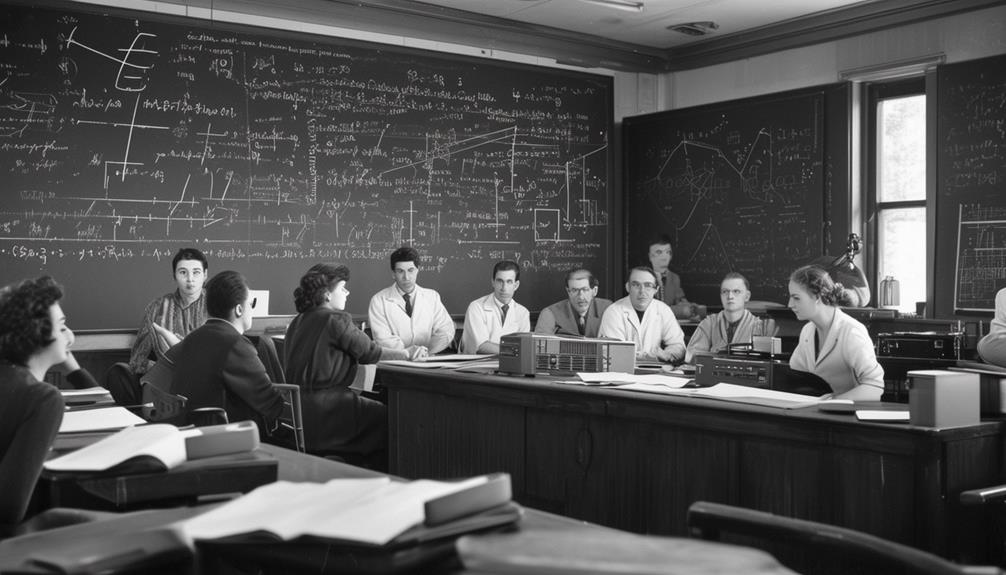
The Dartmouth Conference of 1956 is widely considered the birthplace of artificial intelligence. It was meticulously organized by John McCarthy, Marvin Minsky, Claude Shannon, and Nathaniel Rochester. This seminal event spanned six to eight weeks during the summer at Dartmouth College, with the primary goal of exploring the potential for machines to simulate human intelligence through language, abstraction, and problem-solving.
The organizers, all eminent figures in their respective fields, secured essential funding from the Rockefeller Foundation, which enabled them to convene leading minds to discuss these revolutionary ideas. The Dartmouth Conference was not a spontaneous gathering; it was a carefully planned and well-funded initiative designed to lay the foundation for the field of artificial intelligence.
Key Figures and Organizers
Pioneers like John McCarthy and Marvin Minsky played pivotal roles in organizing the foundational Dartmouth Conference of 1956, which marked the birth of artificial intelligence as a field. Key participants, including Claude Shannon and Nathaniel Rochester, contributed significantly to early discussions and the direction of AI. Recognizing these efforts underscores the collaborative roots that shaped the development of artificial intelligence.
Pioneers of AI
In organizing the 1956 Dartmouth Conference, John McCarthy, Marvin Minsky, Claude Shannon, and Nathaniel Rochester laid the foundational stones of modern artificial intelligence. This event, formally known as the Dartmouth Summer Research Project on Artificial Intelligence, marked the inception of AI as a field of study. John McCarthy, often called the father of AI, proposed the idea and co-organized the workshop with notable figures like Marvin Minsky, a key researcher in AI, Claude Shannon, the father of information theory, and Nathaniel Rochester, representing IBM's interest in the burgeoning field.
Ray Solomonoff, a pioneer in algorithmic probability, was also invited by McCarthy, demonstrating the project's aim to gather the brightest minds. Gerald Jay Sussman contributed significantly; his early work laid the groundwork for many AI advancements. These pioneers not only envisioned the potential of AI but also took the essential initial steps to realize it, setting the stage for decades of innovation.
Foundational Workshop Participants
The Dartmouth Conference of 1956 was a landmark event in the history of artificial intelligence, driven by visionaries such as John McCarthy, Marvin Minsky, Claude Shannon, and Nathaniel Rochester. These key organizers were instrumental in crafting the agenda that laid the foundational framework for AI as a scientific discipline. John McCarthy, often regarded as the father of AI, was pivotal in convening this historic gathering.
Ray Solomonoff also made significant contributions, particularly through his work on algorithmic probability, which has had a lasting impact on machine learning. Among the participants were Gloria Minsky and Margaret Minsky, who provided invaluable support and insights into the emerging field.
Here's an overview of some of the foundational workshop participants:
| Name | Contribution |
|---|---|
| John McCarthy | Organized the conference, AI pioneer |
| Marvin Minsky | Co-organizer, AI research |
| Claude Shannon | Co-organizer, information theory |
| Nathaniel Rochester | Co-organizer, AI development |
| Ray Solomonoff | Algorithmic probability |
| Gloria Minsky | Support and contributions |
These individuals and others played crucial roles in the Dartmouth Conference, fostering a collaborative environment that would propel AI into a significant field of study.
Leading Contributors' Roles
During the Dartmouth Conference of 1956, John McCarthy's visionary leadership, alongside the collaborative efforts of Marvin Minsky, Claude Shannon, and Nathaniel Rochester, established artificial intelligence as a scientific discipline. McCarthy, driven by his vision of machines simulating human intelligence, proposed and organized this groundbreaking workshop, defining its goals and direction.
Marvin Minsky, renowned for his work in neural networks, contributed a deep understanding of cognitive processes, shaping discussions on machines' problem-solving capabilities. Claude Shannon, the father of information theory, applied his expertise to explore how information could be processed and utilized by machines to exhibit intelligent behavior, bridging theoretical concepts with practical applications.
Nathaniel Rochester, a key figure at IBM, provided the technical expertise necessary to ground the conference's ambitious ideas in reality, ensuring discussions were practically feasible and aiding the early development of artificial intelligence. Together, these leading contributors laid the foundation for future advancements in artificial intelligence research.
Objectives and Goals
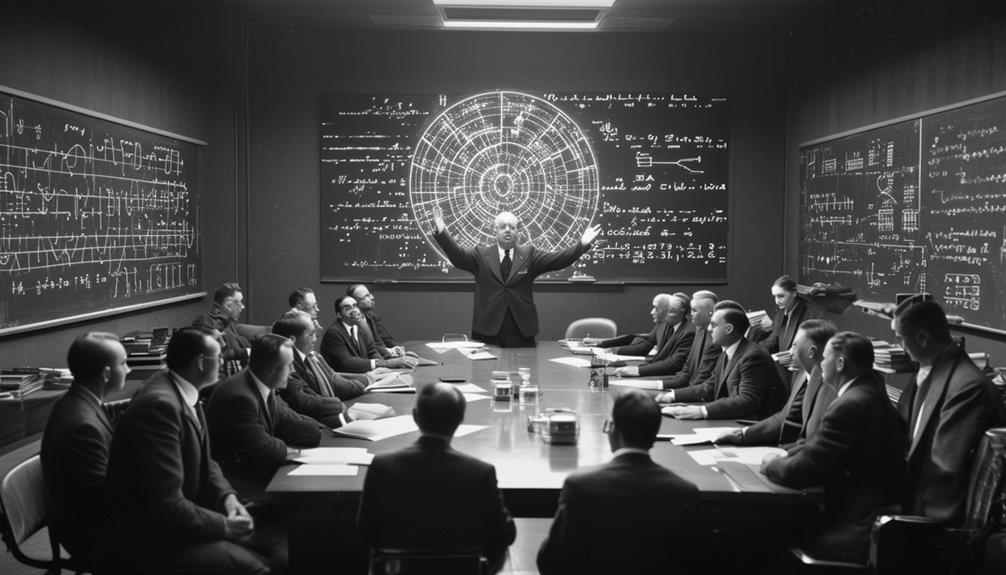
In 1956, the Dartmouth Conference set ambitious goals to explore how machines could simulate human intelligence through language, abstraction, and problem-solving. This pioneering event, known as the Summer Research Project on Artificial Intelligence, marked a crucial milestone in the field of artificial intelligence. Researchers aimed to investigate all aspects of learning and cognition, striving to enable machines to use language and solve problems in ways previously considered uniquely human.
John McCarthy's proposal outlined specific objectives, emphasizing the development of machine learning and symbolic methods to mimic human thought processes. Discussions at Dartmouth focused on using deductive and inductive systems to expand the capabilities of machines. The participants envisioned a future where machines could independently perform complex tasks, laying the foundation for the AI advancements we see today.
Key objectives of the conference included:
| Objective | Focus Area | Methodology |
|---|---|---|
| Simulate human intelligence | Language | Symbolic methods |
| Explore machine learning | Problem-solving | Deductive systems |
| Simulate cognitive processes | Abstraction | Inductive systems |
| Lay foundation for future AI | General AI research | Early expert systems |
These objectives not only defined the Dartmouth Conference but also set the trajectory for future artificial intelligence research.
Funding and Support
In exploring the advancement of artificial intelligence, you'll find that both government funding and private sector contributions have been crucial. Early initiatives, such as the Dartmouth Conference, received essential backing from organizations like the Rockefeller Foundation. This combination of public and private support has been vital in driving AI research forward.
Government Funding Role
Government funding, particularly from the Rockefeller Foundation, was instrumental in initiating the Dartmouth Conference, which laid the foundation for artificial intelligence research. The 1956 summer seminar on artificial intelligence received essential financial support, enabling researchers to explore the potential of simulating human intelligence in machines. This funding was crucial for establishing the Dartmouth project, highlighting the significance of AI as a field worthy of investment.
Without the Rockefeller Foundation's support, the Dartmouth Conference might not have materialized. Government funding played a pivotal role in shaping the direction and focus of the conference, facilitating the assembly of experts that set the stage for future AI research. This financial commitment underscored the importance of artificial intelligence and provided the necessary resources to investigate this emerging area of study.
Private Sector Contributions
Private sector contributions, such as those from the Rockefeller Foundation, have been instrumental in advancing artificial intelligence (AI) research. The Dartmouth Conference of 1956 stands as a prime example of how private sector funding can catalyze significant advancements in AI. The financial support provided by the Rockefeller Foundation enabled groundbreaking discussions and research at this historic conference.
Without this investment, the creative ideas and collaborative efforts that emerged from the Dartmouth Conference could have been severely hampered. By backing this event, the Rockefeller Foundation highlighted the importance of private sector partnerships in fostering AI research and advancement.
This investment underscored the growing interest in AI within the private sector, demonstrating that organizations were willing to commit substantial resources to explore and advance this promising field. The partnership between the private sector and AI researchers at the Dartmouth Conference facilitated immediate progress and set the stage for future innovations. This collaboration exemplified the crucial role of private sector support in driving the progress of AI research.
Notable Attendees
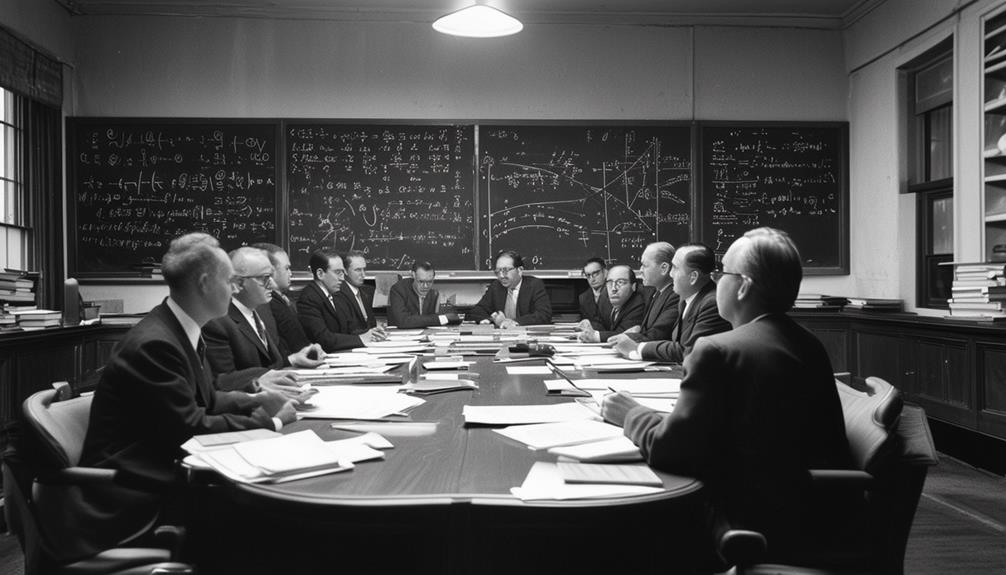
The Dartmouth Conference of 1956 attracted a remarkable assembly of pioneering minds in artificial intelligence, including John McCarthy, Marvin Minsky, and Ray Solomonoff. These three were the only full-time participants at the conference, playing crucial roles in shaping the discussions and ideas that emerged. Alongside them were other notable attendees like Claude Shannon, Nathaniel Rochester, Oliver Selfridge, Trenchard More, and W. Ross Ashby. This diverse group significantly contributed to the foundational concepts of AI.
Here's a snapshot of some key attendees:
- John McCarthy: Often called the father of AI, McCarthy coined the term 'artificial intelligence' and was instrumental in proposing the Dartmouth Conference.
- Marvin Minsky: A founding figure in AI research, Minsky's work on neural networks and robotics remains influential.
- Ray Solomonoff: Known for his work on algorithmic probability, Solomonoff's theories laid the groundwork for machine learning.
- Claude Shannon: The father of information theory, Shannon's insights into data processing and communication were pivotal.
The blend of these minds facilitated rich discussions and groundbreaking ideas, setting the stage for future advancements in artificial intelligence. The synergy among attendees like Rochester, Selfridge, More, and Ashby further enriched the conference's impact.
Major Discussions and Topics
Participants at the 1956 Dartmouth Conference engaged in pivotal discussions on symbolic methods, early expert systems, and the merits of deductive versus inductive systems. These dialogues were intellectually stimulating, as attendees shared and developed groundbreaking ideas about artificial intelligence with the goal of simulating human intelligence in machines through language, abstraction, problem-solving, and self-improvement.
Key figures like John McCarthy, Marvin Minsky, and Ray Solomonoff were at the forefront of these discussions. McCarthy, often considered the father of AI, advocated for symbolic methods to represent knowledge and reasoning. Minsky, a pioneer in the field, investigated early expert systems, designed to emulate human decision-making in specialized areas. Solomonoff introduced theories on inductive inference, emphasizing the importance of learning from data.
The debates on deductive versus inductive systems were particularly intense. Deductive systems focused on logical reasoning from established principles, while inductive systems aimed to derive general rules from specific instances. These discussions at the Dartmouth Conference laid the foundation for many concepts and techniques that would shape the future of artificial intelligence research. The collaborative spirit and intellectual rigor of this gathering marked the beginning of a new epoch in AI, laying the groundwork for decades of innovation.
Immediate Outcomes
Building on the vibrant debates and groundbreaking ideas from the Dartmouth Conference, immediate outcomes in AI research began to materialize. The conference was pivotal in coining the term 'artificial intelligence' and initiating the exploration of symbolic methods. These initial steps were crucial as they laid the foundation for future advancements in simulating human intelligence using machines. The conference served as a catalyst that ignited a new era in AI research, significantly boosting interest and efforts in understanding machine cognition.
The immediate outcomes can be summarized as follows:
- Introduction of 'artificial intelligence': The term was coined at the conference, providing a distinct identity and focus for the emerging field.
- Emphasis on symbolic methods: Researchers began exploring symbolic methods to simulate human intelligence, establishing the groundwork for early AI programs.
- New directions in AI research: The event sparked numerous AI projects and collaborations, promoting interdisciplinary approaches.
- Increased interest in machine cognition: The discussions at Dartmouth deepened the interest in how machines could emulate human thought processes.
These key outcomes not only validated the significance of the Dartmouth Conference but also highlighted its role in shaping the future of artificial intelligence.
Long-term Impact on AI
How did the Dartmouth Conference of 1956 revolutionize the field of artificial intelligence in the long run? The conference fundamentally transformed AI by establishing it as a legitimate intellectual research field. Before Dartmouth, AI was a collection of disparate ideas; post-conference, it became a cohesive discipline. Despite initial shortcomings and overly optimistic predictions, the meeting spurred significant advancements in AI.
The Dartmouth Conference marked a turning point in AI's progress. It set the field on a trajectory that encouraged rigorous academic inquiry and technological development. By bringing together leading thinkers of the time, the conference catalyzed the evolution of AI, paving the way for future innovations.
In the years following 1956, AI evolved rapidly, albeit controversially at times. Researchers built on the foundational ideas discussed at Dartmouth, leading to breakthroughs in machine learning, natural language processing, and robotics. The conference laid the groundwork for AI's continuous progress, shaping its path for decades.
In essence, the Dartmouth Conference of 1956 didn't just spark immediate interest; it created a lasting impact that set the stage for AI's ongoing evolution and its role as a transformative force in technology and society.
Conclusion
The Dartmouth Conference of 1956 was the pivotal moment that kick-started the field of Artificial Intelligence. Visionaries like John McCarthy and Marvin Minsky, with vital support from the Rockefeller Foundation, brought together brilliant minds to investigate machine intelligence. Their discussions laid a strong foundation for AI, shaping the future of technology. The conference's impact is undeniable, and its legacy continues to influence AI advancements today.
Related posts