The Advancements in Autonomous Vehicles and Self-Driving Cars
You may already know that autonomous vehicles and self-driving cars are revolutionizing transportation, but do you understand how AI, machine learning, and Lidar sensors are making this possible? These technologies not only enhance vehicle performance and safety but also pave the way for cars to communicate with each other and their surrounding infrastructure. However, these advancements come with significant challenges, including regulatory hurdles and ethical concerns. How will these issues be addressed, and what implications do they hold for the future of mobility? Let's delve into the key aspects shaping this rapidly evolving landscape.
Evolution of Autonomous Vehicles
Autonomous vehicles have evolved significantly since the 1920s, propelled by continuous innovation and technological advancements. Early experiments laid the groundwork, but it was the 1990s that marked notable progress with features like adaptive cruise control. This technology allowed vehicles to maintain a set distance from the car ahead, setting the stage for more advanced systems.
The pace of development for autonomous vehicles has accelerated with breakthroughs in AI and machine learning. These technologies enable cars to perceive their surroundings and make real-time decisions, enhancing safety and efficiency. Major companies in both the tech and automotive sectors are heavily investing in this area, highlighting a strong commitment to the future of self-driving cars.
Today, autonomous vehicles operate without human intervention, utilizing a combination of sensors, radar, cameras, and sophisticated software algorithms. These components work together to navigate complex environments and make informed decisions on the fly. The ongoing evolution focuses on improving safety, efficiency, and convenience. As these technologies advance, the vision of fully autonomous vehicles on our roadways becomes increasingly feasible.
Key Technologies in Self-Driving Cars
Self-driving cars today rely on a suite of advanced technologies to navigate independently. One crucial component is lidar sensors, which use laser light to measure distances and create high-resolution 3D maps of the car's surroundings. This technology enables the vehicle to 'see' and understand its environment with exceptional detail, essential for safe navigation.
Artificial intelligence (AI) also plays a vital role in self-driving cars. AI enhances the vehicle's decision-making processes, allowing it to handle complex driving situations and make real-time adjustments. By working seamlessly with other technologies, AI ensures that the car can react appropriately to dynamic road conditions.
Equally important are vehicle-to-vehicle communication systems, which allow self-driving cars to exchange real-time data with other vehicles on the road. This communication improves coordination and safety, reducing the risk of collisions and enhancing traffic flow.
AI and Machine Learning
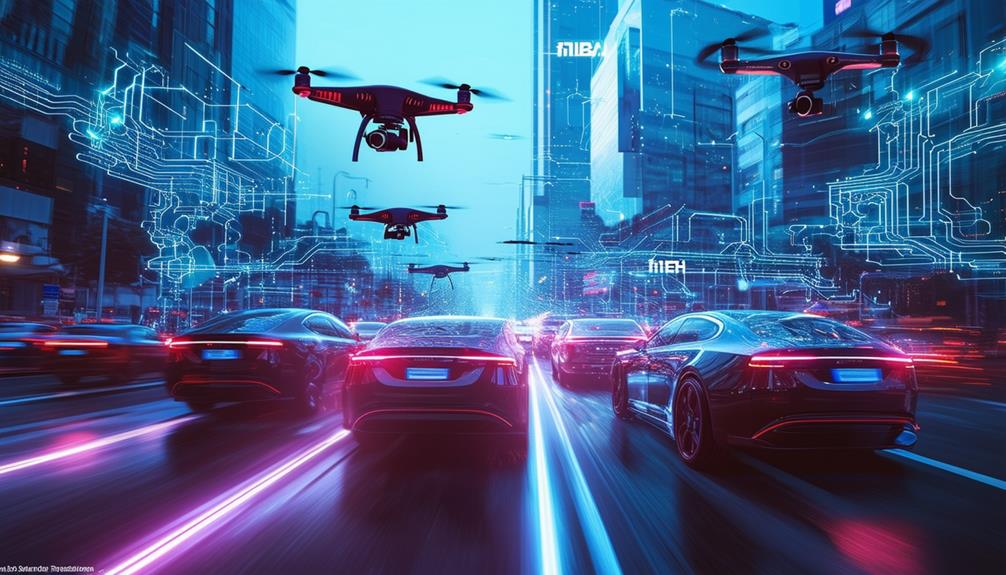
In recent years, AI and machine learning have revolutionized the way self-driving cars interpret and interact with their environment. Leveraging neural networks, researchers are enhancing the performance of autonomous vehicles through advanced reinforcement learning techniques. These neural networks enable cars to make real-time decisions by processing vast amounts of data from their surroundings.
AI and machine learning technologies are now integral to the automotive industry, driving significant advancements in autonomous vehicles. One crucial component in this technological evolution is the use of Lidar sensors, which provide detailed, high-resolution 3D maps of the car's environment. This accurate mapping is essential for precise navigation and obstacle detection. Feeding this data into AI algorithms allows self-driving cars to better understand and adapt to dynamic road conditions.
The focus on sustainability is further prompting the adoption of AI-driven technologies, optimizing energy efficiency and reducing the environmental impact of autonomous vehicles. Innovations in AI and machine learning are continuously improving the safety and efficiency of self-driving systems. With each breakthrough, we move closer to a future where driverless cars are a safe and reliable reality. The combined power of AI, neural networks, and Lidar sensors is paving the way for smarter, greener, and more efficient transportation.
Sensor Integration
Integrating sensors such as Lidar, radar, ultrasonic sensors, and cameras is crucial for accurately perceiving a self-driving car's surroundings. These sensors collaboratively gather real-time environmental data, enabling the vehicle to make informed decisions while navigating. Effective sensor integration in autonomous vehicles is essential for ensuring redundancy and reliability in detecting obstacles, pedestrians, road signs, and other vehicles.
Combining multiple sensors creates a robust system adaptable to varying road conditions, weather, and traffic scenarios. This integration is vital for advanced driver-assistance systems, enhancing the safety and efficiency of self-driving cars. By providing a comprehensive view of the surroundings, these sensors empower the vehicle to make intelligent decisions rapidly.
Sensor fusion, which amalgamates data from different sensors, is particularly critical. It ensures that if one sensor fails or is obstructed, others can compensate, maintaining the vehicle's awareness and operational safety. Consequently, advanced sensor integration not only enhances performance but also builds a more reliable and resilient autonomous vehicle capable of managing the complexities of real-world driving.
Vehicle-to-Everything (V2X)
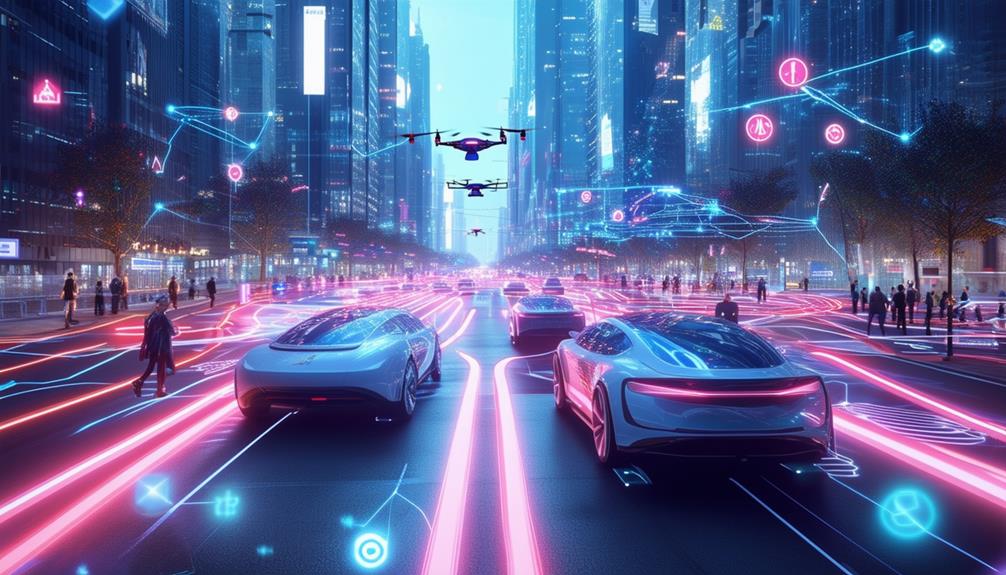
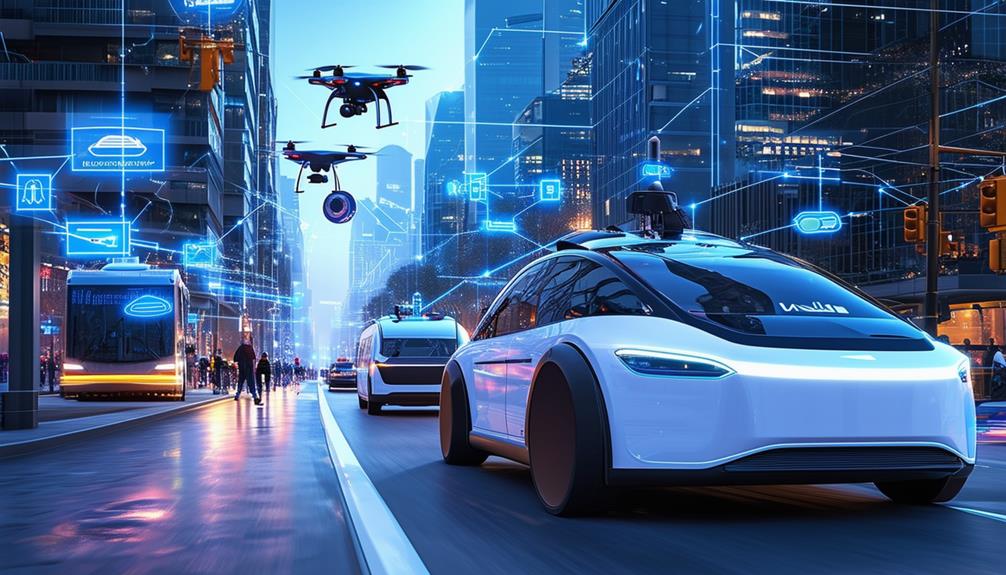
As sensor integration ensures that self-driving cars accurately perceive their immediate environment, Vehicle-to-Everything (V2X) technology extends this capability by enabling communication with other vehicles, infrastructure, and even pedestrians, thereby enhancing safety and efficiency. V2X is transformative for autonomous vehicles, making roads safer and driving more seamless.
Imagine a world where your car can:
- Warn you about an accident miles ahead, allowing you to take an alternate route.
- Communicate with traffic lights to optimize your speed and reduce waiting times.
- Detect a pedestrian about to cross the street and automatically slow down.
- Coordinate with other vehicles for synchronized lane merges, reducing traffic congestion.
The U.S. Department of Transportation (USDOT) is actively researching V2V (vehicle-to-vehicle), V2I (vehicle-to-infrastructure), and V2P (vehicle-to-pedestrian) communication systems. Integrating V2X with IoT (Internet of Things) enables cars to exchange real-time data, creating a connected transportation network that significantly improves road safety. Driver Assisted Truck Platooning (DATP) uses V2X communication to address driver shortages and enhance efficiency in commercial transport. Hyper-connectivity through V2X ensures that autonomous vehicles adopt smarter driving strategies, paving the way for a safer, more efficient future on the roads.
Safety and Regulations
Ensuring the safety of autonomous vehicles requires stringent regulations and robust oversight. Fatal incidents have underscored significant safety concerns, highlighting the urgent need for well-defined rules. A major challenge is the lack of clear regulations for Levels 4 and 5 autonomy, which hinders the widespread adoption of self-driving cars.
Legal liability in accidents involving autonomous vehicles is another complex issue that needs addressing. Determining fault—whether it rests with the car manufacturer, software developer, or vehicle owner—is essential for establishing accountability.
| Safety Concern | Regulatory Challenge |
|---|---|
| Fatal incidents | Need for rigorous oversight |
| Levels 4 and 5 unclear | Complicates adoption |
| Legal liability | Complex accountability issues |
Additionally, the ethical decision-making algorithms used in autonomous vehicles are critical. These algorithms must ensure responsible and safe driving, especially when making split-second decisions. Regulators need to establish guidelines for these algorithms to align with public safety standards.
Current Market Trends
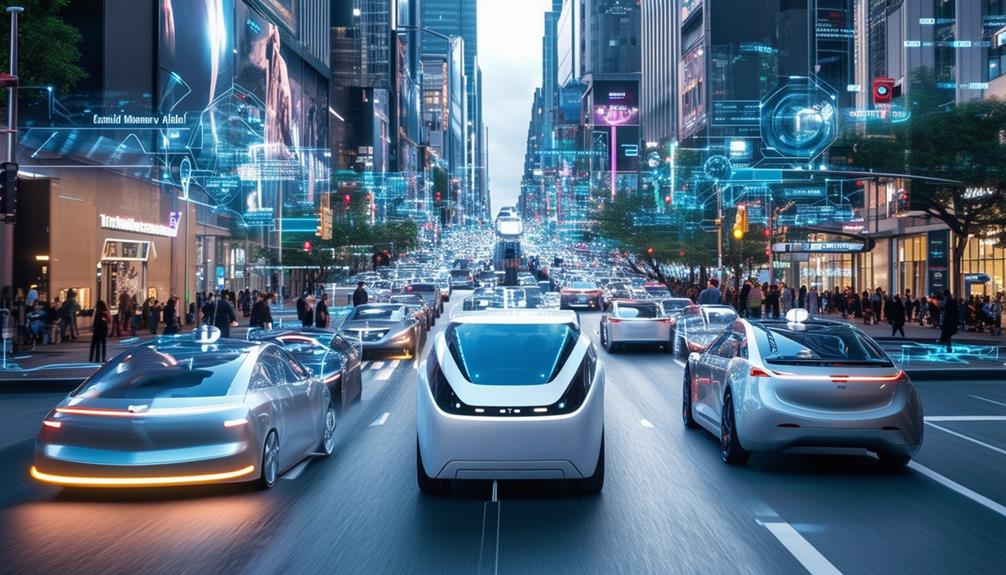
The autonomous vehicle market is witnessing remarkable growth, driven by rapid innovation and intense competition. With a projected CAGR of 22.75% from 2023 to 2028, the automotive industry is on the brink of a significant transformation. Over 40 companies are vying for dominance in this rapidly evolving sector, each contributing to the swift advancements in autonomous vehicle technology.
Key developments highlight the excitement and potential of this industry:
- Honda's SAE Level 3 Autonomous Vehicles: These mass-produced cars mark a substantial advancement in self-driving technology.
- Broad Competition: From tech giants to traditional car manufacturers, over 40 companies are pushing the boundaries of what's possible.
- Incremental Autonomy: While most current vehicles offer Level 2 autonomy, ongoing advancements are moving us closer to fully autonomous cars.
- Transformational Growth: The projected CAGR of 22.75% underscores the immense potential and investment flowing into this field.
The automotive industry is abuzz with innovation, and the race to perfect autonomous vehicles is intensifying. As a consumer or industry observer, you are witnessing a pivotal moment where technological advancements are shaping a future that was once the realm of science fiction.
Challenges and Obstacles
When considering the future of autonomous vehicles, regulatory and legal issues remain unresolved. Ethical and safety concerns also play a significant role, especially as technology grapples with unpredictable human behavior and adverse weather conditions. Addressing these challenges is essential for achieving reliable and widespread adoption of self-driving cars.
Regulatory and Legal Issues
Navigating the regulatory and legal landscape is a major challenge for the widespread adoption of fully autonomous vehicles. The absence of detailed guidelines for Levels 4 and 5 autonomous vehicles creates significant uncertainty for manufacturers and developers. Legal liability in accidents involving self-driving cars raises critical questions about accountability and insurance coverage, making it a complex issue for all stakeholders.
Without clear rules, the development and deployment of these vehicles are greatly hindered. Developers invest years into innovation only to face legal ambiguity. Collaborative efforts among policymakers, industry leaders, and other stakeholders are essential to create detailed guidelines that address these pressing issues.
Key challenges include:
- Ambiguous regulations: Developers lack the clarity needed to proceed confidently.
- Accountability: Determining responsibility in autonomous vehicle accidents.
- Insurance: Developing policies for vehicles that drive themselves.
- Policy-making pace: Regulatory bodies often struggle to keep up with rapid technological advancements.
Addressing these obstacles is crucial to realizing the dream of fully autonomous vehicles on public roads.
Ethical and Safety Concerns
Navigating the regulatory landscape is just one of many challenges; ethical and safety concerns also significantly impede autonomous vehicle adoption. Safety issues have been spotlighted by fatal incidents involving self-driving cars, emphasizing the urgent need for rigorous testing and validation protocols. Ensuring these vehicles operate reliably under various conditions, including adverse weather where sensor performance often falters, is crucial.
Ethical dilemmas, especially around liability in accidents, further complicate matters. Who bears responsibility when a self-driving car crashes? Is it the manufacturer, the software developer, or the vehicle owner? These questions necessitate crucial discussions on accountability and the ethical implications of decision-making algorithms embedded in these vehicles.
The absence of defined regulations for Levels 4 and 5 autonomy adds another layer of complexity. Without clear guidelines, the deployment of fully autonomous vehicles faces substantial obstacles. Additionally, addressing software reliability and cybersecurity is critical. Ensuring these vehicles are not only safe but also secure from potential cyber threats, which could jeopardize their operation and endanger lives, is paramount.
Addressing these ethical and safety concerns requires a comprehensive approach involving policymakers, manufacturers, and technologists to ensure the safe and ethical integration of autonomous vehicles into society.
Future Prospects
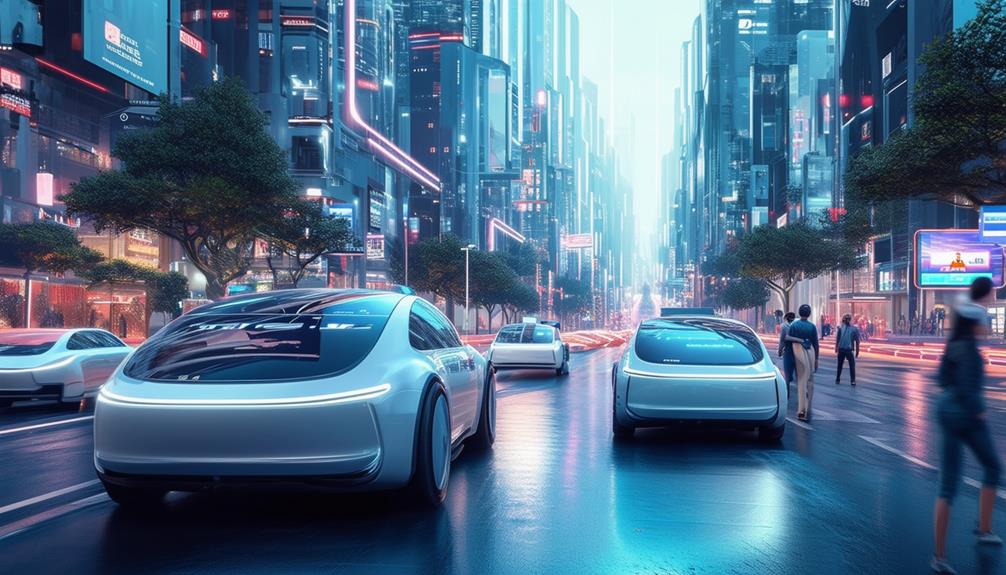
The future of autonomous vehicles promises rapid changes in regulatory frameworks and exciting technological breakthroughs. Governments worldwide are adapting laws to keep pace with these innovations, ensuring safe and efficient integration. With advancements on the horizon, the potential for self-driving cars appears boundless.
Regulatory Framework Evolution
The future of autonomous vehicle regulations hinges on proactive collaboration between governments, industry leaders, and researchers to guarantee both innovation and safety. Trust in self-driving cars relies on a well-structured regulatory framework that addresses safety standards and legal requirements. Governments worldwide are crafting guidelines to oversee the testing and deployment of these vehicles, balancing technological advancements with public safety.
Regulatory bodies are diligently working to establish uniform standards, ensuring consistency in autonomous vehicle operations across regions. This dynamic regulatory landscape continuously adapts to rapid developments in the field, ensuring that autonomous vehicles remain pioneering and safe for public use.
Consider the impact of these collaborative efforts:
- Enhanced Safety: Improved standards can significantly reduce accidents and save lives.
- Legal Clarity: Clear requirements offer a reliable framework for developers and consumers.
- Consumer Confidence: Uniform regulations increase public trust in autonomous technology.
- Innovation Encouragement: Balanced regulations foster technological advancements without compromising safety.
Technological Breakthroughs Ahead
In the near future, groundbreaking technological advancements will redefine the capabilities of autonomous vehicles. The development of autonomous driving technology is accelerating, with projections indicating the global driverless car market will grow at a CAGR of 22.75% between 2023 and 2028. Leading automotive manufacturers are fiercely competing to dominate the sector through cutting-edge innovations.
Currently, most vehicles offer Level 2 autonomy, but companies like Honda are pushing boundaries by mass-producing SAE Level 3 autonomous vehicles. This leap signifies a pivotal moment in the future of self-driving cars, where vehicles will navigate and make decisions with minimal human intervention.
Partnerships such as those between UPS and TuSimple are integrating self-driving trucks for deliveries, illustrating the expansive potential of autonomous driving technology beyond personal vehicles. As these advancements continue, more reliable and efficient autonomous systems will become commonplace.
The development of autonomous vehicles aims not just at achieving higher levels of autonomy but also at creating safer, more efficient transportation solutions. With these technological breakthroughs, the future of self-driving cars looks incredibly promising, poised to transform not just how we drive, but how we live.
Impact on Society
Imagine a world where self-driving cars transform urban landscapes and make transportation more accessible for everyone. These vehicles are not just about convenience; they have the potential to revolutionize urban planning and improve fuel efficiency. By optimizing routes and reducing traffic congestion, self-driving cars can save time and fuel, contributing to a greener planet.
Consider the profound societal impacts:
- Enhanced Mobility: Disabled individuals gain newfound freedom and independence.
- Reduced Traffic: Less congestion means smoother commutes and lower stress levels.
- Environmental Benefits: Improved fuel efficiency leads to lower emissions, benefiting our environment.
- Urban Space Repurposing: Fewer parking spaces are needed, allowing for more parks and community spaces.
Envision cities where traffic jams are a thing of the past and urban spaces are repurposed to benefit the community. Automation in transportation promises a future where everyone has better access to mobility. This shift could make our cities cleaner, more efficient, and more human-centric. The adoption of self-driving cars is not just a technological leap; it's a societal transformation that can nurture a more inclusive and sustainable world.
Conclusion
Autonomous vehicles and self-driving cars are revolutionizing transportation through the integration of AI, machine learning, and advanced sensors. Despite ongoing challenges, collaborative efforts among tech companies, automotive manufacturers, and regulatory bodies are paving the way for a safer and more efficient future. Embrace the transformation towards a connected and sustainable world where transportation seamlessly integrates into daily life. The future is here—let's embrace the journey together!
Related posts