Robots in Public Safety: Enhancing Disaster Response and Recovery
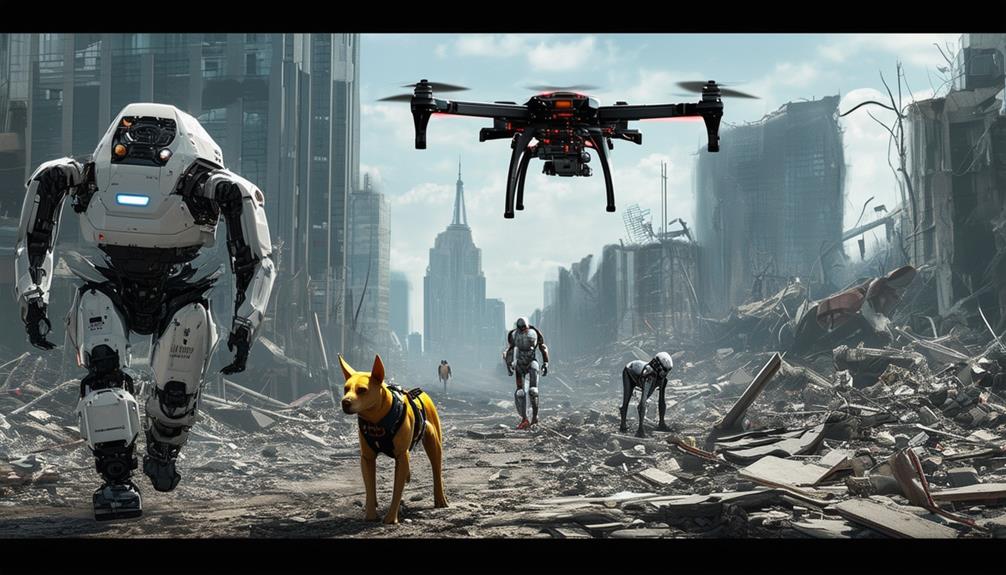
Imagine you're in the midst of a disaster, and human responders are struggling to navigate through the chaos. That's where robots come into play. These advanced machines can enter hazardous environments, locate survivors, and relay critical information, all while keeping human responders out of harm's way. Not only do they save lives, but they also gather crucial data that makes rescue operations more efficient. But how exactly do these robots function, and what advancements are shaping their future in disaster response? Let's explore the world of robotics in public safety and uncover the innovations transforming emergency management.
Navigating Hazardous Environments
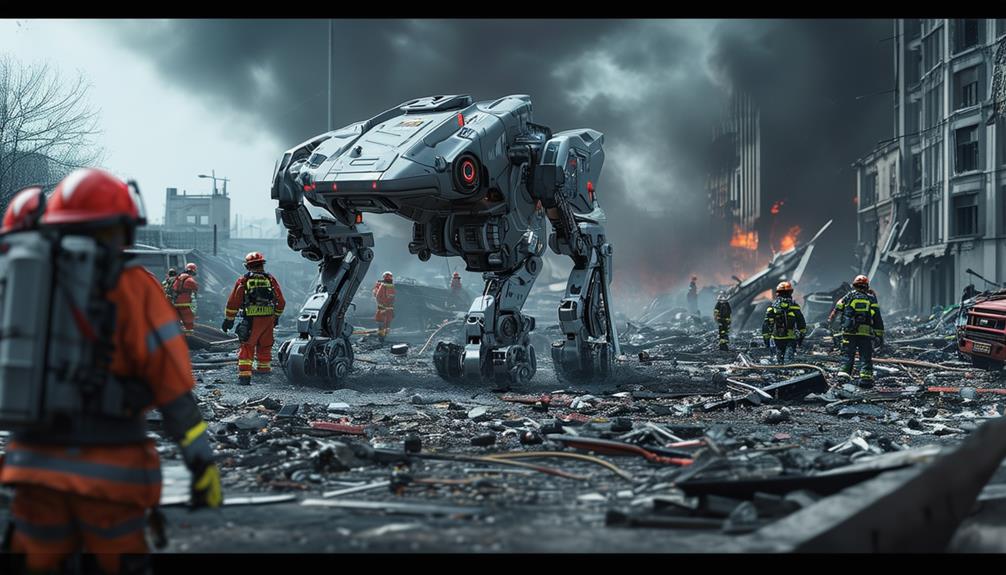
In disaster response, robots are indispensable for traversing hazardous environments such as earthquake aftermaths and nuclear disaster sites. These remarkable machines can navigate areas too risky for human responders, playing a vital role in disaster recovery by assessing damage and gathering critical data without endangering human lives.
One significant advancement in this field is the development of an autonomous hybrid leg-wheeled robot. This innovative machine is designed to adapt to the uncertain and dangerous conditions commonly found in disaster zones. Its hybrid mobility allows it to maneuver over debris and uneven terrain, making it an invaluable asset during rescue operations.
The RABOT project has made considerable strides in enhancing robotic capabilities for disaster scenarios. By addressing the obstacles that robots encounter in high-risk environments, this initiative has paved the way for more effective and reliable robotic assistance in disaster response.
Collaboration between European and Chinese research institutions has been instrumental in these advancements. By pooling resources and expertise, these partnerships aim to push the boundaries of robotic capabilities in disaster recovery, ultimately saving more lives and speeding up recovery efforts.
Search and Rescue Operations
Robots are transforming search and rescue operations by entering hazardous environments to locate and assist individuals in distress. These advanced machines play a crucial role in disaster relief, supporting emergency responders when every second counts. By leveraging state-of-the-art technology, robots significantly enhance the efficiency and effectiveness of rescue missions in disaster zones.
In a disaster scenario, robots can:
- Navigate through rubble and debris to reach trapped survivors
- Utilize sensors and cameras to detect human presence and assess real-time situations
- Relay critical information to emergency responders, facilitating better coordination
- Operate in environments too dangerous for humans, reducing risk to personnel
- Accelerate the overall search and rescue process, thereby saving more lives
Data Collection and Analysis
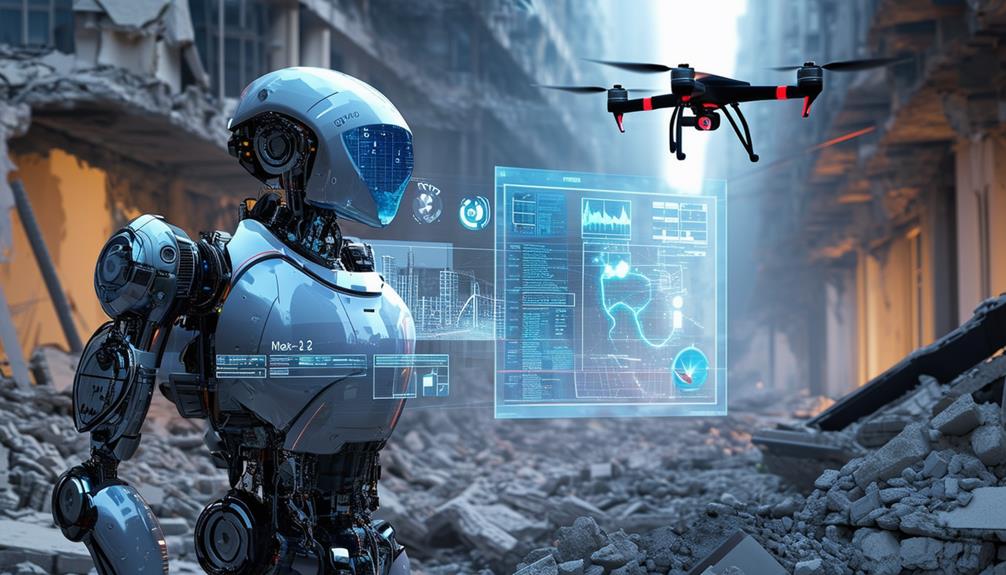
In real-time incident tracking, robots offer unmatched situational awareness by transmitting live data from disaster zones. Predictive analytics can also be utilized to forecast potential hazards and allocate resources more effectively. These technologies combined enable better coordination and faster response times during emergencies.
Real-time Incident Tracking
Imagine drones capturing high-resolution images of disaster zones, providing invaluable data to emergency responders in real time. This technology revolutionizes the way robots assist in rescue operations, enhancing the overall response and recovery process. Real-time incident tracking enables emergency teams to promptly assess the disaster's scope, locate survivors, and identify hazards such as gas leaks or radiation.
By integrating advanced sensors on drones and other robots, responders gain access to critical environmental data. This information is essential for making informed decisions and efficiently allocating resources. Here's how real-time incident tracking benefits disaster response:
- Survivor Identification: Rapidly locate and prioritize rescue efforts for individuals in immediate danger.
- Hazard Detection: Detect threats like gas leaks or elevated radiation levels, ensuring the safety of victims and responders alike.
- Damage Assessment: Assess the extent of structural damage to prioritize recovery tasks effectively.
- Resource Allocation: Make data-driven decisions on deploying personnel and equipment.
- Infrastructure Monitoring: Track critical infrastructure to maintain essential services during the emergency.
Real-time incident tracking significantly enhances disaster response and recovery operations, ensuring a more effective and efficient rescue mission.
Predictive Analytics Utilization
Predictive analytics leverages data collection and analysis to forecast disaster scenarios and optimize response strategies. By examining historical trends and real-time information, you can make data-driven decisions that notably enhance disaster management. Machine learning algorithms process vast datasets to identify high-risk areas, potential hazards, and vulnerable populations, enabling targeted preparedness measures.
Imagine anticipating a flood or earthquake before it occurs. Predictive analytics empowers you to do just that. By analyzing patterns and anomalies in data, you can foresee disaster scenarios that might otherwise be unexpected. This proactive approach results in faster response times, reducing casualties and minimizing property damage.
In disaster management, predictive analytics is a transformative tool. By making data-driven decisions, you improve the efficiency and effectiveness of your response strategies. Integrating these insights into your disaster response plans ensures you are better prepared, more responsive, and ultimately, more capable of safeguarding communities. Embrace predictive analytics—it's your ally in creating a safer, more resilient world.
Minimizing Risks to Responders
By leveraging advanced technologies such as drones and robotic systems, human exposure to hazardous environments can be significantly reduced. These tools facilitate remote hazard assessment, providing real-time data without endangering responders. This approach optimizes resource deployment, enhancing both safety and effectiveness in disaster response operations.
Reducing Human Exposure
Robots significantly enhance the safety of emergency responders by undertaking hazardous tasks, thereby minimizing direct human exposure to danger. In disaster scenarios, robots are deployed to navigate high-risk environments, ensuring that emergency personnel can avoid physical harm. This not only improves public safety but also substantially reduces the likelihood of injuries.
By integrating advanced robotics into disaster response, the need for human presence in perilous situations is greatly diminished. Robots are equipped to handle:
- Harmful substances
- Extreme temperatures
- Unstable structures
- Confined spaces
- High radiation zones
These capabilities enable robots to effectively perform duties that would otherwise expose responders to significant danger. The use of robots in disaster recovery reduces risks for emergency personnel, ensuring a safer environment for all involved.
Remote Hazard Assessment
In disaster response, employing robots for remote hazard assessment provides real-time data, ensuring responders remain safe. These robots, equipped with cameras, microphones, and sensors, can gather essential information from disaster zones without endangering human lives. They are specifically designed to identify safety hazards such as gas leaks and elevated radiation levels.
Controllers in command centers greatly benefit from the immediate imagery and data these robots deliver. This enables the quick identification of survivors and the assessment of safety hazards, which is crucial for making informed decisions during disaster response operations.
Additionally, high-tech harnessed vests for rescue dogs, equipped with sensory devices, can further aid in remote hazard assessment. These vests enhance the dogs' capabilities, allowing for the collection of valuable data from difficult-to-access areas.
Here are the key benefits of using robots for remote hazard assessment:
| Benefit | Description |
|---|---|
| Real-time data | Immediate information on gas leaks and radiation levels |
| Minimized risk | Keeps responders out of hazardous situations |
| Enhanced decisions | Facilitates quick identification of survivors and hazards |
Utilizing robots for remote hazard assessment significantly enhances the safety and efficiency of disaster response and recovery operations, ensuring better outcomes and reduced risks for human responders.
Efficient Resource Deployment
Leveraging the advantages of remote hazard assessment, efficient resource deployment in disaster response utilizes robots to minimize risks to human responders. Robots can be deployed to access hazardous areas, gather critical information, and ensure human safety during disaster recovery operations.
Rescue robots play a crucial role in disaster preparedness and response by performing a range of essential tasks, including:
- Structural Assessments: Robots can quickly evaluate the stability of buildings and other structures, reducing the need for human entry into potentially dangerous zones.
- Search and Rescue Operations: Equipped with cameras and sensors, robots can locate survivors trapped under debris, streamlining rescue efforts.
- Environmental Monitoring: Robots can detect hazardous materials, such as gas leaks or chemical spills, preventing further harm.
- Reconnaissance and Data Collection: By collecting valuable data on the disaster site, robots enable responders to make informed decisions.
- Task Automation: Robots can handle repetitive or strenuous tasks, freeing up human responders for more complex duties.
Improving Response Efficiency
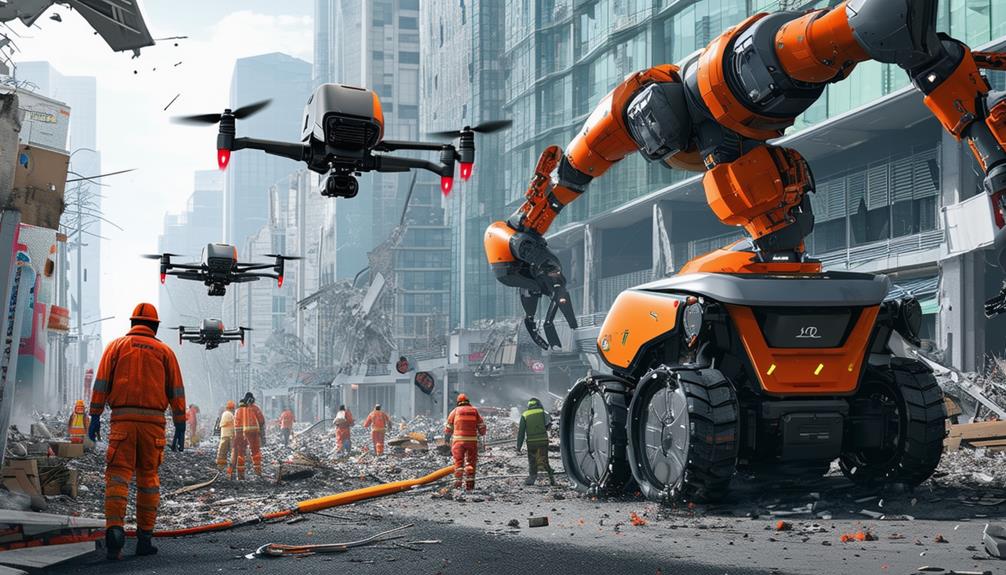
Leveraging real-time data and advanced surveillance, robotics technology can dramatically enhance disaster response efficiency. Deploying robots for search and rescue missions in hazardous environments increases operational effectiveness and safety. These robots can navigate debris and access areas too dangerous for human responders, improving disaster recovery efforts.
Robotics in disaster recovery allows for quicker decision-making based on real-time data. Robots equipped with advanced sensors and cameras relay critical information to command centers, enabling rapid assessment and resource allocation. This expedited decision-making process is vital for reducing casualties and minimizing damage during and after disasters.
Collaborative efforts between robots and drones further streamline operations. Drones can provide aerial views, while ground robots perform detailed searches. This synergy results in a comprehensive understanding of the disaster zone, enhancing response strategies.
Future Developments in Robotics
Exciting advancements in robotics promise to revolutionize public safety by introducing more autonomous and intelligent systems. Experts at the Good Global Summit highlighted how artificial intelligence is driving innovations in rescue robots. These technologies will greatly benefit rescue teams and contribute to Sustainable Cities and Communities by improving responses to natural disasters.
The RABOT project is a prime example, having developed an autonomous hybrid leg-wheeled robot designed for uncertain environments. Key advancements from the project include:
- Collaborations: European and Chinese research partnerships have enhanced sensing, control, and robot manipulation technologies.
- Innovative Designs: The Romanian Academy of Sciences created new control interfaces and a portable robot testing platform.
- Adaptive Mobility: Yanshan University developed a stair-climbing wheelchair, expanding mobility options in disaster zones.
- Intellectual Property: The RABOT consortium submitted four patents on robot movement and haptic interfaces, winning five awards for their smart firefighting platforms.
- Improved Control: Enhanced dynamic walk models and novel haptic interfaces now offer real-time control for robots in disaster environments.
These advancements in robotics are set to transform how we handle the aftermath of natural disasters, making rescue operations more efficient and effective. By integrating these technologies, we can better protect lives and infrastructure in the face of adversity.
Conclusion
Robots are transforming disaster response and recovery by navigating hazardous environments, performing search and rescue operations, and collecting critical data, all while reducing risks to human responders. These advanced machines enhance response efficiency, ensuring timely and effective operations. With ongoing advancements in robotics, we can anticipate even more impressive capabilities in the future, solidifying robots as essential tools in public safety.