Outdoor Drone Use: Regulations & Best Practices in Texas

In Texas, you'll need to register drones (0.55-55 pounds) with the FAA, display registration numbers, and have proof of registration available during flights if asked. Commercial pilots must obtain Part 107 certification. Most Texas state parks require permits, and you can't use drones for hunting wildlife or to count or photograph wildlife without the proper authorization. Stay below 400 feet, maintain visual line-of-sight, and comply with Remote ID regulations. Understanding local ordinances and wildlife protection laws will keep your outdoor drone adventures legal and enjoyable.
Federal Registration Requirements for Texas Drone Owners
Three key federal requirements govern drone ownership in Texas. First, you must register all drones weighing between 0.55 and 55 pounds with the FAA, regardless of whether you're flying for fun or profit. Second, you'll need to display your FAA registration number visibly on your drone's exterior. Third, you must have your registration certificate (digital or physical) available and show it if asked by law enforcement or FAA personnel during flights. Recreational flyers are required to complete the TRUST online course before operating their drones, and keep proof of passage available when flying. Complete your recreational drone registration through the FAA DroneZone website for $5, which covers all drones in your recreational inventory for three years. If you're under 13, an adult must register on your behalf. Non-compliance can trigger severe FAA enforcement actions, including civil penalties up to $27,500, criminal penalties that can include larger fines and imprisonment, and possible drone confiscation. Texas authorities enforce both federal and local drone laws, making proper registration essential before your first flight.Part 107 Certification for Commercial Drone Operations in Texas
View this post on Instagram
Unlike recreational drone pilots, anyone operating drones for commercial purposes in Texas must obtain FAA Part 107 certification before their first business flight. To qualify, you'll need to be at least 16 years old, proficient in English, and pass the 60-question Aeronautical Knowledge Test. The certification process requires creating an FAA account, completing an application, and completing identity verification as part of the FAA’s process. You'll need to present valid photo ID and exam documentation during verification. Your certification remains valid for 24 months, after which you must complete the FAA’s recurrent training requirements to maintain your commercial operating privileges. The FAA offers free online courses for this purpose. Always keep your Remote Pilot Certificate available during all commercial operations. Commercial pilots must adhere to the Part 107 Small UAS Rule which includes regulations for airspace, altitude, and line-of-sight requirements.
Texas State Park Drone Restrictions and Permit Process
View this post on Instagram
Flying drones in Texas state parks requires careful navigation of specific regulations that vary by location. Drones are allowed in state parks in two circumstances: Martin Dies, Jr. State Park has a designated area, and at other parks for filming purposes with a required filming permit. The drone operating protocols are stringent—you'll need written permission through the park’s permitting process, and approval can take time depending on the park and the request. For wildlife-related activities, you must obtain both an Aerial Management Permit and a Land Owner Authorization. Be aware of prohibited flight areas, as unauthorized drone use can result in enforcement actions. You can't use drones to hunt, track, or locate wildlife without proper authorization, supporting fair chase principles and conservation efforts throughout Texas parks. Texas rules specifically restrict drone-assisted methods that give an unfair technological advantage to hunters.
Privacy Laws Governing Aerial Photography in Texas
When operating drones in Texas, you'll need to navigate a detailed set of privacy laws that specifically govern aerial photography and videography. Texas Government Code Chapter 423 prohibits capturing images of individuals or privately owned real property with the intent to conduct surveillance, unless an exception applies under the statute. Violations can carry consequences—from misdemeanor penalties for unlawful image capture to higher-level penalties for improper disclosure, display, distribution, or use in prohibited circumstances. Property owners may also have civil remedies available under the chapter. To protect yourself, obtain consent when you’re filming people or private property in a way that could reasonably be viewed as surveillance, and keep written permissions when permissions are part of your plan. Remember that intent matters—general photography of public spaces is not the same thing as using a drone to conduct surveillance. When in doubt, choose a different angle, increase distance, or avoid filming private areas altogether.
Wildlife Protection Regulations When Flying Outdoors
Texas wildlife protection laws extend beyond human privacy concerns to safeguard animal populations from drone interference. You're prohibited from using drones to hunt, drive, capture, take, count, or photograph wildlife without specific permits from the Texas Parks and Wildlife Department and the required landowner authorization. If you're interested in wildlife habitat protection or conservation efforts monitoring via drone, you'll need an Aerial Management Permit (AMP) and written landowner permission. Even with advanced technology like thermal imaging drones, you can't legally use them to locate game or scout hunting areas unless your activity falls under authorized and permitted use. These restrictions uphold fair chase ethics and help prevent wildlife disturbance. Violating wildlife-related drone restrictions can lead to penalties and enforcement actions. Remember, all wildlife-related drone activities require proper authorization, regardless of your conservation intentions.
Navigating Temporary Flight Restrictions in Texas Airspace
Temporary Flight Restrictions (TFRs) represent one of the most critical airspace limitations you'll need to navigate as a drone operator in Texas. These FAA-issued restrictions temporarily prohibit drone flights in designated areas, often due to emergencies, public events, VIP movements, or security concerns. Weather-related TFRs are common during Texas hurricanes, floods, and wildfires to protect emergency responders. Similarly, military airspace restrictions frequently occur around bases throughout the state during training exercises. Before each flight, you must check for active TFRs using the B4UFLY app, LAANC system, or the FAA’s official tools. Obtaining proper authorization requires coordination with controlling agencies when flying near restricted zones. Non-compliance can result in substantial fines and penalties.
Local Municipality Drone Ordinances Across Texas
Beyond federal regulations, traversing the complex patchwork of local drone ordinances presents an additional challenge for drone operators across Texas. Many cities and counties impose local restrictions on takeoff and landing in certain public spaces, and some locations add special rules for parks, schools, and critical infrastructure. You'll encounter stricter rules in crowded areas, with local restrictions aimed at minimizing safety risks and disturbances. Local no-fly expectations can extend beyond FAA guidance through site-specific rules, even though the FAA controls the national airspace. Before flying, check whether your municipality or the specific park or facility requires prior authorization for launches, landings, or special events. Doing this homework reduces conflicts and keeps your outdoor flight plans smooth.
Visual Line-of-Sight and Altitude Limitations
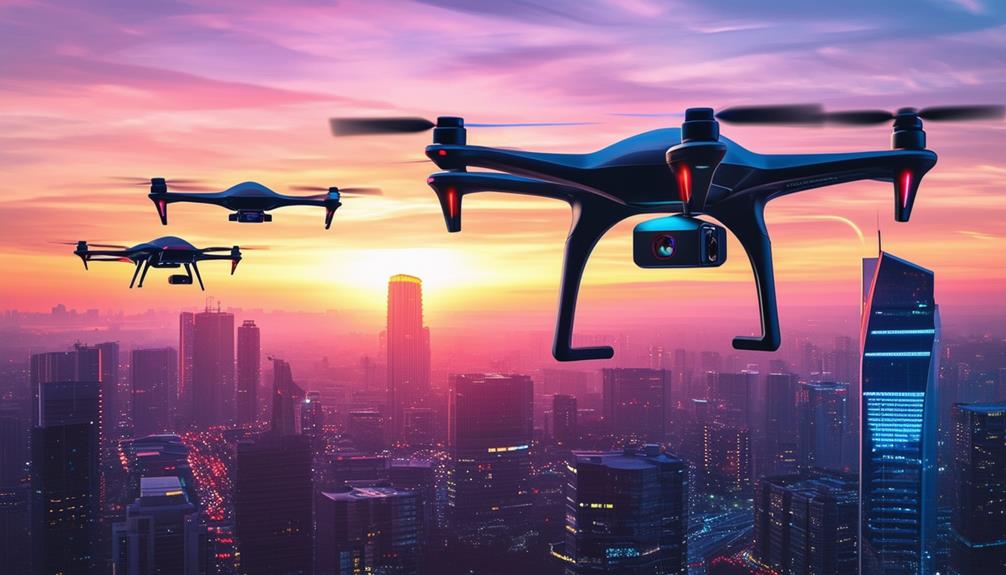
The cornerstone of safe drone operation in Texas revolves around two critical FAA requirements: maintaining visual line-of-sight and observing strict altitude limitations. When flying your drone, you must always maintain VLOS operational limitations, keeping your drone visible without aids beyond corrective lenses. Additionally, you’re generally required to stay below 400 feet above ground level, with Part 107 allowing limited exceptions such as operating within 400 feet of a structure under specific conditions. To create vivid imagery of proper drone operation:
- Imagine tracking your drone's white frame against the blue Texas sky, never letting it disappear from view
- Picture your drone hovering at tree-top level, well below the 400-foot ceiling
- Envision your drone's anti-collision lights blinking clearly during dusk flights
- Visualize monitoring a flight planning app while maintaining eye contact with your aircraft
For BVLOS operations, the waiver application process still requires demonstrating specific safety measures to the FAA.
Remote ID Compliance for Texas Drone Pilots
Every drone operator in Texas must comply with the FAA's Remote ID rule, with enforcement beginning March 16, 2024. This regulation applies to drones that must be registered, requiring them to broadcast identification and location data in real-time unless flown in a FAA-Recognized Identification Area (FRIA). You have three compliance options: using drones with built-in Remote ID capability, attaching external broadcast modules to older models, or flying exclusively in FRIAs. The compliance verification process involves registering your Remote ID serial number in the FAA DroneZone system and maintaining an accurate inventory of all your equipment. While privacy concerns regarding Remote ID exist, this system enables law enforcement to identify unauthorized drone operations. Remember that flying without proper Remote ID compliance outside designated areas can result in substantial penalties.
Best Safety Practices for Rural and Urban Drone Flying
While Remote ID compliance provides a foundation for legal drone flight, operating safely in different environments requires specific practical knowledge. Always conduct pre-flight site surveys to identify potential hazards before launching your drone, paying particular attention to power lines, buildings, and other obstacles that could interfere with your flight. When flying in Texas, remember these essential practices:
- Stay below 400 feet AGL in all environments, with extra caution in urban areas with controlled or restricted airspace
- Keep your drone within visual line of sight at all times, especially in cluttered urban settings
- Avoid flying over emergency scenes and give responders wide space to work
- Develop weather contingency planning to safely land or return home when conditions deteriorate
For public safety operations, consider that agencies may face equipment and compliance constraints based on evolving procurement and security rules, so always confirm site rules when coordinating near official activities.
Related posts