Nils Nilsson: A Pioneer in Automated Planning and Robotics
Nils Nilsson is a foundational figure in the evolution of artificial intelligence and robotics. His work at SRI International, especially the development of the STRIPS planning framework and the A* search algorithm, revolutionized automated planning. Nilsson's creation of SHAKEY, the first mobile intelligent robot, marked a pivotal moment in robotics. These innovations not only advanced the field but also laid the groundwork for today's autonomous systems. Curious about how his early life and education influenced his groundbreaking achievements? Let's delve into that next.
Early Life and Education

Nils Nilsson, born in Saginaw, Michigan in 1933, earned his Ph.D. in electrical engineering from Stanford University in 1958. Driven by a passion for technology and innovation, Nilsson's time at Stanford was pivotal, nurturing his interest in computer science and artificial intelligence through the university's dynamic environment and cutting-edge research facilities.
After completing his Ph.D., Nilsson served as a lieutenant in the U.S. Air Force from 1958 to 1961, stationed at the Rome Air Development Center in New York. This experience allowed him to apply his academic knowledge to practical scenarios, further developing his technical skills and leadership abilities.
Following his military service, Nilsson joined SRI International, a renowned institution for AI and robotics research. His work at SRI International involved groundbreaking projects that would define his career, building on the solid foundation established during his early education and experiences.
Initial Contributions to AI
Nils Nilsson's contributions to AI are epitomized by his work on SHAKEY the robot. He co-directed SHAKEY's creation and developed pioneering algorithms such as STRIPS and A*, which remain integral to modern AI and robotics. SHAKEY's capability to autonomously navigate and interact with its environment represented a major advancement in early AI research.
STRIPS Planning Framework
In the late 1960s, the co-development of the STRIPS planning framework marked a significant milestone in AI, revolutionizing how actions, states, and goals were formalized for problem-solving. Nils Nilsson and his colleagues at the Stanford Research Institute introduced the STRIPS (Stanford Research Institute Problem Solver) planning framework to enhance automated planning. This framework became foundational in AI, offering a systematic approach to represent and solve complex problems by decomposing them into manageable actions and states.
The STRIPS planning framework formalized the use of state variables and operator descriptions, enabling computers to efficiently transition from an initial state to a desired goal state. It laid the groundwork for advanced planning algorithms and systems, influencing subsequent research in the field. By defining actions with preconditions and effects, STRIPS allowed AI systems to plan sequences of actions to achieve specified goals, thereby making automated planning more robust and scalable.
Nilsson's pioneering work on STRIPS advanced both theoretical and practical aspects of AI, paving the way for more sophisticated and capable AI planning systems that remain influential today.
Shakey the Robot
Building on the foundational principles of the STRIPS planning framework, the development of SHAKEY the Robot marked Nils Nilsson's next groundbreaking venture into autonomous systems and artificial intelligence. Created between 1966 and 1972, SHAKEY was an autonomous robot equipped with sensors and a camera, capable of communicating wirelessly with a mainframe computer. Nils Nilsson co-directed this ambitious project, which underscored the significance of autonomous mobile robots.
Nilsson designed key algorithms for SHAKEY, including the STRIPS planning system and the A* search algorithm. These innovations remain crucial in modern AI and robotics. SHAKEY's capabilities were pioneering for its time, as it could navigate and perform tasks autonomously.
Key contributions of SHAKEY include:
- Autonomous Navigation: SHAKEY could move and make decisions independently.
- Algorithm Development: Introduction of STRIPS and A*, fundamental in AI today.
- Sensor Integration: Utilized sensors and a camera to interact with its environment.
- Wireless Communication: Communicated with a mainframe, showcasing early remote control capabilities.
Nils Nilsson's work on SHAKEY laid the groundwork for the future of robotics and artificial intelligence.
Early AI Research
Nils Nilsson's seminal contributions to AI catalyzed significant advancements in autonomous systems and intelligent machines. Between 1966 and 1972, Nilsson co-directed the creation of SHAKEY, the first mobile intelligent robot, marking a groundbreaking achievement in AI research. Nilsson developed crucial algorithms for SHAKEY, including the STRIPS planner and the A* search algorithm, both of which remain foundational in AI and robotics.
The STRIPS (Stanford Research Institute Problem Solver) algorithm enabled SHAKEY to plan and execute complex tasks, while the A* search algorithm optimized pathfinding and graph traversal, essential for applications ranging from smartphone GPS systems to video games. Nilsson's work extended beyond SHAKEY; his research at the Stanford Research Institute focused on developing general-purpose mobile automatons and AI programs for military applications.
These pioneering efforts by Nilsson laid a robust foundation for the future of AI and robotics. His innovations not only propelled the field forward but also influenced a wide range of technologies that are integral to contemporary life.
Development of the A* Algorithm
When addressing the challenge of efficient pathfinding, Nilsson and his collaborators co-developed the A* algorithm, revolutionizing AI applications. Nils Nilsson's contribution to the development of the A* algorithm is immense. This algorithm skillfully combines the benefits of Dijkstra's algorithm and heuristic methods to locate the shortest path efficiently. Its design ensures both efficiency and completeness, making it an essential tool in various fields such as robotics, gaming, and navigation systems.
The A* algorithm is highly regarded for several reasons:
- Efficiency: The A* algorithm guarantees finding the shortest possible path if one exists.
- Effectiveness: By incorporating heuristics, it reduces the number of nodes that need to be explored, accelerating the search process.
- Versatility: It is widely applicable across different AI applications, from robotic route planning to complex gaming environments.
- Foundational Impact: It serves as a cornerstone in pathfinding and graph traversal tasks, influencing subsequent developments in AI.
Nils Nilsson's A* algorithm is not just a technical achievement; it exemplifies how innovative thinking can address complex problems. Its widespread adoption underscores the lasting impact of Nilsson's work on AI and automated planning.
Innovations in Automated Planning
Nils Nilsson pioneered the field of automated planning with the development of the STRIPS planner, fundamentally transforming how robots and AI systems approach decision-making. STRIPS, which stands for Stanford Research Institute Problem Solver, enabled robots to decompose tasks into manageable steps, thereby making complex sequences of actions more feasible. This innovation brought about a structured and effective method for automated planning.
Nilsson's contributions did not end there. He advanced the field further by delving into temporal planning, addressing the challenge of decision-making under time constraints. This groundbreaking work allowed robots to undertake tasks requiring precise timing, such as coordinating movements in dynamic environments.
Moreover, Nilsson's innovations laid the groundwork for modern autonomous systems. By focusing on how robots and AI can autonomously plan and execute tasks, he paved the way for future advancements in robotics and automated planning. His contributions are not merely historical; they actively shape today's landscape in these fields.
Impact on Robotics

Building on his foundational work in automated planning, Nilsson's innovations had a transformative impact on the field of robotics. By co-directing the creation of SHAKEY, one of the earliest robots equipped with sensors and a camera, Nilsson showcased the potential of intelligent systems. SHAKEY could navigate its environment and make decisions based on sensory inputs, a groundbreaking accomplishment in the late 1960s.
Nilsson's algorithms for SHAKEY, including the STRIPS and A* algorithms, remain fundamental in robotics and AI today. These algorithms enabled SHAKEY to plan and execute tasks autonomously, laying the groundwork for modern autonomous robots. They continue to be integral to automated planning and intelligent systems, influencing how robots operate and interact with their surroundings.
Key impacts of Nilsson's contributions to robotics include:
- Autonomous Navigation: SHAKEY's ability to navigate and make decisions set the stage for today's autonomous robots.
- Sensor Integration: The use of sensors and cameras in SHAKEY influenced the development of sensory technologies in robotics.
- Algorithm Development: STRIPS and A* algorithms are still crucial tools in robotics and AI.
- Remote Control: SHAKEY's wireless communication with a mainframe computer demonstrated early applications of remote control in robotics.
Nilsson's pioneering work continues to shape the future of robotics, making automated planning more efficient and effective.
Role at SRI International
At SRI International, Nils Nilsson made pioneering contributions to AI and robotics. Leading the team that built Shakey, the first mobile intelligent robot, he developed key technologies like the A* search algorithm and the STRIPS planner. His work laid the foundation for automated planning and intelligent systems, leaving a lasting impact on the field.
Key Research Contributions
During his tenure at SRI International, Nils Nilsson's groundbreaking work on the SHAKEY project established new standards in robotics and automated planning. As a leader in research, Nilsson spearheaded the development of SHAKEY, the first mobile intelligent robot. His innovative contributions to robotics and automated planning have left a lasting impact on the field.
Nilsson developed pioneering algorithms such as STRIPS and A* for SHAKEY, which have become essential tools in artificial intelligence. These algorithms not only enhanced SHAKEY's capabilities but also influenced the broader AI community. His work laid the foundation for modern robotics and automated planning, expanding the horizons of what was achievable.
Nilsson's research also extended to automated temporal planning and logical reasoning, further shaping the future of AI. His role at SRI International was crucial in revolutionizing robotics and setting the stage for future advancements.
Key contributions from his time at SRI include:
- Development of SHAKEY: The first mobile intelligent robot.
- Creation of STRIPS and A*: Fundamental algorithms for AI.
- Foundation for Modern Robotics: Pioneering work that enabled future innovations.
- Advances in Automated Planning: Important contributions to temporal planning and logical reasoning.
These achievements underscore the depth and significance of Nilsson's contributions to the field.
Significant Projects Led
Nils Nilsson led several groundbreaking projects at SRI International, most notably the development of SHAKEY, the pioneering mobile intelligent robot. Under Nilsson's direction, SHAKEY became the first robot capable of reasoning about its actions, integrating both robotics and automated planning. This project marked a significant advancement in AI, demonstrating that a machine could autonomously navigate and interact with its environment.
Nilsson also played a pivotal role in incorporating logical reasoning within a complete agent, laying the groundwork for the field of automated temporal planning. His work has profoundly influenced how robots and AI systems approach complex problem-solving tasks over time. By leading these initiatives, Nilsson not only pushed the boundaries of robotics but also deeply impacted the theoretical foundations of artificial intelligence.
At SRI International, Nilsson's leadership in projects like SHAKEY helped establish the institution as a leader in AI and robotics research. His contributions have had a lasting impact, shaping educational materials like 'Artificial Intelligence: A Modern Approach' and setting the stage for future innovations in robotics and automated planning.
Innovative Technologies Developed
Frequently pushing the boundaries of technology, Nilsson's team at SRI International developed pioneering algorithms such as the A* search algorithm and the STRIPS planner. These advances became foundational in the fields of AI and robotic planning, significantly impacting technologies you encounter in daily life.
At the Stanford Research Institute, Nilsson and his team created Shakey, the first mobile intelligent robot capable of perceiving and modeling its environment. This groundbreaking work laid the foundation for technologies ranging from smartphone GPS systems to video games and even the Mars Rover.
Here's a concise overview of these groundbreaking technologies and their impacts:
- A* Search Algorithm: Revolutionized pathfinding and graph traversal, essential in GPS navigation and video games.
- STRIPS Planner: Became a cornerstone in automated planning, facilitating the development of intelligent agents.
- Shakey: The first mobile robot to integrate perception and action, setting the stage for future robotic platforms.
- Automated Temporal Planning: Enhanced logical reasoning in agents, vital for complex decision-making processes.
Nilsson's contributions at the Stanford Research Institute have had a lasting impact, influencing not only academic research but also real-world applications in AI and robotics.
Academic Career at Stanford
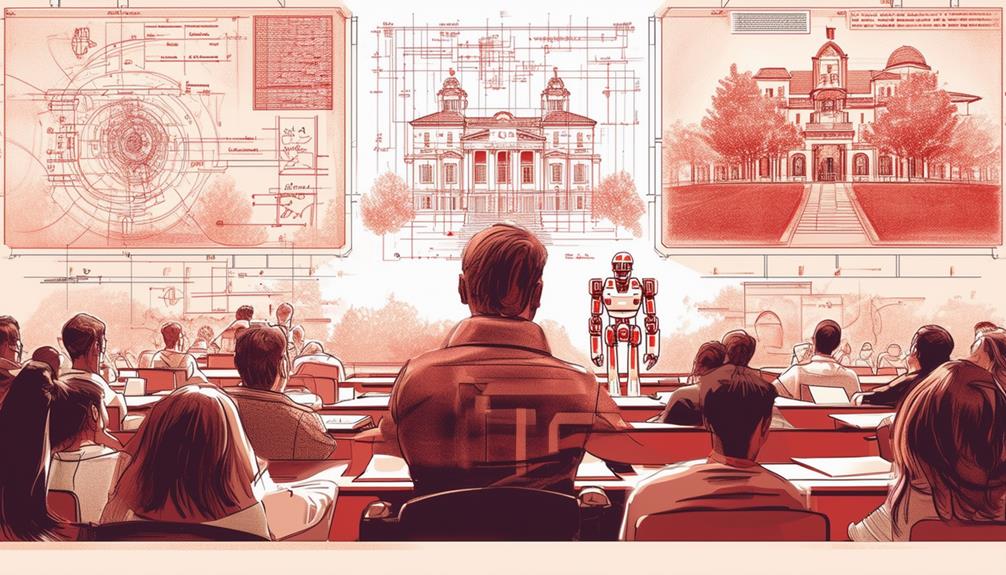
In 1985, Nils Nilsson joined Stanford University's Computer Science Department as a faculty member, marking the start of a significant era for both him and the institution. His expertise quickly earned him the position of department chair, which he held from 1985 to 1990. During this period, he was also honored with the title of Kumagai Professor of Engineering, recognizing his profound contributions to the field.
| Year | Role | Achievement |
|---|---|---|
| 1985 | Joined Stanford University | Faculty Member in Computer Science |
| 1985-1990 | Chair of Computer Science Dept. | Led the Department |
| During Tenure | Kumagai Professor of Engineering | Recognized for Significant Contributions |
As the Kumagai Professor of Engineering, Nilsson significantly advanced research and education in artificial intelligence. He authored several influential books, including the notable 'Principles of Artificial Intelligence,' which has shaped academic discourse and inspired many students and researchers.
Under Nilsson's leadership, the department thrived academically and became a hub for pioneering AI research. His tenure at Stanford solidified his reputation as a leading figure in AI, leaving a lasting legacy that continues to influence the field today.
Awards and Honors
Nilsson's groundbreaking work in AI and robotics has earned him wide recognition and numerous prestigious awards, underscoring his significant impact on the field. Here are some of the most notable accolades:
- IEEE Intelligent Systems AI's Hall of Fame (2011): Inducted for his substantial contributions to AI and robotics, marking a career that has profoundly influenced the field.
- Neural-Network Pioneer Award from the IEEE: Honored for his pioneering efforts and innovations in artificial intelligence and robotics.
- Research Excellence Award and Distinguished Service Award in AI: Recognized for outstanding achievements and dedication to advancing AI and robotics.
- Fellow of the American Association for the Advancement of Science: Acknowledged for his pioneering work in automated planning and robotics, affirming his status as a leading figure in the scientific community.
Additionally, Nilsson served as the president of the Association for the Advancement of Artificial Intelligence (AAAI), further cementing his legacy in the AI community. Each of these recognitions reflects the enduring impact of Nilsson's work on the fields of robotics and AI.
Influence on Modern Technology
Nils Nilsson's pioneering work has profoundly influenced modern technology, particularly in navigation systems and autonomous vehicles. His development of algorithms like A* laid the groundwork for today's navigation systems, such as Waze and Google Maps. When you use these apps to find the quickest route, you're benefiting from Nilsson's groundbreaking research.
Nilsson also significantly advanced autonomous vehicle technology. His early work in AI and robotics forms the foundation of the sophisticated self-driving technologies we see today. Former student Frank Chen highlights Nilsson's enduring impact on navigation technology, noting that his methods are experiencing a resurgence in contemporary AI development. By integrating his rule-based approaches with modern deep learning techniques, today's engineers continue to build on his legacy.
Institutions like the Computer History Museum recognize Nilsson's contributions, underscoring his role in shaping the tech landscape. Whether guiding your GPS or steering an autonomous vehicle, Nilsson's influence remains profound and enduring.
Legacy and Inspiration
Nils Nilsson's groundbreaking contributions continue to inspire today's researchers and innovators in artificial intelligence and robotics. His pioneering algorithms, such as STRIPS and A*, have become foundational tools in the field, attesting to his enduring legacy. Across various universities, Nilsson's work remains a cornerstone in AI and robotics curricula, fostering the development of a new generation of scientists and engineers.
His influence permeates numerous areas:
- Modern Navigation Systems: Technologies like Waze and Google Maps owe much to Nilsson's early work on navigation algorithms.
- Academic Inspiration: Prominent figures such as Andrew Ng and Rodney Brooks frequently acknowledge Nilsson's impact on their careers and research.
- Research Resurgence: There is renewed interest in integrating Nilsson's rule-based approaches with contemporary methods like deep learning, leading to groundbreaking advancements.
- Educational Legacy: Nilsson's textbooks and research papers continue to educate and inspire students worldwide.
Nilsson's efforts have established a robust foundation upon which modern AI and robotics stand. His vision and accomplishments serve as a guiding light for future developments, ensuring that his legacy endures in academic halls and forward-thinking labs globally.
Conclusion
Nils Nilsson's impact on AI and robotics is profound and far-reaching. He developed pivotal algorithms like A* and pioneered automated planning with the STRIPS framework. His work with SHAKEY, one of the first robots to integrate perception and action, has left an indelible mark on the field. Nilsson's contributions continue to drive advancements in modern AI, inspiring future generations and shaping our technological landscape. His legacy as a true pioneer in AI and robotics remains unquestionable.