Key Components in Humanoid Robots: Sensors, Actuators, and Control Systems
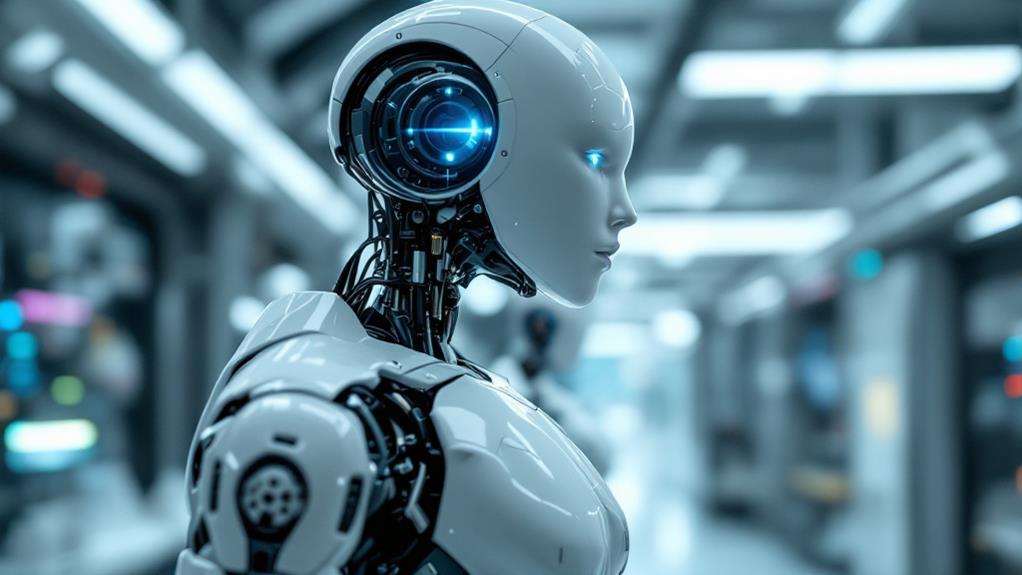
To understand humanoid robots, focus on sensors, actuators, and control systems. Sensors are like a robot's senses—vision, touch, and motion sensors help it perceive and interact with the world. Actuators convert energy to motion, enabling the robot to mimic human actions with precision and fluidity. Control systems manage the interaction between sensors and actuators, ensuring coordinated and realistic movements through feedback loops and adaptive algorithms. These components work together to create robots that respond effectively to their environment. If you're curious about how each of these elements improves robot functionality, investigate further for detailed insights.
Understanding Sensors in Robotics
When delving into the world of robotics, understanding sensors is vital. Sensors act as a robot's eyes and ears, allowing it to perceive and interact with its environment. You'll find that sensor types differ widely, each designed for specific tasks, such as environmental sensing, which enables robots to detect changes in their surroundings. Achieving sensor accuracy is important, as precise data is key to effective robot operation. This is where sensor calibration comes into play, guaranteeing each sensor provides reliable readings.
Sensor fusion emerges as a significant concept, combining data from multiple sensors to create a thorough understanding of the environment. This integration improves a robot's decision-making processes, making your robot more efficient and responsive. Additionally, establishing a sensor network can facilitate communication between diverse sensors, enabling real-time data exchange and processing.
Sensing technologies continue to evolve, offering improved capabilities and broader applications. As you integrate these technologies into your robot, consider how each sensor complements the others. Effective sensor integration guarantees that your robot can adapt to complex environments, respond accurately, and perform tasks with precision. Understanding these elements will improve your ability to design advanced humanoid robots.
Types of Sensors Used
In the domain of humanoid robotics, a variety of sensors are employed to mimic human sensory capabilities. Vision sensors act as the robot's eyes, allowing it to process images and recognize objects. These are essential for navigation and interaction with the environment. Tactile sensors, akin to human skin, enable the robot to sense touch, pressure, and texture, providing important feedback for handling objects delicately or applying the right amount of force.
Environmental sensors help the robot understand its surroundings by collecting data about temperature, humidity, and other atmospheric conditions. This information is critical for adapting to different environments. Proximity sensors allow the robot to detect obstacles and maintain a safe distance from objects or humans, guaranteeing smooth and safe movements.
Motion sensors, including accelerometers and gyroscopes, help the robot maintain balance and posture by detecting changes in orientation and movement. Temperature sensors make sure the robot doesn't overheat during operation, protecting its components. Pressure sensors measure the force exerted by the robot, significant for tasks requiring precise control. Finally, audio sensors enable the robot to perceive sounds, facilitating communication and interaction with humans. By integrating these sensors, you can create humanoid robots that effectively emulate human senses.
Role of Actuators
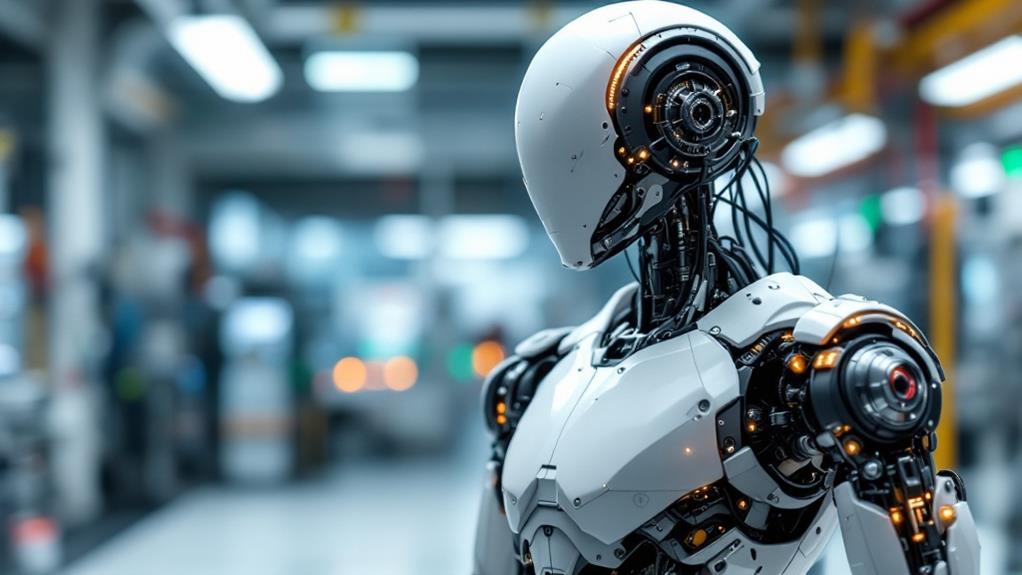
Actuators play a fundamental role in humanoid robots, serving as the muscles that enable movement and interaction with the environment. They convert energy into motion, allowing robots to perform tasks that mimic human actions. Without actuators, your robot wouldn't be able to walk, grasp objects, or even make simple gestures. The efficiency of actuator mechanisms directly impacts how smoothly and accurately the robot can perform these tasks.
When you're designing a humanoid robot, you need to focus on optimizing actuator performance. This involves ensuring that the actuators are not only powerful enough to handle the required tasks but also precise and responsive. You want actuators that provide smooth movement and can handle the stresses of complex motions. Actuator performance is critical for achieving realism and functionality in humanoid robots, as it affects how well the robot can adapt to different environments and tasks.
Moreover, consider how actuator mechanisms integrate with other components, like sensors and control systems. This integration is important for maintaining balance, coordination, and comprehensive functionality. By prioritizing actuator performance, you can improve your humanoid robot's ability to interact effectively and efficiently with its surroundings.
Types of Actuators
Understanding the variety of actuators available is key to tailoring your humanoid robot's capabilities. Actuators are crucial components that help your robot perform movements ranging from simple tasks to complex maneuvers. Here's a quick overview of different types of actuators you might consider:
- Linear Actuators: These are perfect when you need straight-line motion, ideal for tasks like pushing or pulling.
- Rotary Actuators: Use these when rotational movement is required, such as turning a wheel or rotating a joint.
- Pneumatic Actuators: These actuators use compressed air to create movement and are great for applications where quick and repetitive action is needed.
- Hydraulic Actuators: If you're looking for high force and precise control, hydraulic actuators, which use fluid pressure, might be your best bet.
- Smart Actuators: Incorporating sensors and control electronics, these provide feedback and adjust motion in real-time, enhancing your robot's performance.
Don't forget about electromagnetic actuators, which are versatile and efficient, or miniature actuators, perfect for compact spaces. Piezoelectric actuators can offer precision with rapid response times. Each type has its own strengths, so understanding your robot's specific needs will guide you to the right choice.
Exploring Control Systems
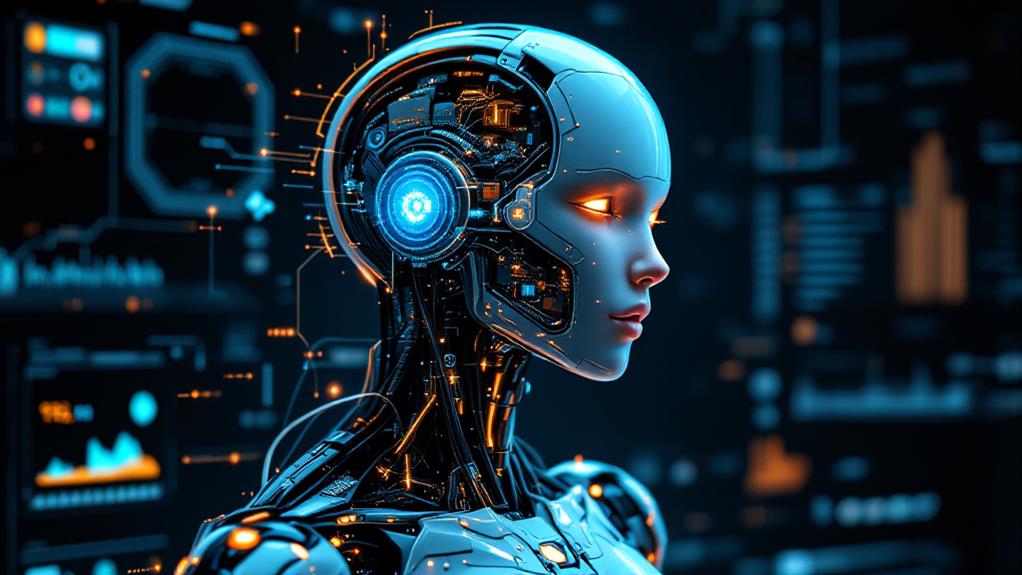
Delving into control systems, you'll uncover the heart of a humanoid robot's functionality. These systems are essential for managing the complex interactions between a robot's sensors and actuators, guaranteeing it behaves as intended. At the core of any effective control system are feedback loops, which continuously monitor the robot's actions and environment. By using feedback, the system can make real-time adjustments, maintaining balance, coordination, and precision in tasks like walking or manipulating objects.
Incorporating adaptive algorithms into control systems allows humanoid robots to learn and improve from their experiences. These algorithms enable the robot to adapt its behavior to different conditions, enhancing flexibility and efficiency. For instance, if a robot encounters a slippery surface, adaptive algorithms help it adjust its walking pattern to avoid slipping.
You must guarantee that control systems are robust and responsive, capable of handling unexpected changes or disturbances in the environment. This requires a careful balance between complexity and efficiency, allowing the robot to operate smoothly without excessive computational demands. Ultimately, a well-designed control system empowers a humanoid robot to interact seamlessly with its surroundings, mimicking human-like movements and decision-making processes.
Integration of Sensors and Actuators
When you engage yourself in the integration of sensors and actuators in humanoid robots, you're stepping into a crucial area that determines how effectively these machines interact with their environment. Sensor fusion and actuator coordination are the backbone of this integration. By blending data from multiple sensors, you create a thorough understanding of the robot's surroundings, enhancing its ability to perform complex tasks. At the same time, coordinating actuators allows the robot to execute precise movements and respond to dynamic situations.
To achieve successful integration, consider these key aspects:
- Real-time Data Processing: Confirm your robot processes sensor data quickly for timely decision-making.
- Seamless Communication: Maintain a robust communication protocol between sensors and actuators to avoid delays.
- Adaptive Algorithms: Implement algorithms that adjust based on changing environmental inputs.
- Redundancy and Reliability: Incorporate redundant sensors to increase reliability and fault tolerance.
- Scalability: Design systems that can easily integrate supplementary sensors or actuators as needed.
Advanced Control Techniques
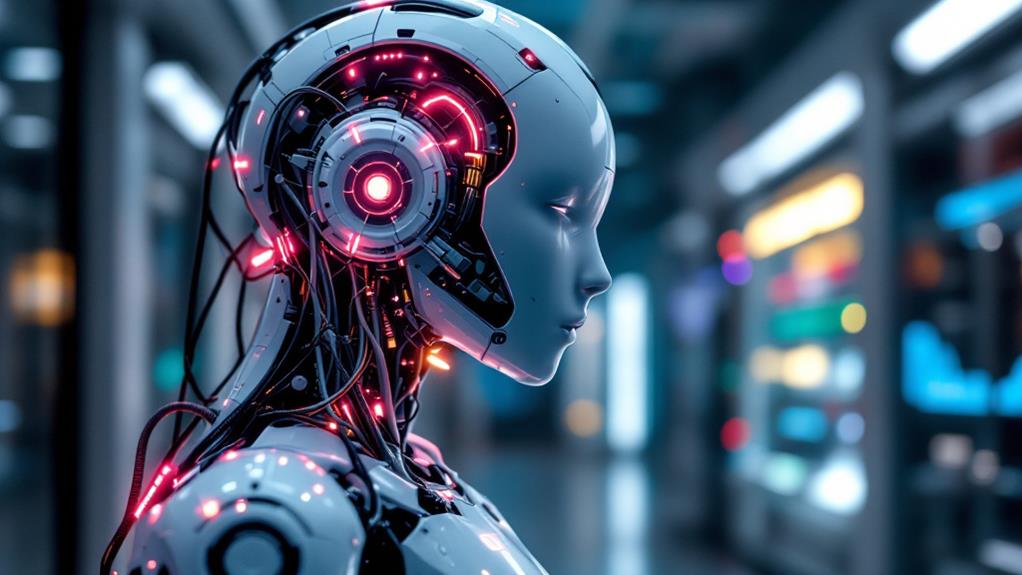
Building upon the foundation of sensor and actuator integration, mastering advanced control techniques is essential for improving a humanoid robot's functionality. You need to focus on control techniques that allow the robot to adapt and respond to changes in its environment effectively. Incorporating adaptive algorithms is a great way to achieve this. These algorithms enable the robot to adjust its actions based on real-time feedback, ensuring smoother and more efficient movements.
Another critical approach is using model predictive control (MPC). This technique involves predicting future states of the robot based on a model of its dynamics. By doing so, the robot can make informed decisions about its actions, optimizing performance while minimizing errors. MPC allows the robot to anticipate and react to potential obstacles or changes in terrain, maintaining stability and balance.
Both adaptive algorithms and model predictive control are significant in ensuring your humanoid robot operates seamlessly in complex environments. They provide the robot with the ability to learn from experiences, improve over time, and handle unexpected situations with ease. By mastering these advanced control techniques, you boost your robot's capabilities, making it more autonomous and efficient in performing tasks.
Challenges in Sensor Implementation
Implementing sensors in humanoid robots presents several challenges that can impact their performance and reliability. You need to guarantee sensor accuracy, which isn't always easy due to numerous environmental factors. Humidity, temperature, and lighting conditions can affect how well sensors perform. Keep in mind that data processing can become a bottleneck, especially when dealing with large volumes of information. Efficient data handling is vital to maintain the robot's responsiveness.
To improve sensor accuracy, consider using sensor fusion, which combines multiple sensor inputs to create a more all-encompassing understanding of the environment. However, this approach requires sophisticated algorithms and calibration methods to ascertain the data is accurately interpreted. Don't overlook cost considerations either, as high-end sensors can greatly increase the total expense of your project.
Here are some challenges you might face:
- Environmental factors that disrupt sensor readings
- Sensor accuracy issues that lead to unreliable data
- Data processing demands that slow down responsiveness
- Calibration methods that are complex and time-consuming
- Cost considerations that affect the project's budget
Guarantee you focus on energy efficiency, as sensors can drain the robot's power quickly if not managed well. Addressing these challenges is vital for developing reliable and efficient humanoid robots.
Future Trends in Robotics Components

Look ahead and you'll see exciting developments shaping the future of robotics components. Machine learning will play an essential role in enhancing real time processing, allowing robots to make decisions faster and more accurately. You'll notice that autonomous navigation is becoming more sophisticated, thanks to adaptive algorithms that process complex environments efficiently.
Human robot interaction is set to improve with sensory fusion, which combines data from multiple sensors to give robots a better understanding of their surroundings. This will lead to more intuitive and seamless interactions. The use of modular designs will provide flexibility, making it easier to upgrade and customize robots according to specific needs.
Energy efficiency is another trend that's gaining traction. By optimizing power consumption, robots can operate longer and perform more tasks without needing frequent recharges. However, as these technologies advance, ethical considerations must be addressed, ensuring that robots are used responsibly and safely.
The development of robust software frameworks will support these innovations, offering a solid foundation for building and deploying advanced robotic systems. By staying informed about these trends, you're better prepared to engage with the rapidly evolving world of robotics, ensuring that your work remains at the cutting edge.
Related posts