Joseph Engelberger: The Father of Industrial Robotics
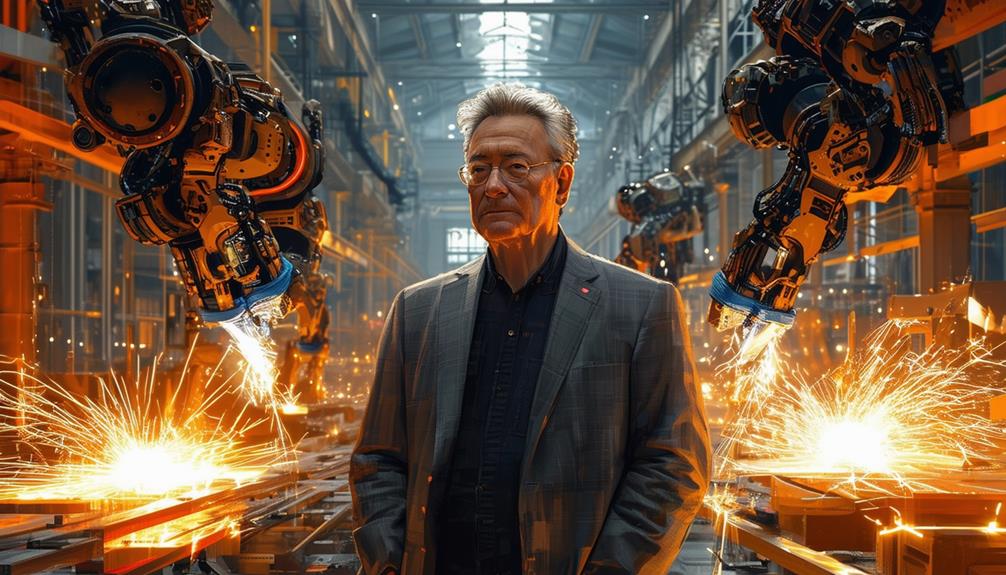
Imagine you're in the 1960s, a time when manufacturing relied heavily on human labor. Then, Joseph Engelberger steps in, co-founding Unimation and introducing the world to the Unimate robot. This innovation didn't just automate tasks; it revolutionized industrial operations, bringing unprecedented efficiency and safety. Engelberger's vision extended beyond manufacturing; he also envisioned robots transforming healthcare and other sectors. What fueled this relentless drive for progress, and how did his journey begin?
Early Life and Education
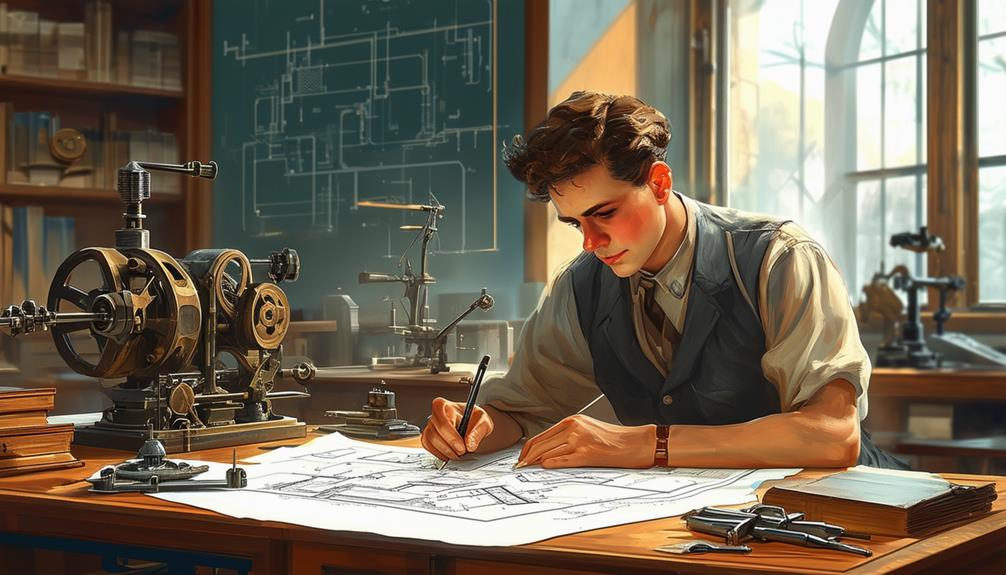
Joseph Engelberger, born on July 26, 1925, in Brooklyn, New York, embarked on a journey that would significantly transform the field of industrial robotics. His early education in Brooklyn laid a strong foundation for his future accomplishments. Demonstrating a keen interest in science and technology from a young age, Engelberger set the stage for his groundbreaking work in robotics.
After completing high school, Engelberger attended Columbia University, where he pursued a degree in physics. Graduating in 1947 with a B.S. in physics, his academic background endowed him with critical thinking and problem-solving skills essential for innovation.
Engelberger began his career at a railroad supply firm, gaining valuable industrial sector experience. However, his passion for robotics soon took precedence. Widely recognized as the Father of Robotics, Engelberger introduced the first industrial robot to the United States, marking a pivotal moment in the field. His early education and career experiences were crucial in shaping his vision and ability to actualize the concept of industrial robots, fundamentally revolutionizing manufacturing processes and establishing him as a pioneer in robotics.
Founding Unimation
Leveraging his early career insights and passion for robotics, Joseph Engelberger co-founded Unimation with George Devol in 1956, marking the birth of a pioneering robotics company. Combining Engelberger's engineering acumen with Devol's inventive genius, they set Unimation on a groundbreaking trajectory in the robotics industry. Their collaboration led to the creation of the first industrial robot, the Unimate, which revolutionized manufacturing processes.
Unimation Inc was officially established in Danbury, Connecticut, in 1961, quickly establishing itself as an industry leader. Engelberger and Devol's visionary leadership ensured that Unimation's innovations extended beyond the Unimate. By 1966, the company had licensed its technology to international giants such as Nokia and Kawasaki Robotics, embedding robotics into various industrial applications worldwide.
Under Engelberger's guidance, Unimation became synonymous with innovation and reliability in robotics. His partnership with George Devol laid the foundation for the modern robotics industry, making Unimation a cornerstone in the history of industrial automation. Their efforts not only transformed manufacturing but also paved the way for future advancements in robotics.
Innovations in Robotics
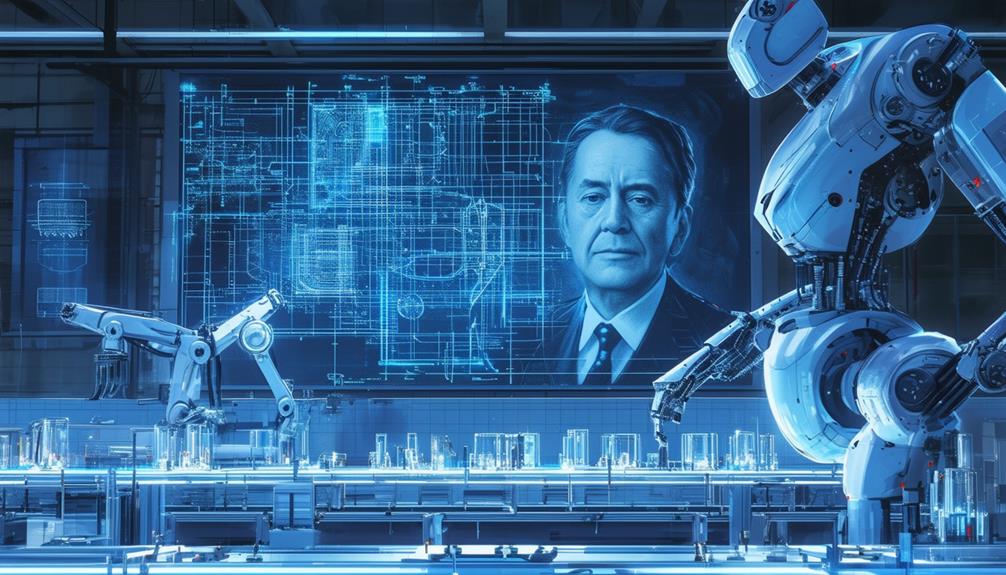
Engelberger's innovations, particularly the Unimate, laid the foundation for modern robotics. His subsequent creation of the PUMA robot set new standards for industrial efficiency, revolutionizing robotic automation. Engelberger's work transformed industries and fundamentally changed our approach to automation.
Unimate's Groundbreaking Development
Unimate's creation in 1961 marked a seismic shift in manufacturing by automating labor-intensive tasks. Joseph Engelberger and George Devol co-engineered this pioneering industrial robot, forever changing production lines by making processes faster, more efficient, and significantly reducing human error. When General Motors purchased the initial Unimate, it wasn't just buying a machine—it was investing in the future of manufacturing. This milestone demonstrated that industrial robots were here to stay. Engelberger and Devol's company, Unimation, became a trailblazer in the field, setting the standard for what industrial robots could achieve.
The success of Unimate didn't go unnoticed. Unimation's impact on the industry was so profound that Westinghouse acquired it in 1982 for $107 million. This acquisition solidified the role of industrial robots in manufacturing and highlighted the transformative power of automation. Through Unimate, Engelberger and Devol sparked an industrial revolution. By automating repetitive and dangerous tasks, they paved the way for a new era in manufacturing where efficiency and innovation go hand in hand.
Robotic Automation Revolution
Joseph Engelberger didn't stop at creating Unimate; he continued to drive the robotic automation revolution with groundbreaking innovations like the Programmable Universal Machine for Assembly (PUMA). Engelberger's relentless pursuit of innovation at Unimation led to the development of PUMA in 1977, a pivotal advancement in integrating robotics into manufacturing processes.
Engelberger's work in industrial robotics didn't just enhance production lines; it revolutionized them. With robots like Unimate and PUMA, he enabled:
- Increased efficiency by automating repetitive and labor-intensive tasks.
- Improved accuracy in manufacturing operations, reducing errors and enhancing product quality.
- Enhanced safety by minimizing human involvement in hazardous environments.
These innovations transformed industries, particularly automotive manufacturing, where streamlined production processes became the norm. By harnessing the power of automation, Engelberger ensured companies could meet higher demands without compromising quality or safety. His contributions laid the groundwork for modern robotics, allowing for the widespread use of robots across various sectors.
Engelberger's visionary approach at Unimation didn't just create machines; it sparked a revolution that continues to evolve, driving advancements in industrial automation and redefining the future of manufacturing.
Contributions to Healthcare
In 1988, Joseph Engelberger, an American physicist and pioneer in industrial robotics, revolutionized healthcare logistics with the introduction of HelpMate, a mobile robot hospital courier. Engelberger envisioned transforming healthcare logistics through automation, leading to the creation of HelpMate Robotics. These robots were designed to assist in delivering medications and supplies within hospitals, significantly enhancing healthcare operations. By reducing the workload on medical staff, HelpMate robots played a crucial role in streamlining hospital logistics.
HelpMate robots were integrated into over 100 hospitals worldwide, profoundly innovating medical care. They efficiently navigated hospital corridors, delivering necessary items quickly, thereby allowing healthcare professionals to dedicate more time to patient care. This automation marked a pivotal shift in hospital operations, making logistics more reliable and efficient.
Engelberger's groundbreaking work was widely recognized. In 1997, he received the prestigious Japan Prize for his contributions to healthcare robotics, highlighting his impact on the field. His vision for healthcare automation has had lasting effects, setting the stage for future innovations in medical robotics. Engelberger's legacy continues to inspire advancements in technology aimed at improving patient care and hospital efficiency.
Recognitions and Awards
Joseph Engelberger's career was marked by numerous accolades that recognized his significant contributions to robotics. From his early career achievements to prestigious industry honors, Engelberger's impact on the field was widely acknowledged. His lifetime contributions earned him some of the highest awards in robotics.
Early Career Achievements
Earning accolades early in his career, Joseph Engelberger's pioneering work in robotics garnered him prestigious awards and recognitions. After earning his degree in electrical engineering from Columbia University, he collaborated with inventor George Devol to create the initial industrial robot, Unimate. The introduction of Unimate at the General Motors plant marked a groundbreaking moment in manufacturing.
Engelberger's inventive contributions were widely recognized. He received the Leonardo da Vinci Award from the American Society of Mechanical Engineers (ASME), a testament to his outstanding work in the field. His election to the National Academy of Engineering further solidified his status as a trailblazer in robotics.
Throughout his career, Engelberger amassed numerous awards that highlighted his influence, including:
- Thomas Egleston Medal for his notable contributions to engineering.
- Recognition from the American Die Casting Institution for advancing robotics in manufacturing.
- An honor from the Robotics Industries Association, emphasizing his role in shaping the industry.
Engelberger's early achievements laid a strong foundation for his lifelong impact on robotics. His work not only transformed industrial practices but also established him as a global advocate for robotics technology. His vision and dedication continue to inspire advancements in the field.
Prestigious Industry Honors
How did Joseph Engelberger's groundbreaking work earn him some of the most prestigious honors in the robotics industry? Engelberger's pioneering efforts did not go unnoticed. As President of Unimation, he not only launched the first industrial robot but also paved the way for future innovations. His contributions were so significant that the American Society of Mechanical Engineers awarded him the Leonardo Da Vinci Award, recognizing his role in establishing the robot industry.
The Robotic Industries Association honored Engelberger by naming an award after him—the Engelberger Awards. This accolade celebrates outstanding achievements in the robotics field, solidifying his legacy. Moreover, he was elected to the National Academy of Engineering, a testament to his distinguished engineering achievements and sociological impact on the industry.
Engelberger's influence extended beyond engineering circles. He received the Japan Prize in Systems Engineering in 1997, and his profile was highlighted in the London Sunday Times. Additionally, he was inducted into various Halls of Fame, underscoring his enduring impact.
Even popular culture acknowledged him; he once appeared on Johnny Carson's show, bringing robotics into mainstream awareness. Engelberger's prestigious industry honors speak volumes about his monumental contributions to industrial robotics.
Lifetime Contribution Awards
Joseph Engelberger's pioneering contributions to the robotics industry have earned him numerous prestigious Lifetime Contribution Awards, cementing his legacy as the 'Father of Industrial Robotics.' His groundbreaking work has garnered accolades from esteemed organizations worldwide.
In 1997, Engelberger received the Japan Prize for his innovative contributions to robotics, particularly for developing the HelpMate robot for medical care. This award underscores his commitment to leveraging technology for the benefit of humanity.
In 1982, the Society of Manufacturing Engineers (SME) honored him with the Progress Award for his pioneering efforts in industrial robotics. That same year, the American Society of Mechanical Engineers (ASME) awarded him the Leonardo da Vinci Award, recognizing his significant influence on the field.
Major recognitions include:
- Japan Prize (1997): For contributions to robotics and the HelpMate robot.
- Progress Award (1982): From the Society of Manufacturing Engineers.
- Leonardo da Vinci Award (1982): From the American Society of Mechanical Engineers.
Additionally, Engelberger founded the foremost robotics trade association in North America and earned numerous honorary doctorates for his leadership in promoting robotic advancements. His profound influence continues to inspire ongoing innovations in robotics technology worldwide.
Lasting Legacy
Joseph Engelberger's groundbreaking innovations and visionary leadership in industrial robotics have left a lasting legacy that continues to drive technological advancements worldwide. As the co-founder of Unimation, the pioneering robotics company, Engelberger set the stage for a new era in automation. His creation of the Unimate robotic arm in 1961 revolutionized manufacturing processes and established the foundation for the robotics industry.
The Unimate showcased the potential of robotic automation, enabling more efficient and precise production lines. Engelberger's innovation did not stop there; in 1977, he introduced the Programmable Universal Machine for Assembly (PUMA), further advancing industrial robotics technology and underscoring his commitment to pushing the boundaries of what robotics could achieve in manufacturing.
Engelberger's influence extended beyond Unimation. His work led to international collaborations, with companies like Nokia and Kawasaki Robotics licensing Unimation's technology. This global impact ensured that his legacy would inspire advancements in automation across various sectors.
Today, Joseph Engelberger's pioneering efforts continue to resonate. His vision and dedication laid the groundwork for modern robotics, making the world more efficient and connected. His legacy remains a cornerstone of the robotics industry, epitomizing innovation and progress.
Conclusion
Joseph Engelberger's visionary work reshaped industries and laid the groundwork for modern robotics. From founding Unimation to developing groundbreaking innovations like the Unimate and PUMA robots, his impact is undeniable. Engelberger's contributions extended beyond manufacturing, touching healthcare and other fields. His numerous recognitions and awards highlight a legacy that continues to inspire future generations. Engelberger wasn't just an innovator; he was a true pioneer whose work will resonate for years to come.