
Introduction to Genetic Algorithms in AI

Exploring genetic algorithms in AI reveals their ability to emulate natural selection principles to efficiently optimize solutions. These algorithms represent potential solutions as binary strings and evolve them through selection, crossover, and mutation processes. By continuously assessing the fitness of these solutions against an objective function, genetic algorithms adapt and improve, making them well-suited for solving complex problems. Interested in how this evolutionary approach can transform AI applications and why it's so effective? Let's delve into the key components and real-world examples that showcase their advantages and limitations.
How Genetic Algorithms Work
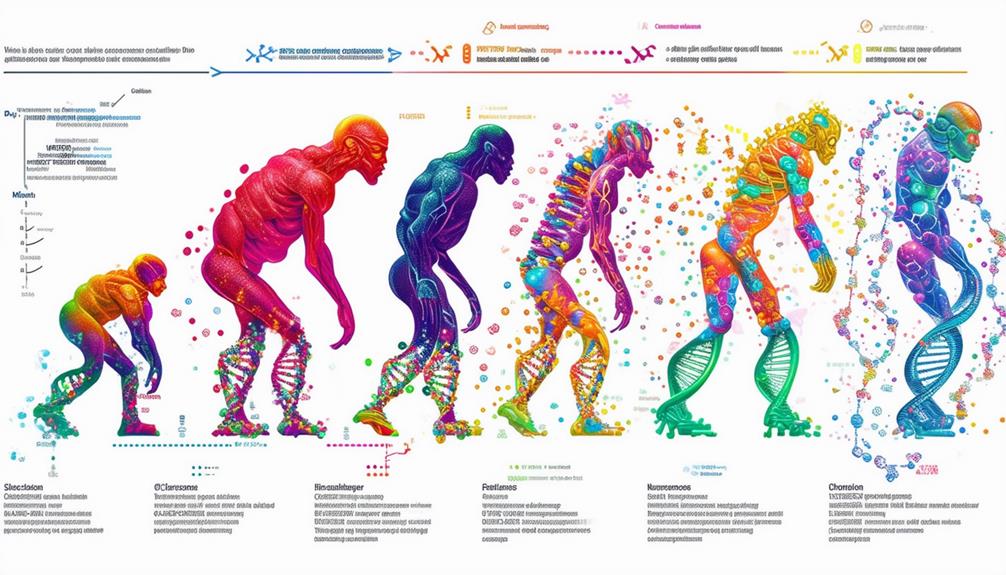
How Genetic Algorithms Work
Understanding genetic algorithms (GAs) begins with recognizing their foundation in natural selection and genetics. At its core, a GA is an optimization process that mimics evolutionary principles to solve complex problems. Key operations in this process include selection, crossover, and mutation.
Initially, potential solutions to a problem are encoded as binary strings, forming an initial population. The GA evaluates these solutions using a predefined fitness function, which measures how well each solution addresses the optimization problem.
The selection process then identifies the best-performing solutions, which are more likely to be chosen for the next generation. This ensures that favorable traits are passed on. Next, crossover operations combine pairs of solutions to produce offspring, mixing their characteristics. This is followed by mutation operations, which introduce small random changes to some solutions, adding genetic diversity and helping the algorithm explore a broader solution space.
Key Components
To understand how genetic algorithms work effectively, it's essential to grasp their key components: selection, crossover, and mutation. These elements collaborate to evolve solutions over generations, steering the algorithm toward optimal outcomes.
Selection involves favoring fitter solutions. In genetic algorithms, candidate solutions are typically encoded as binary strings and evaluated based on a fitness value. The higher the fitness value, the better the solution. By selecting the fittest individuals, the algorithm ensures that superior genetic material is propagated to the next generation.
Crossover, or recombination, combines genetic information from two parent solutions to produce offspring. This operation mimics biological reproduction and enables the algorithm to explore new regions of the solution space by mixing and matching the traits of successful candidates.
Mutation introduces diversity into the population by randomly altering bits in the binary strings. This random tweaking prevents the algorithm from becoming too homogenous and getting stuck in local optima, thereby ensuring a broader search for the global best solution.
Applications in AI

Genetic algorithms (GAs) are invaluable for optimizing machine learning models and parameters in AI due to their versatility. When tackling complex optimization problems, GAs mimic natural selection to efficiently find ideal or near-ideal solutions. This is particularly useful in AI, where fine-tuning machine learning models can be a laborious process. GAs automate parameter tuning, enhancing performance with minimal manual intervention.
In evolutionary robotics, GAs are crucial for evolving robot behavior and control strategies. Instead of manual programming, GAs simulate evolution, enabling robots to adapt and improve their actions over generations. This leads to more efficient and adaptive robotic systems.
In image processing, GAs offer significant advantages for tasks such as image reconstruction and denoising. By optimizing the relevant parameters, GAs help achieve clearer and more accurate images. Whether dealing with noise reduction or image enhancement, GAs provide a robust toolset for refining outcomes.
These applications demonstrate the versatility and potency of genetic algorithms in various aspects of artificial intelligence, making them indispensable in modern AI development.
Real-World Examples
Genetic algorithms are revolutionizing industries by optimizing complex processes efficiently. Tesla, for example, leverages these algorithms to enhance its autonomous driving technology, improving route planning and decision-making to ensure safer and more efficient trips—a reality on today's roads.
In logistics, Amazon employs genetic algorithms to optimize delivery routes, warehouse management, and supply chain processes. This optimization results in faster deliveries and improved resource management, ensuring smooth operations.
Autodesk integrates genetic algorithms into their design tools, aiding in the optimization of product designs, architecture, and engineering solutions. This enables designers to achieve superior outcomes more quickly and effectively.
Uber utilizes genetic algorithms to refine its dynamic pricing strategies. By analyzing real-time demand and supply dynamics, these algorithms help Uber set prices that reflect current market conditions, benefiting both drivers and passengers by balancing supply and demand.
DeepMind's AlphaFold project also employs genetic algorithms to predict protein folding, a significant advancement in computational biology and drug discovery. This breakthrough has the potential to lead to new treatments and a deeper understanding of biological processes.
These examples demonstrate how genetic algorithms are transforming various industries today.
Benefits and Limitations

Genetic Algorithms (GAs) are highly effective for solving complex optimization problems and can generate multiple high-quality solutions. However, they also come with considerable computational demands and potential complexities. It's crucial to evaluate these benefits and limitations carefully to determine the appropriateness of GAs for a given task.
Optimization and Efficiency Gains
Genetic algorithms (GAs) make complex problems more manageable by optimizing vast solution spaces and improving efficiency in finding near-optimal solutions. Mimicking natural selection, GAs evaluate numerous potential solutions and choose the fittest individuals to produce the next generation, iteratively enhancing solution quality.
GAs are adept at handling continuous, discrete, and multi-objective functions. They provide not just a single solution but a range of good solutions, adding flexibility to decision-making processes. This versatility makes GAs valuable in various fields such as engineering, finance, and machine learning, where traditional algorithms may falter.
However, GAs have limitations. They are less suitable for problems where derivative information is available, as traditional optimization methods can be more efficient in such cases. The repeated evaluation of fitness values can be computationally expensive. Additionally, the stochastic nature of GAs means there's no guarantee of finding the optimal solution. Poor implementation can also hinder convergence, leading to suboptimal results.
Complexity and Scalability Issues
Understanding the complexity and scalability of genetic algorithms reveals both significant benefits and inherent limitations. On the benefit side, genetic algorithms excel at navigating vast search spaces, making them particularly adept at solving intricate optimization problems. Their scalability allows them to handle problems with multiple objectives simultaneously, making them versatile tools across various domains. As the algorithm evolves, it generates fitter individuals, continually improving solution quality.
However, these advantages come with some limitations. Genetic algorithms can be computationally expensive, especially when dealing with large population sizes or highly complex problems. They don't always guarantee finding the best solution and can sometimes get trapped in local optima. This trade-off means you need to carefully consider the specifics of your problem to maximize the effectiveness of genetic algorithms.
To summarize the key points:
- Efficiency: Genetic algorithms efficiently navigate large search spaces, making them suitable for complex problems.
- Scalability: They can handle multiple objectives and high complexity levels, adding versatility.
- Limitations: Potential computational expense and risks of getting stuck in local optima.
Further Reading
To deepen your understanding of genetic algorithms, consider exploring a variety of resources. Start with recommended books and academic journals that cover both theoretical foundations and practical applications. Key research papers will provide insights into the latest advancements, while online courses and tutorials offer hands-on experience. This multi-faceted approach will help you effectively grasp and utilize genetic algorithms in artificial intelligence.
Recommended Books and Journals
For those looking to deepen their understanding of genetic algorithms, 'An Introduction to Genetic Algorithms' by Melanie Mitchell is essential for grasping the theoretical foundations. This book delves into the principles of genetic algorithms, covering key concepts such as natural selection and genetics. However, it is primarily theoretical and does not offer extensive practical implementation guidance for solving real-world optimization problems.
To further broaden your knowledge, consider the following resources:
- 'Genetic Algorithms in Search, Optimization, and Machine Learning' by David E. Goldberg: This book provides a blend of theory and practical examples, making it easier to understand how to apply genetic algorithms to optimization problems.
- 'The Handbook of Genetic Algorithms' edited by Lawrence Davis: This resource offers a collection of practical applications and case studies, showcasing the versatility of genetic algorithms across various fields.
- 'Evolutionary Computation: Towards a New Philosophy of Machine Intelligence' by David B. Fogel: This book explores the broader context of evolutionary algorithms, including genetic algorithms, and their applications in artificial intelligence.
These books complement Melanie Mitchell's work by providing a more comprehensive understanding, bridging the gap between theory and practical implementation. They cover different aspects of genetic algorithms, ensuring a thorough and well-rounded learning experience.
Key Research Papers
Curious about the latest advancements in genetic algorithms? Dive into these essential research papers to deepen your knowledge.
Begin with 'A Survey of Optimization by Building and Using Probabilistic Models in Genetic Algorithms' by Pelikan, Goldberg, and Lobo. This paper explores how probabilistic models can enhance genetic algorithms, providing innovative methods to traverse the solution space of intricate optimization problems.
Follow up with 'Theoretical Foundations of Evolutionary Computation' by Luke, Panait, and Balan. This paper offers a comprehensive examination of the theoretical principles underlying evolutionary computation, including genetic algorithms, helping you understand how individuals evolve across generations.
For insights on maintaining diversity within genetic algorithms, read 'An Analysis of Diversity-Preserving Selection Methods for Genetic Algorithms' by Gagné and Parizeau. This paper analyzes selection techniques aimed at preserving a diverse solution pool, crucial for preventing premature convergence.
To delve into genetic programming, consider 'A Survey of Crossover and Mutation in Genetic Programming' by Vanneschi, Gustafson, and Moraglio. This study provides an in-depth look at the crossover and mutation operators essential for generating new individuals in the solution space.
Online Courses and Tutorials
Immerse yourself in online courses and tutorials on genetic algorithms to gain hands-on experience and deepen your understanding of this fascinating AI technique. These resources provide detailed explanations and practical examples to help you master genetic algorithms and tackle optimization problems effectively.
Online platforms like Coursera, Udemy, and edX offer courses designed by experts in computer science and artificial intelligence. Whether you're a beginner or an advanced learner, you'll find content tailored to your skill level. Courses typically cover essential topics such as genetic representation, crossover, mutation, and fitness functions, ensuring you have a thorough understanding of how these components work together to solve optimization problems.
You'll benefit from a variety of learning materials, including code implementations, case studies, and interactive exercises that allow you to apply genetic algorithms in real-world scenarios. By engaging with these resources, you'll be better equipped to utilize genetic algorithms in your projects.
- Practical Examples: Engage in hands-on coding exercises that demonstrate how genetic algorithms solve complex problems.
- Fitness Functions: Learn to design and implement fitness functions for evaluating solutions.
- Expert Instruction: Gain insights from leading professionals in AI and computer science.
Explore these online courses to enhance your expertise in genetic algorithms today!
Conclusion
You've now got a solid grasp of genetic algorithms in AI! By understanding their mechanisms, key components, and diverse applications, you can appreciate their power as an optimization tool. Remember to consider the real-world examples and balance the benefits against the limitations. As you explore further, you'll uncover even more intriguing uses and techniques. So, delve deeper and let genetic algorithms transform your problem-solving approach!