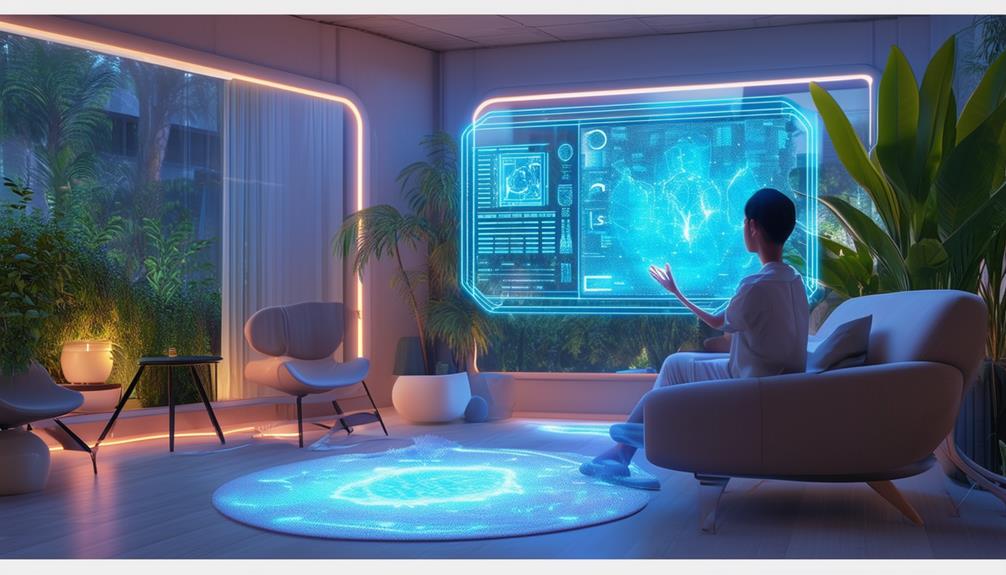
Introduction to AI-Powered Virtual Reality
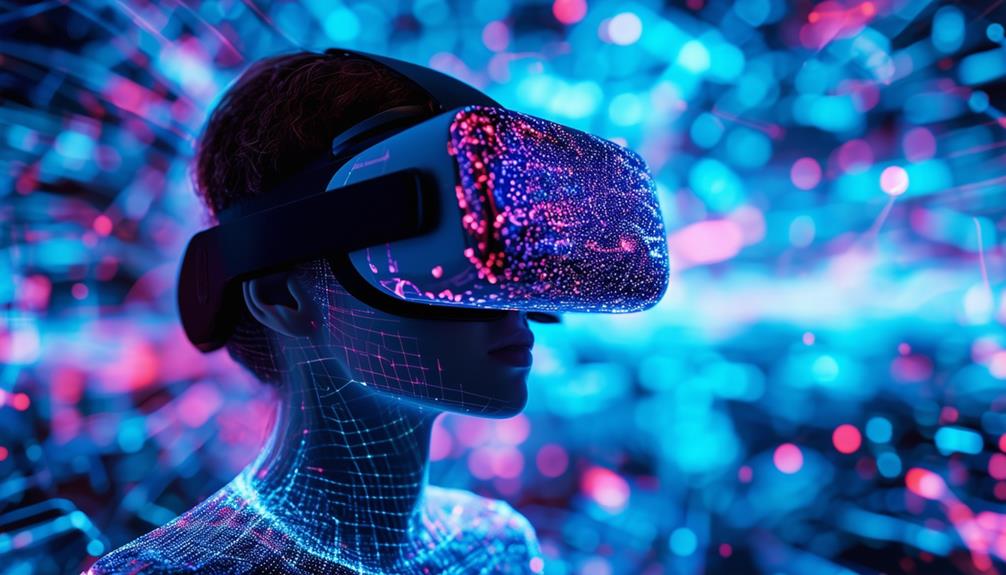
You are about to explore the fascinating convergence of artificial intelligence and virtual reality—two groundbreaking technologies that, when combined, create immersive and customizable environments. AI algorithms can tailor VR experiences to individual preferences, making interactions more personalized and engaging. However, this promising integration comes with its set of challenges, including latency issues and hardware compatibility. Additionally, ethical considerations such as data privacy and algorithmic bias are paramount. So, how does this integration function, and what are its implications across various industries? Let's delve deeper into this compelling topic.
Understanding Artificial Intelligence
Artificial Intelligence (AI) is a technology that enables machines to emulate human intelligence to perform tasks such as decision-making and problem-solving. AI encompasses various technologies, including machine learning, neural networks, and deep learning, which collectively aim to replicate human cognitive functions. These technologies allow machines to analyze data, identify patterns, and make decisions autonomously, without the need for explicit programming.
AI enables machines to engage in natural language processing (NLP), allowing them to understand and generate human language. This capability powers applications like chatbots, which can hold conversations and provide customer support. Additionally, AI can create personalized experiences by analyzing user data to tailor responses or recommendations based on individual preferences.
Machine learning and neural networks are fundamental to AI, enabling machines to improve their performance over time. Deep learning, a subset of machine learning, uses layered neural networks to handle complex tasks such as image and speech recognition. By understanding and leveraging these AI technologies, one can appreciate their potential to revolutionize industries such as healthcare, finance, gaming, and autonomous vehicles, driving advancements and creating more dynamic and responsive systems.
Exploring Virtual Reality
Virtual Reality (VR) technology immerses users in computer-generated environments that replicate real-world experiences. By utilizing headsets and sensors, VR tracks movements and creates interactive settings that are both captivating and realistic. Whether you're navigating a fantasy land in a video game or exploring a detailed architectural model, VR applications are diverse and extensive.
From gaming and healthcare to education and industrial simulations, VR's applications are numerous. Consider training for a medical procedure in a risk-free, realistic environment, or learning history by virtually stepping into ancient civilizations. These immersive virtual experiences transport users to different worlds and scenarios, making learning and entertainment more dynamic and interactive.
Artificial Intelligence (AI) plays a crucial role in enhancing these virtual environments. AI in VR facilitates the creation of more realistic settings and responsive interactions, making the experience more lifelike. AI-enhanced VR systems are smarter and more adaptive, responding to user actions and preferences to create a seamless blend of reality and simulation. As VR technology continues to advance, the integration of AI ensures that these experiences remain at the forefront of innovation, providing immersive and engaging interactions.
AI in Enhancing VR Experiences
In a VR world, AI algorithms operate behind the scenes to create a highly immersive and interactive environment. They precisely track your movements, adapt the experience based on your actions, and utilize natural language processing for seamless communication. This intelligent content generation ensures that every moment in VR feels uniquely tailored to you.
Realistic Environment Rendering
AI algorithms excel at creating lifelike virtual environments by analyzing data from real-world settings, thereby making VR experiences more immersive and authentic. These AI-powered systems elevate the quality of digital content, ensuring that every detail in virtual environments is realistic and visually stunning. By replicating real-world elements, AI contributes to VR applications that are not only engaging but also offer a high degree of authenticity.
Imagine stepping into a VR world where every tree, building, and shadow looks and feels true to life. AI's ability to process and interpret vast amounts of real-world data allows it to recreate these elements with remarkable precision. This leads to a virtual environment that doesn't just look good but feels right, thereby enriching your overall experience.
Moreover, AI-driven technology continuously improves the realism and detail of these environments, making each VR session more compelling than the last. The result is a VR world that captivates your senses and immerses you fully, thanks to the enhanced realism and quality brought about by AI. You get to enjoy a seamless blend of impressive visuals and engaging content, making your VR experiences truly unforgettable.
Adaptive User Interactions
Imagine a VR experience that evolves based on your actions and preferences, creating a tailor-made adventure just for you. By leveraging AI, adaptive user interactions transform virtual reality into something truly personal and engaging. AI algorithms analyze your behavior, making real-time adjustments to the environment. This allows for personalized content delivery that keeps you immersed and invested in your VR journey.
- AI enhances adaptive user interactions, making each experience unique.
- Real-time adjustments driven by AI ensure the virtual world responds to your actions and choices.
- Customized content delivery keeps you engaged by presenting scenarios that align with your interests.
- Increased user satisfaction stems from the high quality and personalization of these immersive experiences.
These AI-driven features significantly enhance the overall quality and personalization of VR, fostering higher engagement and user satisfaction. The system learns from your interactions, continually refining the experience to suit your preferences. As a result, every session feels fresh and customized to you, providing a sense of connection and excitement that traditional VR setups can't match. The future of VR lies in these intelligent, adaptive experiences that place you at the center of your virtual adventure.
Intelligent Content Generation
Leveraging AI, intelligent content generation crafts incredibly lifelike virtual environments that significantly enhance your VR experience. Advanced AI algorithms meticulously analyze real-world data to create visually stunning and immersive environments. By learning from actual environments, these systems generate virtual content that is rich in detail and authenticity.
Imagine stepping into dynamic virtual worlds where every interaction feels real. AI ensures that these lifelike experiences are not only visually appealing but also filled with realistic behaviors. This means the virtual characters and objects you encounter behave in ways that mirror the real world, making your experience more engaging and believable.
| Feature | Description |
|---|---|
| AI Algorithms | Analyze real-world data to enrich virtual content. |
| Immersive Environments | Generate visually stunning, lifelike experiences. |
| Realistic Behaviors | Ensure captivating interactions with virtual entities. |
Intelligent content generation revolutionizes VR by continuously adapting and improving virtual environments. As you navigate these intelligent environments, you'll notice that every detail significantly contributes to the overall immersion. The potential for AI to craft dynamic virtual worlds means your VR experiences will keep evolving, offering new levels of engagement and realism.
Applications in Various Sectors
AI-powered virtual reality is transforming various industries by offering innovative solutions tailored to specific sector needs. In education, AI integration facilitates the creation of interactive content that adapts to each student's learning pace, making education more engaging and effective. In healthcare, AI-driven VR provides realistic simulations for medical professionals to practice complex procedures in a risk-free setting, thereby enhancing training and improving patient outcomes.
Architecture and design greatly benefit from AI in VR, enabling the creation of detailed 3D models and interactive visualizations. This allows clients to examine and modify designs before construction, leading to more accurate and satisfying results. The gaming industry leverages AI for dynamic gameplay, creating adaptive environments and challenges that keep players engaged. AI-driven VR games offer personalized experiences that adjust based on player behavior and preferences.
Retail is also experiencing a transformation with AI-powered VR shopping experiences. These provide personalized recommendations and immersive product interactions, allowing customers to virtually try products and make informed purchasing decisions.
Technical Challenges

In AI-powered virtual reality, you'll encounter notable technical challenges, particularly related to latency and performance. Ensuring hardware compatibility is crucial to optimize processing power and enhance user experience. Balancing these factors is essential for creating seamless and immersive VR environments.
Latency and Performance Issues
Latency and performance issues are critical challenges in virtual reality (VR) that can significantly disrupt user experience and immersion. In VR, latency refers to the delay between a user's actions and the system's response. High latency can cause motion sickness and disorientation, greatly impacting user comfort. Thus, maintaining low latency is essential for smooth interactions and realistic feedback.
Performance issues, such as dropped frames or lag, can be equally disruptive. These issues can break the sense of immersion, making the virtual world feel less convincing and more frustrating. Addressing these challenges requires both hardware and software optimizations:
- Hardware optimization: Upgrading components like GPUs, CPUs, and memory to handle VR's demanding requirements can reduce latency and improve overall performance.
- Software optimization: Efficient coding practices and algorithms can enhance system responsiveness and stability.
- AI integration: AI can predict user actions to pre-render scenes, thus minimizing latency and enhancing immersion.
- User comfort: Implementing these optimizations can reduce motion sickness, ensuring a more comfortable and enjoyable VR experience.
Addressing latency and performance issues is key to creating a compelling and immersive virtual reality environment.
Hardware Compatibility Constraints
Balancing power consumption, processing power, size, weight, and user comfort presents significant technical challenges for VR headsets, especially when integrating AI. The inclusion of AI can increase the weight and heat of the device due to the additional processing power required. Therefore, developers must focus on creating energy-efficient chipsets capable of handling AI tasks without compromising usability.
One primary hardware constraint is balancing power consumption with high functionality. AI algorithms require substantial processing power, which can quickly drain the battery and generate excess heat. To address this, researchers are developing low-power chipsets specifically designed for VR/AR applications. These chipsets aim to optimize performance without increasing power consumption or adding unnecessary weight.
Compatibility constraints are also critical. VR headsets must seamlessly integrate AI features without causing discomfort or reducing battery life. Ensuring the hardware supports AI integration without compromising user experience demands meticulous engineering. As you explore AI-powered VR solutions, consider how these hardware challenges might influence your choices and the system's overall performance. Balancing these factors is crucial for advancing VR technology effectively.
Ethical Considerations
When exploring AI-powered virtual reality, it is crucial to address ethical concerns related to privacy, bias, transparency, user consent, and job displacement. Privacy issues stem from the extensive data collection required to create personalized VR experiences. Without robust safeguards, this data could be misused or insufficiently protected, jeopardizing user privacy.
Bias in AI algorithms can lead to unfair or discriminatory outcomes, affecting user interactions within virtual environments. Transparency in AI decision-making is essential for building trust, as users need to understand the rationale behind certain decisions. This transparency helps reduce the risk of hidden biases impacting VR experiences.
User consent is another critical consideration. Users must be fully informed about how their data will be utilized and given the option to opt in or out. Without explicit consent, ethical dilemmas arise, challenging the integrity of the VR experience.
Lastly, job displacement due to AI integration in virtual reality raises significant concerns about workforce impact. As AI assumes roles traditionally performed by humans, the ethical implications for job security and economic stability must be addressed.
Future Developments

Imagine a future where AI-powered virtual reality creates seamless and hyper-realistic alternate realities, transforming our interactions, work, and play. With advancements in AI and VR technologies, the metaverse will become a hub for immersive interactions, offering lifelike environments previously unimaginable. This evolution will be driven by deep research and innovation in AI, AR, VR, and other immersive technologies.
As AI and VR converge, expect a wave of creative applications across various industries. In healthcare, AI can simulate complex surgeries in virtual environments, enhancing training and precision. In education, immersive experiences will make learning more engaging and interactive, breaking down traditional barriers. Businesses will utilize AI and VR for virtual meetings, fostering a digital transformation that redefines remote work.
The metaverse will become a daily reality, providing users with unprecedented immersive interactions. AI's ability to analyze and adapt to user behavior will create personalized virtual worlds, enhancing user engagement and satisfaction. This seamless integration of AI and VR will drive the next phase of the digital revolution, setting the stage for endless possibilities in immersive experiences and virtual environments.
Conclusion
You've now glimpsed the fascinating world of AI-powered virtual reality. By combining AI and VR, we are fostering personalized, immersive experiences that revolutionize industries from gaming to architecture. While technical challenges and ethical concerns persist, continuous advancements pave the way for a promising future. Embrace the potential of AI-powered VR and imagine the endless possibilities it holds for transforming our digital experiences and beyond.