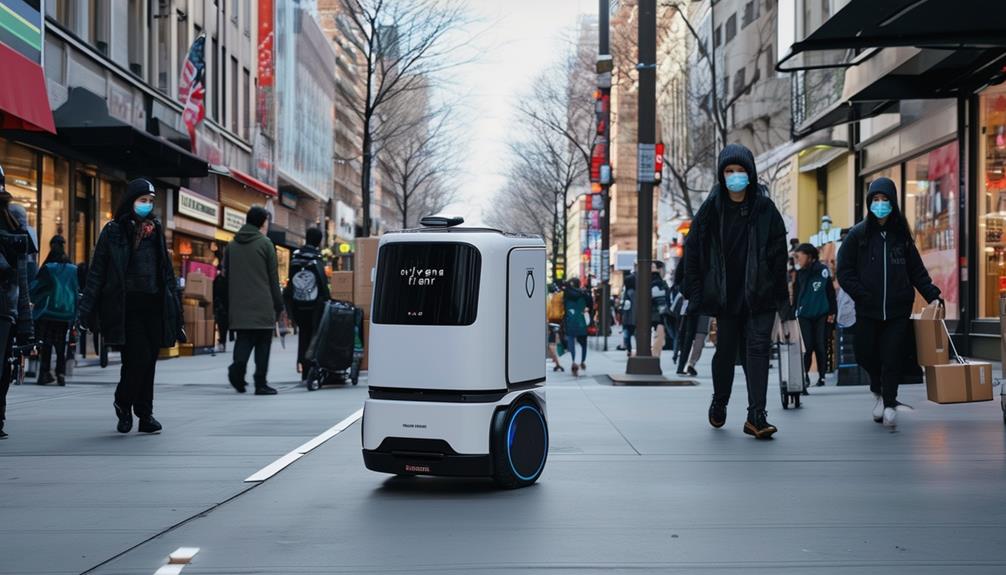
How Legged Robots Achieve Balance and Mobility Across Varied Terrains
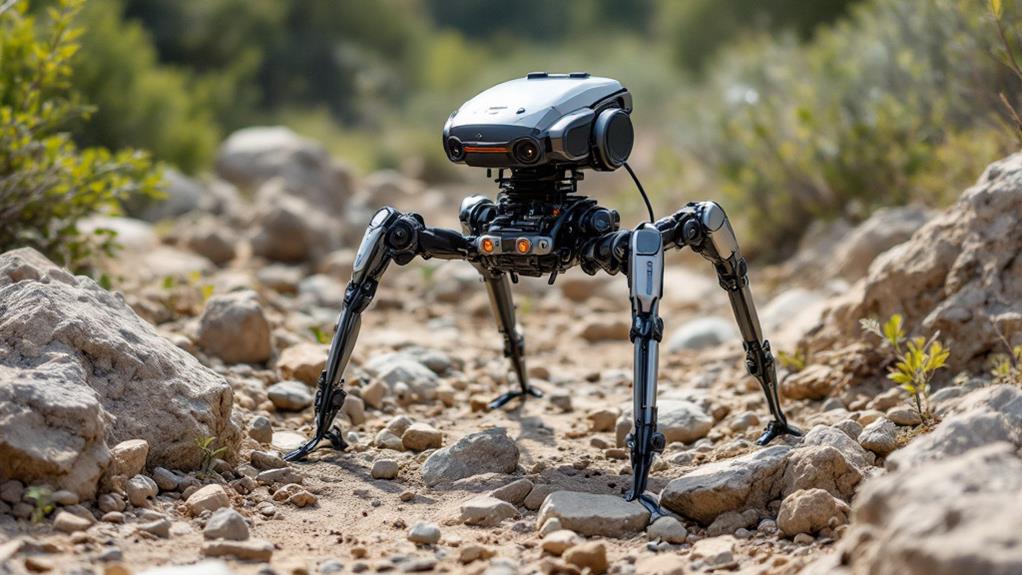
Legged robots achieve balance and mobility by combining advanced sensors, adaptive algorithms, and groundbreaking design. They use real-time feedback from sensors like accelerometers and cameras to adjust their posture and gait as they navigate varied terrains. This enables them to maintain stability over uneven ground and obstacles. The algorithms process this data, helping the robots anticipate environmental changes and make quick corrections. Their structural design improves their ability to maneuver through challenging landscapes while conserving energy. If you're intrigued by how these robots evolve and tackle real-world applications, there's much more to investigate!
Overview of Legged Robots
Legged robots represent a fascinating intersection of biology and technology, mimicking the movement of animals to navigate complex environments. As you investigate the world of legged robots, you'll notice how they've undergone significant robotic evolution over the years. These machines are designed to replicate the agility and adaptability of different species, allowing them to traverse challenging terrains where wheeled robots often struggle.
You'll find that mobility innovations play an essential role in their development. Engineers and researchers focus on mimicking the natural gait of animals, whether it's the bounding of a kangaroo or the precise steps of a dog. This bio-inspired approach has led to breakthroughs in balance and locomotion, enabling these robots to handle obstacles and uneven surfaces with ease.
Additionally, the varied applications of legged robots are impressive. From search and rescue missions in disaster-struck areas to investigating other planets, these robots are proving their worth in multiple fields. As you probe deeper into the domain of legged robots, you'll appreciate how they continue to evolve, pushing the boundaries of what's possible in robotics and mobility.
Key Components of Legged Robots
What makes legged robots so effective at maneuvering tricky terrains? The answer lies in their key components. Initially, actuator types play an essential role in defining a robot's movement, with options ranging from electric motors to hydraulic systems. These actuators work in harmony with sophisticated control systems that manage the robot's gait and balance.
You'll also find that locomotion strategies vary greatly, adapting to the terrain's demands. Regardless of whether it's walking, running, or climbing, these strategies optimize energy efficiency, ensuring that the robot uses power judiciously. The structural design of legged robots is fundamental too; it influences how well they can traverse obstacles and maintain stability.
Material selection is another significant factor. Lightweight yet durable materials improve mobility while minimizing energy consumption. Foot mechanisms and joint configurations further contribute to their adaptability. For instance, specialized foot designs allow for better grip on uneven surfaces, while flexible joints enable a range of movement that's essential for maneuvering varied terrains.
In essence, these components work together, making legged robots exceptionally capable of traversing challenging environments with agility and precision.
Understanding Balance in Robotics
Achieving balance in robotics involves a complex interplay of sensors, algorithms, and mechanical design. To maintain dynamic equilibrium, robots need to constantly adjust their posture and movements based on real-time feedback from their environment. This balance is vital, especially when maneuvering varied terrains that can challenge stability.
Your understanding of robotic gait is fundamental here. The way a robot moves—its gait—affects its ability to stay balanced. For instance, a bipedal robot might use a different gait pattern when walking on uneven surfaces compared to flat ground. The algorithms driving these movements analyze data from sensors, helping the robot adapt its gait to maintain stability.
You'll notice that successful robots often exhibit a remarkable ability to predict and respond to shifts in weight and external forces. This responsiveness is key to achieving dynamic equilibrium. By continuously refining their movements and learning from past experiences, these robots can improve their balance over time. Essentially, mastering balance in robotics isn't just about the mechanics; it's about creating a harmonious relationship between movement, feedback, and environment.
Sensor Technologies in Motion
How do sensor technologies improve the mobility of legged robots? These technologies play an essential role in enabling robots to navigate complex environments. You'll find that sensor fusion, the process of integrating data from multiple sensors, improves the robot's perception of its surroundings. By combining inputs from accelerometers, gyroscopes, and cameras, the robot can achieve a thorough understanding of its position and orientation.
Motion tracking is another critical component. It allows the robot to monitor its movements in real-time, adjusting its gait and posture based on the feedback it receives. This capability is particularly significant when traversing uneven terrain, where stability is paramount. With accurate motion tracking, the robot can anticipate changes in the environment, like obstacles or slopes, and react promptly.
Algorithms for Dynamic Stability
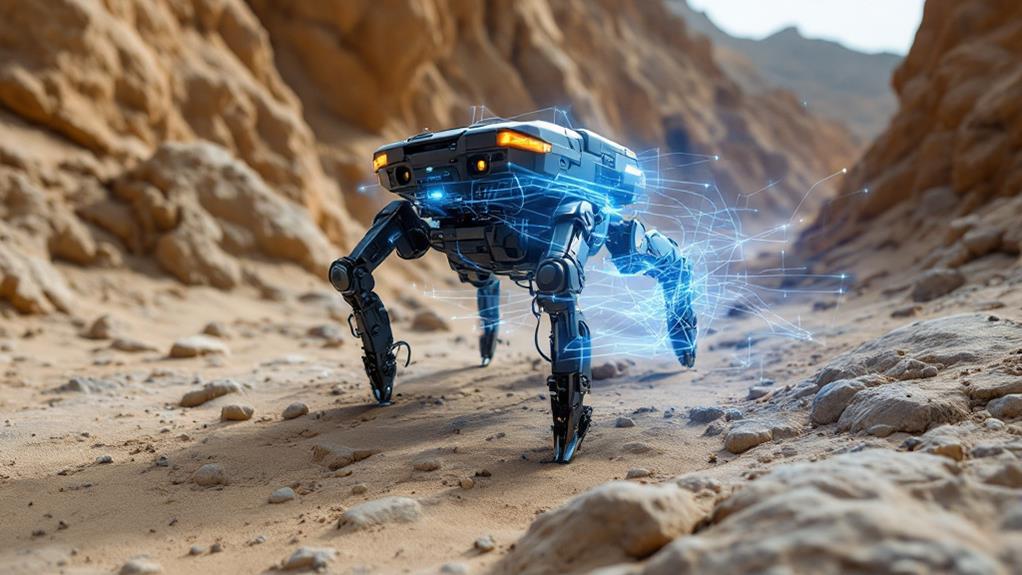
While traversing unpredictable terrains, legged robots rely on advanced algorithms for dynamic stability to maintain their balance. These algorithms utilize dynamic programming techniques to compute ideal movement strategies in real-time. By processing data from sensors, the robot can predict its future states and adjust its actions accordingly.
Stability analysis plays an essential role in these algorithms. It involves evaluating the robot's posture and the forces acting on it to determine if it can maintain balance under varying conditions. By analyzing how the robot's center of mass shifts during movement, you can identify potential instabilities before they occur.
Incorporating feedback loops, these algorithms continuously monitor the robot's position and make instantaneous corrections. This responsiveness is key to maneuvering difficult terrains, like rocky surfaces or uneven ground. By leveraging both dynamic programming and stability analysis, legged robots can adapt their gait, ensuring they remain upright even in challenging environments.
Ultimately, these sophisticated algorithms help bridge the gap between robotic design and real-world application, allowing legged robots to achieve a level of mobility that mimics natural movement.
Adapting to Various Terrains
Legged robots excel at adapting to diverse terrains, thanks to their ability to modify their gait and posture in response to changing surfaces. This terrain adaptation is fundamental for effective locomotion strategies, enabling robots to traverse everything from rocky paths to soft sand. By analyzing surface interaction, these robots can adjust their foot placement and movement patterns, ensuring ideal grip and balance.
Environmental perception plays a key role in this process. Sensors gather data about the terrain, allowing the robot to make rapid stability adjustments. Such adjustments are necessary for maintaining energy efficiency, as the robot learns to conserve power while maneuvering through challenging landscapes.
When faced with obstacles, legged robots employ sophisticated obstacle negotiation techniques, effectively maneuvering around or over barriers. Traction management becomes critical in these scenarios, as the robot must determine the best way to maintain grip without losing stability.
Real-World Applications of Legged Robots
In multiple industries, legged robots are proving invaluable for tasks that require mobility and adaptability in unpredictable environments. In disaster response scenarios, these robots can navigate through rubble, helping to locate survivors during search and rescue operations. Their ability to traverse uneven terrain makes them ideal for agricultural automation, where they can assist in planting and harvesting crops efficiently.
In industrial settings, legged robots are employed for inspection tasks, reaching areas that are difficult for traditional machines. They can also improve wildlife monitoring by traversing varied landscapes while collecting valuable data without disturbing ecosystems. In transportation logistics, these robots can aid in moving goods across warehouses, optimizing efficiency.
Construction assistance is another key application, where they help with material transport on job sites, reducing manual labor. Finally, the entertainment industry is tapping into legged robots for interactive experiences, creating engaging attractions that captivate audiences. By leveraging their unique capabilities, legged robots are transforming how we approach different tasks, providing cutting-edge solutions across many sectors.
Challenges in Terrain Navigation
Maneuvering uneven terrain poses significant challenges for legged robots, often pushing the limits of their design and functionality. You must consider how these robots handle obstacle detection and terrain classification to navigate effectively. Without accurate perception of their environment, they can struggle with multi-surface navigation, making it difficult to traverse diverse landscapes.
To overcome these hurdles, robots rely on adaptive gait and advanced locomotion strategies. By employing real-time adjustments, they can modify their movements in response to changing conditions, ensuring stability and balance. However, this adaptability often comes at the cost of energy efficiency, as constant adjustments can drain power reserves quickly.
Furthermore, effective environmental perception is vital for successful navigation. It helps robots anticipate obstacles and plan their paths accordingly. Without it, legged robots might struggle to keep up with the demands of varied terrains. Ultimately, the ability to implement robust obstacle detection, real-time adjustments, and efficient locomotion strategies can make a significant difference in how well these robots perform in challenging environments. Addressing these challenges is fundamental for enhancing legged robots' capabilities and expanding their practical applications.
Future Trends in Robotic Mobility
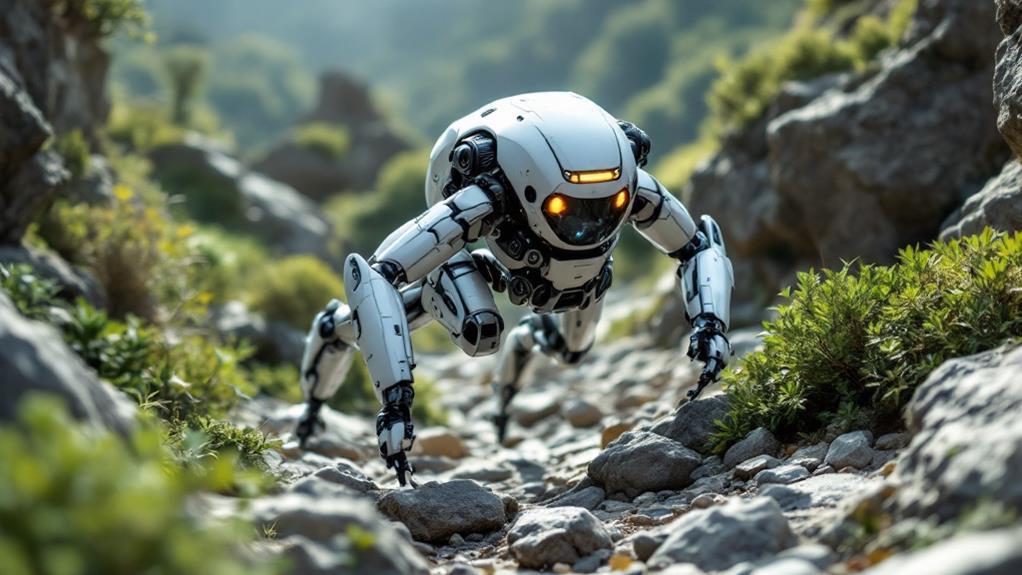
As robotic mobility continues to progress, researchers are pushing the boundaries of what's possible in legged design and functionality. You'll notice that robotic advancements are leading to mobility innovations that improve terrain adaptability. Future applications of these technologies promise to revolutionize how robots navigate complex environments, allowing for smoother shifts across varied terrains.
One significant trend is the use of autonomous navigation, where robots can independently assess their surroundings and adjust their paths in real-time. With machine learning algorithms, robots are becoming smarter, learning from past experiences to improve their performance. This adaptability is essential for tasks ranging from search and rescue missions to delivering goods in urban areas.
Moreover, sensor integration is playing a significant role in robotic evolution. Advanced sensors provide robots with rich environmental data, enabling them to detect obstacles, assess terrain conditions, and make informed decisions. As these technologies converge, expect to see legged robots that not only mimic human movement but also exceed our capabilities in challenging landscapes. The future of robotic mobility is bright, and you're witnessing the birth of a new chapter in robotics that could redefine how we interact with machines.
Case Studies of Successful Robots
While many legged robots are still in development, several have already demonstrated remarkable success in real-world applications. These robots showcase advanced robotic locomotion and adaptive behaviors, proving they can navigate a range of terrains with ease. For instance, Boston Dynamics' Spot can traverse rocky landscapes, climb stairs, and even open doors, making it a versatile tool in fields like construction and security.
Here are some inspiring examples of successful legged robots:
- RoboCup Soccer: These robots compete in soccer matches, showcasing teamwork and agility.
- ANYmal: This four-legged robot excels in inspection tasks in industrial settings, enhancing safety and efficiency.
- Cassie: With its unique bipedal design, Cassie can walk, run, and even dance, illustrating the potential for robotic companions.
- PETMAN: Designed for testing military gear, PETMAN moves like a human, adapting to diverse environments and challenges.
These case studies not only highlight the incredible advancements in robotic technology but also evoke excitement about the future possibilities of legged robots in our everyday lives.
Related posts