How Humanoid Robots Like Honda’s ASIMO Work: Key Hardware Innovations
Humanoid robots like Honda's ASIMO rely on key hardware advancements to mimic human behavior and interact with users. They utilize advanced sensors, including cameras for vision and LIDAR for depth perception, enabling them to navigate complex environments. Creative actuators allow for agile movements, closely replicating human limb motion. With sophisticated processing power, these robots can analyze data in real-time, adapting their actions quickly. Their motion control systems guarantee stability and balance, while robust communication interfaces improve interactions with users. Uncovering more about their groundbreaking features reveals even more about the future of robotics and human-robot collaboration.
Overview of Humanoid Robotics
Humanoid robotics is transforming how we interact with technology. As you investigate this fascinating field, you'll notice that humanoid design plays an important role in creating robots that mimic human appearance and behavior. This design not only improves user experience but also fosters a sense of connection between humans and robots. You might find it intriguing how these robots can perform tasks ranging from simple interactions to complex movements, making them valuable in different sectors, including healthcare and customer service.
However, with this advancement comes a significant responsibility—robot ethics. You'll need to reflect on the implications of integrating humanoid robots in everyday life. Questions arise about their impact on employment, privacy, and social behavior. It's important to think critically about how these robots should be programmed, especially in situations requiring moral judgment. As you investigate deeper into humanoid robotics, you'll realize that balancing innovation and ethical considerations is crucial for ensuring a positive future. This awareness will shape your understanding of how humanoid robots can not only improve our lives but also maintain our values as technology continues to evolve.
Key Hardware Components
When exploring humanoid robots, you'll quickly uncover that key hardware components are vital for their functionality and performance. One of the most significant components is the robot vision system, which allows the robot to perceive its environment. This system typically includes cameras and sensors that help the robot identify objects, navigate spaces, and interact with humans. Effective robot vision is fundamental for tasks like avoiding obstacles and recognizing faces.
Another important hardware element is the motor and joint systems, which provide movement and flexibility. These systems are often equipped with advanced actuators that mimic human muscle movement, enabling the robot to walk, run, or perform intricate tasks.
To maintain stability while moving, humanoid robots rely on balance algorithms. These algorithms process data from gyroscopes and accelerometers to adjust posture in real-time, ensuring the robot remains upright and coordinated. By combining robot vision with sophisticated balance algorithms, humanoid robots achieve greater mobility and adaptability in dynamic environments. Together, these key hardware components form the backbone of humanoid robotics, allowing these machines to function effectively and interact meaningfully with the world around them.
Advanced Sensors
The effectiveness of humanoid robots heavily relies on advanced sensors that improve their perception and interaction capabilities. These sensors allow robots like Honda's ASIMO to navigate complex environments and engage with humans effectively. By utilizing different sensor types, these robots can gather critical sensory feedback that informs their actions and decisions.
- Vision Sensors: Cameras and LIDAR systems provide depth perception and object recognition.
- Proximity Sensors: Ultrasonic and infrared sensors help detect nearby objects and obstacles.
- Touch Sensors: These sensors enable robots to gauge pressure and contact, improving interaction with users.
With these advanced sensors, humanoid robots can interpret their surroundings, identify potential hazards, and understand human gestures or speech. This sensory feedback is crucial for executing tasks safely and efficiently. By continually processing data from these sensors, robots adapt their behavior in real-time, enhancing their ability to work alongside humans in different settings. As technology evolves, expect even more sophisticated sensors to emerge, further increasing the potential for humanoid robots to become integral parts of our daily lives.
Innovative Actuators
Incorporating groundbreaking actuators is crucial for improving the agility and dexterity of humanoid robots. These inventive components play a critical role in mimicking human movement, enabling robots to perform complex tasks with precision. By utilizing soft robotics, engineers can create actuators that are both flexible and resilient. This flexibility allows robots to adapt their movements, providing a more natural interaction with their environment.
Moreover, bio-inspired design principles are transforming actuator technology. By studying how muscles and tendons work in biological organisms, researchers develop more efficient and effective actuators. These bio-inspired actuators can replicate the intricate motions of human limbs, improving the robot's ability to navigate different terrains and perform delicate tasks.
You'll find that the combination of soft robotics and bio-inspired design leads to actuators that not only improve performance but also guarantee safety. These actuators can better absorb shocks and prevent injuries during interactions with humans. As humanoid robots continue to evolve, inventive actuators will be at the forefront, enabling them to achieve unprecedented levels of agility and versatility. Embracing these advancements is key to revealing the full potential of humanoid robots in real-world applications.
Processing Power
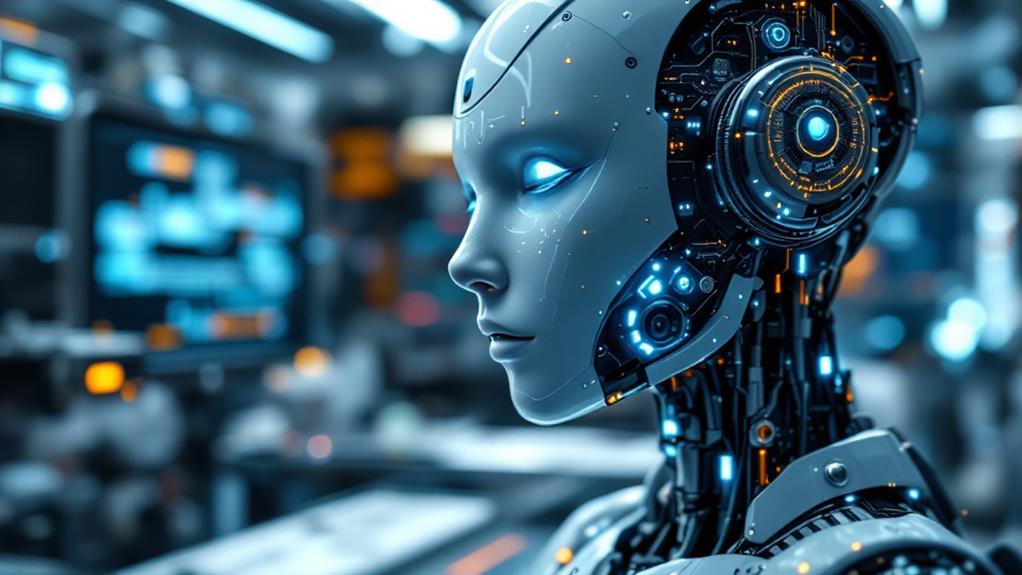
Advancements in actuator technology naturally lead to a greater demand for processing power in humanoid robots. As these robots become more capable and complex, their processing systems must keep pace with the increasing requirements for real-time decision-making and adaptability. This is where the integration of machine learning and artificial intelligence comes into play, allowing robots to learn from their environment and improve their performance over time.
Here are some critical aspects of processing power in humanoid robots:
- Real-time data analysis: Efficient processing enables robots to analyze sensory data instantly, ensuring quick and accurate responses.
- Enhanced learning capabilities: With powerful processors, robots can utilize machine learning algorithms to adapt their behavior based on experiences.
- Complex decision-making: Advanced artificial intelligence allows robots to make informed decisions in unpredictable situations.
Motion Control Systems
A robust motion control system is vital for humanoid robots to navigate their environments effectively. This system enables the robot to maintain dynamic balancing, which is fundamental for tasks like walking, running, or even climbing stairs. By integrating sensors that provide real-time feedback on the robot's position and movement, the motion control system can make rapid adjustments to keep the robot upright and stable.
Gait analysis also plays a significant role in optimizing movement. By studying the robot's walking pattern, engineers can refine its gait to guarantee smooth and efficient locomotion. This analysis involves examining factors such as stride length, speed, and the timing of each limb's movement. With this data, you can improve the robot's agility and adaptability in varied environments.
Moreover, the algorithms used in motion control systems take into account the robot's weight distribution and ground surface, allowing it to respond to unexpected obstacles or changes in terrain. Altogether, effective motion control systems are the backbone of humanoid robots, enabling them to mimic human-like movement and perform complex tasks while maintaining balance and stability.
Communication Interfaces
To operate effectively in complex environments, humanoid robots need more than just advanced motion control systems; they also rely on robust communication interfaces. These interfaces enable robots to interact seamlessly with humans and their surroundings, making them more intuitive and user-friendly.
Here are some key features of communication interfaces in humanoid robots:
- Voice Recognition: This allows robots to understand and respond to spoken commands, making interactions feel natural and engaging.
- Gesture Interpretation: By recognizing human gestures, robots can interpret non-verbal cues, enhancing their ability to communicate and respond appropriately.
- Multimodal Interaction: Combining voice and gesture inputs, robots can engage in more sophisticated conversations, improving user experience and functionality.
These elements are essential for creating a humanoid robot that can navigate social situations and execute tasks effectively. With advancements in voice recognition and gesture interpretation, these robots are becoming increasingly adept at understanding human intent, which fosters smoother interactions. As you investigate these communication interfaces, you'll see how they play a significant role in making humanoid robots not only functional but also relatable companions in our daily lives.
Energy Management
Efficient energy management is vital for the performance and longevity of humanoid robots. When you think about robots like Honda's ASIMO, their ability to operate without constant recharging hinges on effective battery efficiency and smart power distribution. These robots rely on advanced battery technologies that optimize energy storage while minimizing weight. This balance allows them to perform activities such as walking, climbing stairs, or even running for extended periods.
You'll find that power distribution systems play an important role in energy management. They guarantee that energy is allocated where it's needed most, regardless of that being for movement, sensor operation, or communication. By prioritizing power usage, humanoid robots can conserve energy during less demanding tasks, allowing them to extend their operational time considerably.
Moreover, real-time monitoring of energy consumption helps enhance performance. The robot can adjust its functioning based on remaining power levels, confirming it doesn't run out of energy unexpectedly. As a result, you see how vital energy management is to the general efficiency and effectiveness of humanoid robots, paving the way for more advanced and capable machines in the future.
Future Innovations in Robotics
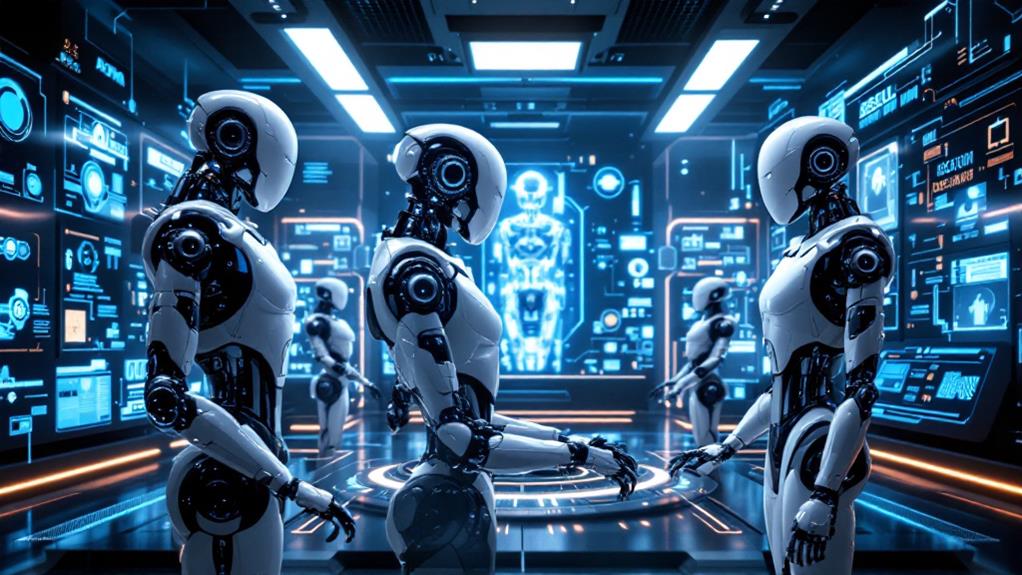
The landscape of robotics is on the brink of transformative innovations that promise to redefine humanoid capabilities. As you look ahead, consider how these advancements will intertwine with our daily lives, shaping the future in profound ways.
- Improved emotional intelligence in robots for better human interaction
- Seamless education integration, making learning more interactive
- Addressing robotic ethics to navigate the social implications of automation
Future applications of humanoid robots will likely involve advanced emotional intelligence, allowing them to understand and respond to human emotions more effectively. This will improve human-robot collaboration in different fields, from healthcare to education. The integration of robotics into educational settings can make learning more engaging and personalized, preparing students for a technology-driven world.
However, as workforce automation accelerates, it raises pressing questions about robotic ethics and the social implications of replacing human jobs. Balancing innovation with ethical considerations will be essential to ensuring a harmonious coexistence between humans and machines. As you accept these future innovations, remember to advocate for responsible development and deployment to optimize benefits while minimizing risks. The future of robotics is bright, but it requires our careful stewardship.
Related posts