How Biomimicry Inspires the Design of Modern Robotic Systems

Biomimicry inspires modern robotic systems by drawing lessons from nature's designs and evolution. You'll see how robotics mimic features like the agility of cheetahs or the collaborative behavior of bees. Engineers use these insights to improve functionality and sustainability, creating soft robots that adapt like octopuses or drones that move like fish. Advanced materials inspired by natural strength enhance performance and energy efficiency. This nature-inspired approach not only pushes technological boundaries but also promotes ecological harmony. Uncovering more about these groundbreaking designs reveals how closely the future of robotics aligns with the intricacies of the natural world.
Definition of Biomimicry
Biomimicry, which draws inspiration from nature's designs and processes, is a creative approach that seeks to solve human challenges by emulating the strategies found in the natural world. This groundbreaking practice allows you to tap into millions of years of evolution, utilizing biological insights to inform your designs. Essentially, biomimicry applications can range from creating more efficient structures to developing advanced robotic systems that mimic animal movements.
By analyzing how organisms thrive in their environments, you can uncover unique solutions to contemporary problems. For instance, studying bird flight can lead to better aerodynamic designs in drones, while observing how plants manage water can inspire new filtration systems. This focus on ecological creativity not only improves functionality but also promotes sustainability, aligning your projects with environmental goals.
Ultimately, biomimicry encourages you to rethink traditional design paradigms, leading to more adaptive and resilient technologies. As you incorporate these natural strategies, you can create products that not only perform better but also harmonize with the ecosystems they operate within. This synergy between nature and technology allows for a more sustainable future.
Historical Context of Biomimicry
Throughout history, humans have looked to nature for inspiration, a practice that predates the formal concept of biomimicry. Ancient inspirations are evident in traditional practices, where societies observed and learned from the natural world around them. This fascination with ecological adaptation has led to significant advancements over time.
You can see how biological models have influenced diverse fields through:
- Natural engineering: Creating structures that mimic animal habitats.
- Design evolution: Developing tools and machines that reflect nature's mechanisms.
- Sustainability lessons: Learning how ecosystems maintain balance and resilience.
- Evolutionary strategies: Applying principles of survival and reproduction to innovation.
- Traditional practices: Utilizing time-tested methods rooted in nature's wisdom.
As you investigate this historical context, you'll recognize that the interplay between nature and human ingenuity has paved the way for modern innovations. The lessons learned from nature not only inform design but also encourage a greater appreciation for sustainability. By studying these connections, you can gain insights into the potential of biomimicry to shape future technologies, particularly in the domain of robotic systems.
Key Principles of Biomimicry

How can nature's solutions inspire creative designs? By embracing the key principles of biomimicry, you can tap into biological inspiration that drives innovation in robotics. One crucial principle is functional mimicry, where you replicate nature's mechanisms. For instance, studying the way birds fly can inform drone designs.
Ecological design emphasizes creating systems that harmonize with their environment. You'll want to incorporate sustainability principles that prioritize resource efficiency and minimal waste. This aligns with nature's ability to thrive within its limits.
Additionally, adaptive systems from nature demonstrate resilience engineering; organisms evolve and adapt to survive, teaching you how to create robots that can adjust to changing conditions.
Using evolutionary strategies, you can draw from natural patterns, like the Fibonacci sequence, to develop more efficient algorithms and structures. These principles not only improve functionality but also foster a deeper connection with the environment.
Case Studies in Robotics
Robotic advancements often draw inspiration from nature, leading to groundbreaking designs that boost functionality and efficiency. By studying biological models, researchers create robotic applications that mimic evolutionary designs and adaptive mechanisms found in natural systems.
Here are some fascinating case studies that illustrate this approach:
- Robotic Bees: Utilizing swarm intelligence, these robots replicate the foraging patterns of bees, allowing for efficient pollination and environmental monitoring.
- Soft Robotics: Inspired by octopuses, these robots use flexible materials and sensory feedback to navigate complex environments, demonstrating improved environmental interaction.
- Cheetah Robots: Mimicking the speed and agility of cheetahs, these robots showcase advanced locomotion techniques that improve their performance in diverse terrains.
- Underwater Drones: Drawing from fish anatomy, these drones utilize streamlined designs and adaptive mechanisms for efficient movement in aquatic environments.
- Quadrupedal Robots: Inspired by wolves, these robots exhibit remarkable balance and agility, enabling them to traverse rugged landscapes while maintaining stability.
These case studies highlight how nature's designs can lead to creative robotic systems that effectively address real-world challenges. By learning from nature, you can contribute to the evolution of robotics!
Nature-Inspired Materials
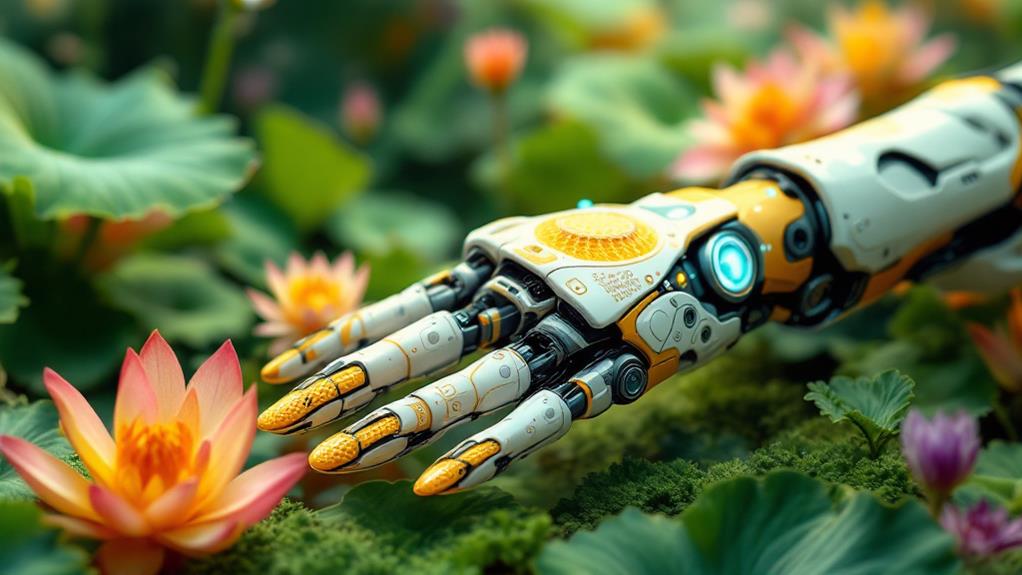
Inspired by the intricate designs found in nature, researchers are developing cutting-edge materials that improve robotic performance and functionality. You'll notice that many modern robots utilize natural composites that mimic the strength and flexibility of biological materials. These adaptive structures enable robots to respond to their environments in real time, enhancing their overall effectiveness.
Self-healing materials are particularly fascinating, as they allow robots to recover from damage autonomously, much like living organisms do. You'll find that lightweight designs play a significant role in enhancing mobility, making it easier for robots to navigate complex terrains. Additionally, the incorporation of different surface textures can help robots grip or manipulate objects with greater precision.
The use of multifunctional properties in materials, such as bio-based polymers, opens up new avenues for creating adaptable robots that can perform numerous tasks. Smart textiles are another innovation; they can sense environmental changes and adjust their properties accordingly, providing robots with heightened awareness. By harnessing these nature-inspired materials, you can see how modern robotics is evolving, leading to more resilient and capable systems that reflect the ingenuity of the natural world.
Bio-Inspired Movement and Locomotion
Building on the advancements in nature-inspired materials, researchers are now focusing on bio-inspired movement and locomotion. By mimicking the efficient ways that animals move, they're creating cutting-edge robotic systems that can adapt to diverse environments. For instance, robotic insects utilize nature's algorithms to navigate and perform tasks effectively.
Here are some exciting developments in this field:
- Adaptive gaits allow robots to mimic the walking patterns of animals, enhancing stability and maneuverability.
- Underwater drones draw inspiration from fish, enabling them to glide effortlessly through water.
- Climbing robots replicate the movement of geckos or spiders, allowing them to scale vertical surfaces.
- Swarm intelligence enables groups of robots to work together, just like bees or ants, improving efficiency and task completion.
- Bio-inspired vehicles take cues from animal locomotion to improve transport methods on land, in the air, and underwater.
These advancements in legged locomotion and beyond are paving the way for robots that are not only functional but also adaptable and resilient, making them invaluable in numerous applications.
Energy Efficiency From Nature
Nature has perfected energy efficiency over millions of years, and researchers are harnessing these principles to improve robotic systems. By observing natural phenomena, you can see how diverse organisms optimize their energy usage, leading to groundbreaking designs in robotics. For example, the way birds glide through the air with minimal effort inspires drones that consume less power while maintaining flight stability.
Incorporating sustainable energy practices in robotic design is essential. You might consider how certain plants, like the sunflower, track the sun to enhance light absorption, influencing solar panel designs to be more efficient. Likewise, fish schools maneuver effortlessly in water, prompting the development of underwater robots that mimic their energy-efficient movements.
Future Trends in Biomimetic Robotics
As robotics continues to evolve, the influence of biomimicry is set to reshape the future of design and functionality. You'll see more robots that can adapt to their environments and perform tasks with remarkable precision. This shift is largely driven by advancements in adaptive algorithms and sensory integration, allowing these machines to mimic biological systems more effectively.
Here are some trends you can expect in biomimetic robotics:
- Enhanced Mobility: Inspired by animals, robots will navigate complex terrains with ease.
- Improved Sensory Systems: Utilizing sensory integration techniques, robots will better interpret their surroundings.
- Autonomous Decision-Making: Adaptive algorithms will enable machines to make real-time choices, similar to how organisms respond to stimuli.
- Energy Efficiency: Drawing from nature, robots will optimize energy use, extending operational life.
- Collaboration with Nature: Expect designs that work symbiotically with ecosystems, promoting sustainability.
These trends promise to create robotic systems that are not just functional but also intelligent and environmentally friendly. With these innovations, you'll witness a new chapter where robots perform tasks that were once thought impossible, all thanks to nature's inspiration.
Challenges and Limitations
While the potential of biomimetic robotics is exciting, several challenges and limitations hold back its full realization. You'll encounter design constraints that stem from the complexity of mimicking nature's intricate systems. These constraints often mean that creating robots that can effectively replicate natural behaviors isn't straightforward.
Additionally, ethical considerations arise when developing robots inspired by living organisms. You need to think about the implications of using biological models, especially concerning animal welfare and environmental impact. Scalability issues also play a significant role. What works in a lab may not function effectively on a larger scale, limiting the practical application of your designs.
Technological limitations hinder your progress, as current materials and sensors might not fully capture the adaptability of biological systems. Integration challenges further complicate matters, as combining diverse biomimetic features into a cohesive robotic system can become cumbersome.
To push the boundaries of biomimetic robotics, you must address these challenges head-on. Acknowledging these limitations will help you find creative solutions that pave the way for a more sustainable and efficient future in robotic design.