Fei-Fei Li: Transforming AI With Imagenet
Fei-Fei Li's transformative work with ImageNet has significantly reshaped the landscape of artificial intelligence, particularly in the realm of computer vision. One might ask how a single dataset could revolutionize this field and set new benchmarks across the AI community. By effectively utilizing crowdsourcing, Li curated over 14 million annotated images, which substantially improved the accuracy of image recognition algorithms. What inspired her vision, and how has it propelled advancements in deep learning and industry applications? Reflecting on her pioneering efforts and the extensive impact of ImageNet, we can discern the profound implications for the future trajectory of AI research.
Early Life and Education

Fei-Fei Li began her academic journey with a B.A. in Physics from Princeton University, laying a solid foundation for her future contributions to artificial intelligence. She furthered her education with a Ph.D. in Electrical Engineering from the California Institute of Technology. In 2009, she joined Stanford University as an assistant professor in the Department of Computer Science.
At Stanford, Fei-Fei Li's research significantly impacted the AI community, particularly with her development of the ImageNet dataset in 2009, which has been crucial for advancements in computer vision. She also co-founded AI4ALL, a nonprofit organization aimed at increasing diversity and inclusion in AI education.
Her work has garnered numerous awards, including the Intel Lifetime Achievement Innovation Award. Fei-Fei Li's dedication to advancing technology and fostering inclusivity in the AI community continues to inspire future innovators, making her a transformative figure in the field of artificial intelligence.
Vision Behind ImageNet
The inception of ImageNet aimed to create a comprehensive, crowdsourced dataset that would transform AI's ability to comprehend and classify real-world images. Initiated by Fei-Fei Li in 2006, the project sought to build an extensive, meticulously labeled dataset to lay the groundwork for AI training. Recognizing the constraints of existing datasets, she leveraged crowdsourcing to collect real-world data, enabling deep neural networks to operate more accurately and efficiently.
Fei-Fei Li's strategy was to rapidly expand the dataset using the power of crowdsourcing. This method allowed ImageNet to grow exponentially, amassing over 3 million images across more than 6,000 synsets within just a few months. By April 2010, ImageNet had accumulated over 11 million images, categorized into more than 15,000 synsets. This monumental effort revolutionized machine learning and AI research.
The ImageNet Challenge, an annual competition, emerged as a benchmark for evaluating image classification models. It spurred significant advancements in machine learning, continually pushing the boundaries of what deep neural networks could achieve. Fei-Fei Li's ImageNet project underscored the critical importance of large-scale, real-world data in developing robust AI systems.
Creating the Dataset

Creating the ImageNet dataset required meticulous data collection, an effective image categorization strategy, and rigorous quality control measures. Crowdsourcing was instrumental in gathering millions of images and ensuring accurate labeling. Let's explore how these critical components synergized to develop one of the most impactful datasets in AI history.
Data Collection Process
The ImageNet project, led by Fei-Fei Li, achieved a remarkable feat by collecting three million images in just a few months. The cornerstone of this effort was the innovative use of Amazon Mechanical Turk, a platform that facilitated scalable image classification through crowd contributions. This large-scale image dataset quickly became a cornerstone for AI research.
The data collection process included several crucial steps:
- Crowdsourcing: Thousands of contributors from around the globe participated in annotating images, making the data collection process both efficient and expansive.
- Annotation: Each image was meticulously labeled, ensuring high-quality data that researchers could trust for training and testing their algorithms.
- Scalability: Leveraging Amazon Mechanical Turk enabled the team to manage the vast scope of the project, categorizing images across thousands of synsets.
Image Categorization Strategy
ImageNet's categorization strategy aimed to meticulously organize millions of images into over 15,000 synsets, creating a varied and comprehensive dataset for AI training. Fei-Fei Li envisioned a thorough collection of real-world data to drive significant advancements in AI systems. Through crowdsourcing efforts, ImageNet rapidly expanded to over 11 million images by April 2010, showcasing the project's impressive scalability.
The strategy behind categorizing these images was crucial for developing robust deep learning models and neural networks. By offering a diverse array of labeled images, ImageNet enabled the training of AI systems in object recognition tasks, pushing the boundaries of previous capabilities. Each synset, representing a unique concept, contained hundreds or even thousands of images to ensure richness and diversity in training data.
Fei-Fei Li's approach to categorization emphasized both quantity and the quality and variety of data. This meticulous organization allowed AI systems to learn from a wide spectrum of visual information, ultimately improving their accuracy and performance in real-world applications. The ImageNet Challenge highlighted these advancements, making significant strides in machine learning and deep neural networks.
Quality Control Measures
To ensure the dataset's reliability, Fei-Fei Li implemented stringent quality control measures involving multiple human annotators to accurately verify and label each image. These measures were crucial for maintaining the accuracy and consistency of the ImageNet dataset, which grew to over 11 million images in more than 15,000 synsets by April 2010, leveraging crowdsourcing efforts. Through meticulous verification, Fei-Fei Li established ImageNet as a reliable benchmark for researchers worldwide.
The quality control process included several key steps:
- Multiple Human Annotators: Each image was reviewed by several human annotators to ensure accurate labeling and minimize errors.
- Crowdsourcing Efficiency: By leveraging crowdsourcing, ImageNet categorized three million images across 6,000+ synsets in a short timeframe, showcasing the efficiency and scalability of the process.
- Stringent Verification Protocols: Strict protocols ensured that only high-quality data was included, thereby enhancing the reliability of research outcomes.
These quality control measures were instrumental in making ImageNet a cornerstone for advancements in machine learning and deep neural networks. Researchers could trust the dataset's accuracy, knowing that Fei-Fei Li's rigorous standards had been applied. This reliability has driven significant progress in AI, with the ImageNet Challenge continually pushing the boundaries of what is possible in the field.
Impact on Computer Vision
ImageNet has revolutionized computer vision by providing an extensive dataset for object recognition and image classification. It serves as the primary benchmark for testing and improving models, driving advancements in accuracy and efficiency of image recognition technologies.
Enhanced Image Recognition
ImageNet has fundamentally transformed computer vision by significantly enhancing the accuracy of image recognition algorithms. Spearheaded by Fei-Fei Li, the ImageNet project assembled a dataset of over 14 million annotated images, allowing AI researchers to train deep convolutional neural networks with unparalleled effectiveness. This extensive dataset underscored the crucial role of data in advancing computer vision and machine learning.
Fei-Fei Li's ImageNet was more than a collection of images; it established a new benchmark for the AI community. By providing a diverse and comprehensive dataset, researchers could test and refine their models, leading to groundbreaking innovations such as AlexNet. These advancements have markedly improved the ability of machines to recognize and classify images accurately, a capability essential for applications ranging from autonomous vehicles to medical diagnostics.
The impact of ImageNet on enhanced image recognition can be summarized as follows:
- Boosted Algorithm Accuracy: Deep learning models trained on ImageNet have achieved unmatched precision in image classification tasks.
- Sparking Innovation: The ImageNet Challenge catalyzed the development of powerful neural network architectures.
- Democratizing Data: By making the dataset freely available for non-commercial research, ImageNet accelerated progress in machine learning and computer vision.
Benchmark Dataset Creation
Fei-Fei Li's vision for creating an extensive dataset with over 14 million annotated images has made ImageNet the gold standard for benchmarking in computer vision research. By assembling such a vast collection, she ensured that deep learning models could be trained on diverse real-world data across 22,000 categories. This comprehensive benchmark dataset has become indispensable in the field, driving significant advancements in object recognition.
ImageNet has had a transformative impact on the AI community's focus. Fei-Fei Li emphasized the importance of data over algorithms, which led to the development of groundbreaking deep learning models like AlexNet. This model, in particular, drastically improved image classification accuracy, setting new performance standards.
Researchers worldwide rely on ImageNet to test their image classification algorithms, making it a central pillar in computer vision research. Its availability for non-commercial purposes has enabled countless studies, pushing the frontiers of AI. By using ImageNet, researchers contribute to the ongoing evolution of computer vision technology.
Ultimately, Fei-Fei Li's creation of ImageNet has transformed the way we approach and solve problems in object recognition, underscoring the paramount importance of real-world data in advancing AI.
The ImageNet Challenge
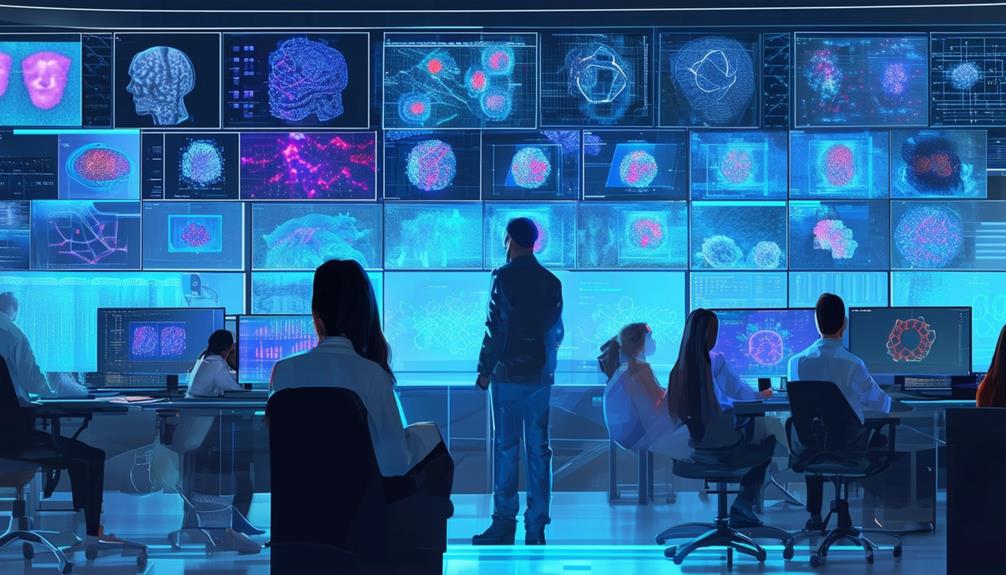
Since its inception in 2010, the ImageNet Challenge has consistently pushed the boundaries of object classification and detection using the expansive ImageNet dataset. Spearheaded by Fei-Fei Li, this annual competition has become a cornerstone in the field of computer vision. Participants harness deep learning and neural networks to achieve remarkable advancements in image recognition. The ImageNet Challenge has not only driven innovation but also established high benchmarks for accuracy and performance.
In 2012, the competition witnessed a groundbreaking moment when AlexNet, a deep neural network, outperformed its rivals by a significant margin of 10.8%. This victory marked a paradigm shift, showcasing the immense potential of deep learning in object classification and detection. The challenge has since seen numerous teams surpassing 95% accuracy, highlighting the rapid evolution of image recognition technologies.
Researchers worldwide use the ImageNet dataset as a benchmark to test and refine their models. This continuous cycle of innovation guarantees that the field of computer vision remains dynamic and progressive.
- AlexNet's 2012 victory highlighted deep learning's potential.
- Many teams now achieve over 95% accuracy.
- Researchers use ImageNet to benchmark and improve models.
Fei-Fei Li's vision has unquestionably transformed AI through the ImageNet Challenge.
Advancements in Deep Learning
The advent of deep learning has dramatically reshaped the field of artificial intelligence, catalyzing significant advancements in computer vision and other domains. Central to this revolution is Fei-Fei Li's ImageNet dataset, an extensive collection of labeled images that has driven deep learning to unprecedented levels. The success of AlexNet in the 2012 ImageNet Challenge demonstrated the immense potential of convolutional neural networks (CNNs), marking a pivotal moment in AI research.
Training models on the comprehensive ImageNet dataset has enabled researchers to achieve groundbreaking progress in image recognition and object classification. These advancements have set new standards, expanding the horizons of AI capabilities. Consequently, the ImageNet dataset has become a critical benchmark, spurring the development of increasingly sophisticated deep learning architectures.
Fei-Fei Li's contributions through ImageNet have not only advanced computer vision but have also facilitated the broader adoption of deep learning techniques across various AI applications. The ongoing evolution of CNNs and other deep learning models, driven by the rich data provided by ImageNet, underscores the transformative impact of Li's work on the future of AI research and technology.
Industry Applications
ImageNet's extensive dataset has revolutionized various industry applications by significantly enhancing object recognition and classification accuracy.
In the domain of autonomous vehicles, ImageNet has been instrumental. Companies like Tesla utilize its vast dataset to train AI models to identify pedestrians, other vehicles, and road signs, thereby making self-driving cars safer and more reliable.
Facial recognition technology has also benefited immensely from ImageNet. Social media giants like Facebook leverage this data to improve user tagging systems and bolster security features by accurately identifying faces in photos and videos.
Moreover, ImageNet has transformed e-commerce by optimizing product recommendation systems. Online platforms use its comprehensive dataset to analyze and categorize product images, ensuring customers receive accurate suggestions, which enhances user experience and drives sales.
- Autonomous Vehicles: Enhances object detection, increasing safety and reliability.
- Facial Recognition: Improves accuracy in identifying individuals, strengthening security and user experience.
- Product Recommendations: Enhances the precision of recommendations on e-commerce platforms, driving better user engagement.
Additionally, ImageNet's impact extends to quality control in manufacturing, where its object recognition capabilities ensure higher precision in identifying defects. By continuously advancing AI models, ImageNet has set a high standard for industry applications, making technology smarter and more efficient.
Future of AI Research
The future of AI research depends on substantial funding and ambitious projects to push the boundaries of what's possible. Fei-Fei Li, a leader in AI research, emphasizes the necessity of continued financial support to achieve groundbreaking advancements. She advocates for moonshot projects that can drive significant innovation in both academia and government sectors.
Li's recent discussions with President Biden underscored the critical role of increased public sector investment. She believes that government funding can greatly propel technological breakthroughs, benefiting not only the tech industry but society at large. The collaboration between government and academia is vital for fostering an environment where ambitious research projects can thrive.
Additionally, Li highlights the importance of diverse backgrounds in AI research. Bringing together varied perspectives can lead to more creative solutions and substantial progress. By promoting diversity, she aims to create a more inclusive and effective research community.
Conclusion
Fei-Fei Li's vision and dedication have profoundly transformed AI through the creation of ImageNet. This groundbreaking dataset has revolutionized computer vision, expanded the boundaries of deep learning, and influenced numerous industry applications. Her pioneering work continues to inspire ongoing research and innovation in AI. As you look ahead, remember that these advancements are only the beginning, with countless possibilities yet to be explored.
Related posts