Famous Roboticists: The Contributions of Cynthia Breazeal to Social Robotics
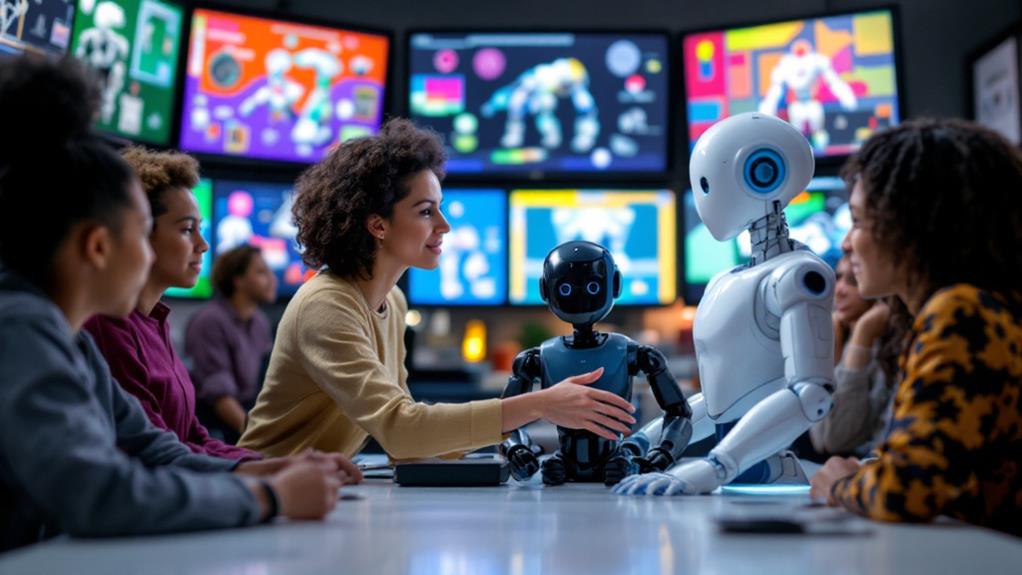
Cynthia Breazeal's contributions to social robotics are groundbreaking. She pioneered Kismet, a robot that recognizes and responds to human emotions, enhancing our ability to connect emotionally with machines. Then, she created Jibo, a friendly robot designed for natural conversations and user engagement. Breazeal emphasizes emotional intelligence in robots, enabling them to build trust and understanding with users. Her work has reshaped human-robot interaction, showing that machines can act as companions. With ongoing advancements, social robots may soon become even more intuitive and relatable. There's much more to uncover about her impact and future directions in this field.
Early Life and Education
Cynthia Breazeal grew up in a family that fostered curiosity and creativity, which laid the foundation for her future as a pioneering roboticist. Her family background played a vital role in shaping her interests. With parents who encouraged exploration and learning, you can see how she developed a passion for science and technology from an early period. They supported her inquisitive nature, allowing her to tinker with gadgets and ask questions about how things worked.
Educational influences also notably impacted Cynthia's path. She thrived in an environment that valued education and innovation, attending schools that emphasized hands-on learning. This approach ignited her fascination with robotics and artificial intelligence. You can imagine her excitement as she pursued higher education, where she explored deeper into engineering and computer science, eventually earning her degrees from prestigious institutions.
Cynthia's early life experiences and educational opportunities set the stage for her groundbreaking work in social robotics. They instilled in her the belief that technology could improve human relationships, a vision that would guide her throughout her career.
Development of Kismet
Building on her early experiences and education, Breazeal initiated a groundbreaking project: the development of Kismet, an expressive robot designed to engage in social interactions with humans. Kismet's architecture was revolutionary, combining mechanical design and advanced AI to enable it to recognize and respond to human emotions. You'd see Kismet equipped with facial features that mimicked human expressions, allowing it to convey emotions like happiness, sadness, or surprise.
Kismet's capabilities extended beyond simple responses. It could engage in back-and-forth interactions, responding to verbal cues and non-verbal signals from users. This made Kismet a pioneer in social robotics, as it could adapt its behavior based on the emotional state of its human companions. Imagine interacting with a robot that could genuinely seem to understand your feelings!
Breazeal's work with Kismet laid the foundation for future social robots, demonstrating the potential of robots to form emotional connections with people. Through Kismet, you can see how Breazeal's vision of human-robot interaction began to take shape, pushing the boundaries of what robots could achieve in social contexts. Her contributions have influenced the trajectory of robotics, making Kismet a significant milestone.
Creation of Jibo
The creation of Jibo marked another significant milestone in Breazeal's journey in social robotics. You'll find that Jibo's design stands out with its friendly, approachable look, featuring a round body that resembles a character from a beloved animated film. This aesthetic choice isn't just for appearance; it encourages interaction and connection with users.
Jibo features advanced technology that allows it to recognize faces and respond to voice commands, making it a personal assistant with a unique charm. You can ask Jibo to tell you a joke, remind you of appointments, or even capture family moments with its built-in camera. The robot's ability to engage in natural conversations makes it feel more like a companion than a mere gadget.
Breazeal emphasized creating a social robot that fosters relationships, and Jibo embodies this vision perfectly. By combining an enchanting design with interactive features, Jibo invites users to engage in a two-way relationship, showcasing the potential of social robotics in everyday life. As you investigate Jibo, you'll appreciate how Breazeal's work pushes the boundaries of what robots can do in the domain of human interaction.
Emotional Intelligence in Robotics
Understanding emotional intelligence in robotics is fundamental as it shapes how machines interact with humans. When you think about robots, you might not associate them with feelings, but advances in affective computing are changing that perception. Affective computing enables machines to recognize and respond to human emotions, making interactions feel more natural and engaging.
Empathy algorithms play a vital role in this development. These algorithms allow robots to interpret emotional cues from users, such as facial expressions or tone of voice. By analyzing this data, robots can adjust their responses accordingly, fostering a sense of companionship and understanding. Imagine a robot that not only recognizes when you're happy or sad but can also respond in a way that feels comforting or supportive.
As you explore deeper into emotional intelligence in robotics, you'll notice that the goal is to create machines that can form meaningful connections with people. This approach not only improves user experience but also opens up new possibilities for social robots in diverse settings, from healthcare to education. The future of robotics is all about blending technology with emotional awareness, and you're witnessing the transformative experience unfold.
Impact on Human-Robot Interaction
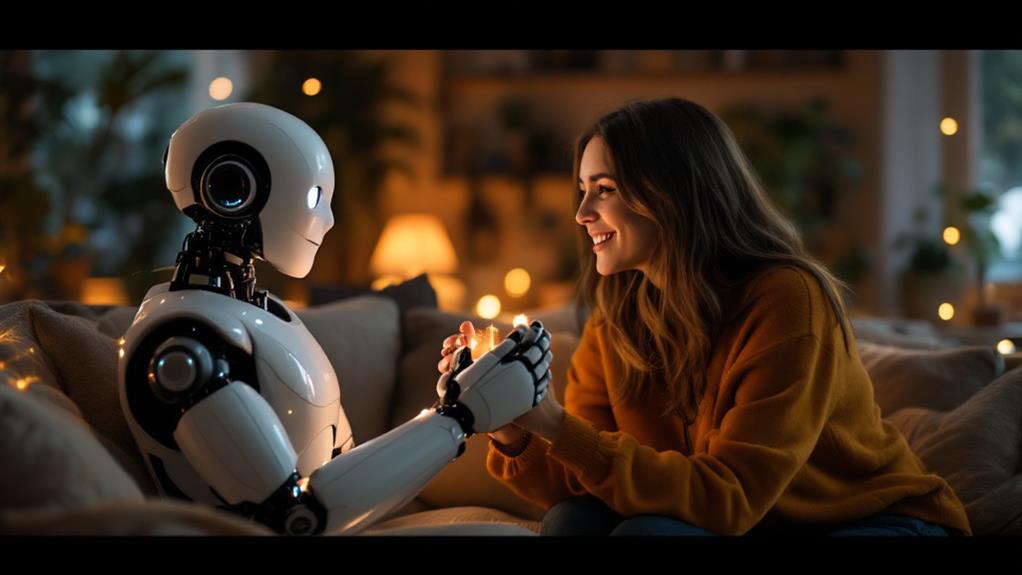
Enhancing human-robot interaction relies heavily on emotional intelligence, which transforms how people engage with machines. When robots exhibit emotional awareness, they become more relatable and foster a sense of human connectivity. Cynthia Breazeal's work emphasizes the importance of robotic empathy, allowing robots to understand and respond to human emotions effectively. By integrating emotional cues into robotic behavior, you can create a more engaging and meaningful interaction.
As you interact with socially intelligent robots, you'll notice how they can recognize your feelings and adapt accordingly. This responsiveness not only makes the experience more enjoyable but also builds trust between humans and machines. Breazeal's innovations have shown that when robots display empathy, they can better support users in diverse settings, from education to healthcare.
You'll likely find that this emotional connection encourages users to express themselves more openly, deepening their engagement with the technology. Ultimately, the impact of Breazeal's contributions on human-robot interaction underscores the potential for robots to act as companions and allies in your daily life, enhancing not just functionality but also emotional well-being.
Future Directions in Social Robotics
As social robotics continues to evolve, researchers are pushing the boundaries of what robots can achieve in human environments. You'll see robots becoming more intuitive, learning from interactions to respond in ways that feel natural. The future applications are vast, ranging from healthcare companions to educational tools, enhancing the quality of life for many.
However, as we accept these advancements, it's essential to address ethical considerations. You must think about how these robots will impact privacy, autonomy, and emotional well-being. How will they be programmed to handle sensitive situations? Are they capable of making decisions that prioritize human safety and dignity?
Moreover, the integration of social robots into daily life will require ongoing dialogue among engineers, ethicists, and users. You'll want to guarantee these technologies serve everyone fairly and don't reinforce existing biases.
In the coming years, expect social robots to be more emotionally aware and capable of complex interactions. Their design will prioritize user experience while keeping ethical implications at the forefront. As you engage with these advancements, keep in mind that responsible innovation is key to truly enrich human-robot relationships.
Related posts