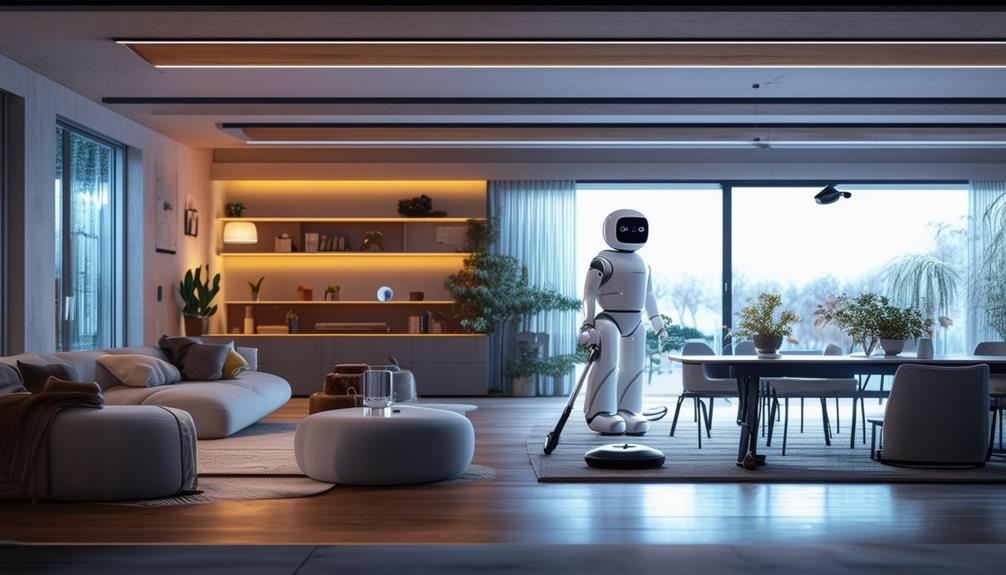
Exploring the Role of AI in Smart Home Devices
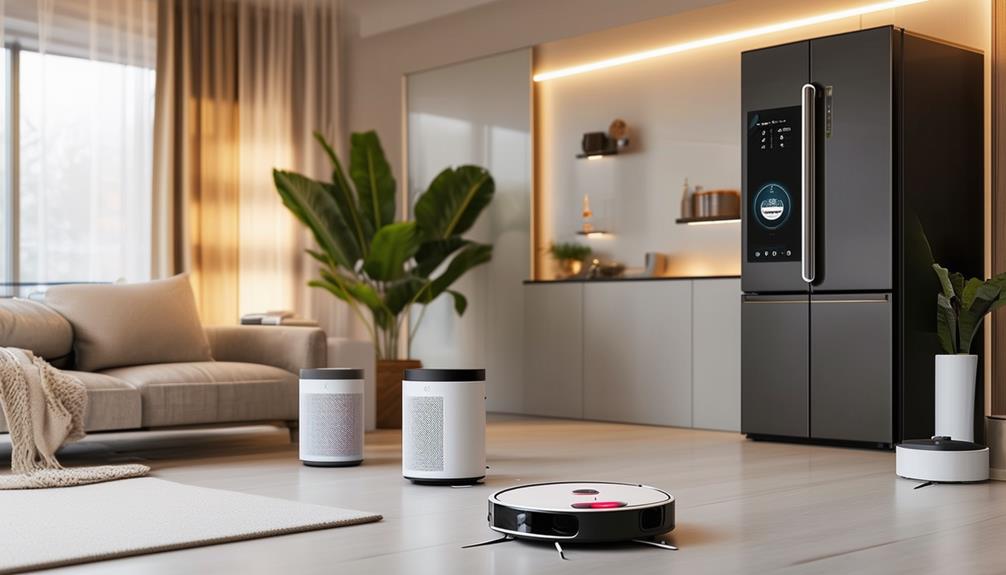
When considering smart home devices, AI's impact is unmistakable, influencing everything from energy management to personalized user experiences. Envision a home where the thermostat adjusts or lights dim based on your daily routines, all without manual intervention. AI enhances convenience and optimizes energy consumption, promoting sustainability. Yet, this integration also prompts critical questions about security and system reliability. As AI becomes more ingrained in daily life, it is vital to comprehend its multifaceted role in modern homes and address the challenges it presents.
AI in Home Automation
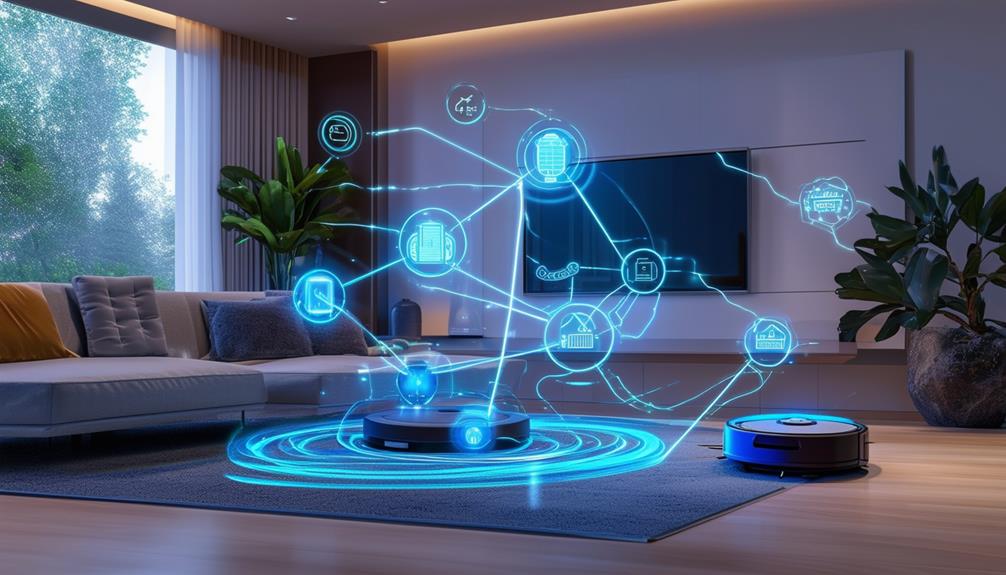
AI in home automation enables personalized control of your devices based on your habits and preferences. By leveraging machine learning algorithms, your smart devices can automatically adjust settings to ensure peak energy efficiency. For example, your thermostat might lower the temperature when it detects no one is home, or your lights could dim to conserve power. This seamless background operation exemplifies AI's role in optimizing home environments.
AI learns your routines, offering unparalleled convenience and comfort. Imagine your coffee maker starting to brew just as you get out of bed, or your smart blinds opening to let in natural light when you wake up. This personalized control transforms your living space into a responsive, tailored environment.
The integration of AI in home automation extends beyond individual devices. Virtual assistants, though not the primary focus here, are crucial in managing these systems through voice commands, making interaction effortless. This interconnected ecosystem of smart devices ensures smooth operation, offering both convenience and energy efficiency. Embracing AI in home automation creates a smarter, more efficient household that adapts to your unique lifestyle.
Virtual Assistants
When you use virtual assistants like Amazon Alexa or Google Assistant, you can control your smart devices with simple voice commands, making your interactions more efficient. These assistants also tailor recommendations and reminders to your preferences, creating a personalized user experience. This combination of voice command efficiency and customization enhances your daily life and simplifies managing your smart home.
Voice Command Efficiency
Virtual assistants like Alexa and Google Assistant have revolutionized smart home interactions, making control through voice commands incredibly efficient. These AI-driven systems accurately understand and respond to your commands, significantly enhancing your user experience. With simple voice prompts, you can control lights, adjust thermostats, or play music, thanks to advanced AI technology. This hands-free operation not only simplifies daily routines but also transforms how you interact with your living space.
At the core of smart home automation is voice command efficiency. Leveraging AI technology, virtual assistants provide an intuitive and seamless way to manage various home systems. Whether locking doors, checking the weather, or setting reminders, voice commands offer a streamlined solution. The adaptive and responsive nature of these AI-driven assistants ensures a more convenient and efficient lifestyle.
Advancements in voice command efficiency are redefining home interaction. As AI technology evolves, the potential for enhancing smart home automation grows, promising even more innovative and user-friendly solutions. Embrace the future of smart living with the power of voice commands.
Personalized User Experience
Virtual assistants like Amazon Alexa and Google Assistant provide personalized recommendations and reminders tailored to your preferences. These AI-powered assistants use natural language processing to understand and respond to your voice commands, creating a customized experience in your smart home.
By learning your habits and preferences over time, virtual assistants offer tailored experiences that enhance convenience and simplify interactions with your smart home devices. Imagine walking into your home and having the lights adjust to your preferred brightness, or your favorite playlist start playing, all triggered by a simple voice command. These intuitive assistants make your daily routines smoother and more enjoyable.
Here are some ways virtual assistants provide a personalized experience:
- Personalized recommendations: Receive suggestions for music, recipes, and even shopping, all based on your past interactions.
- Custom reminders: Never miss an appointment or task, with reminders specifically set to your schedule.
- Smart home automation: Control lighting, heating, and other devices based on your preferences.
- Routine learning: Assistants learn and adapt to your daily habits, offering more intuitive assistance.
- Natural language processing: Communicate with your devices in a natural, conversational manner for a seamless experience.
Virtual assistants are redefining how you interact with your smart home, making it more responsive and attuned to your needs.
Predictive Maintenance
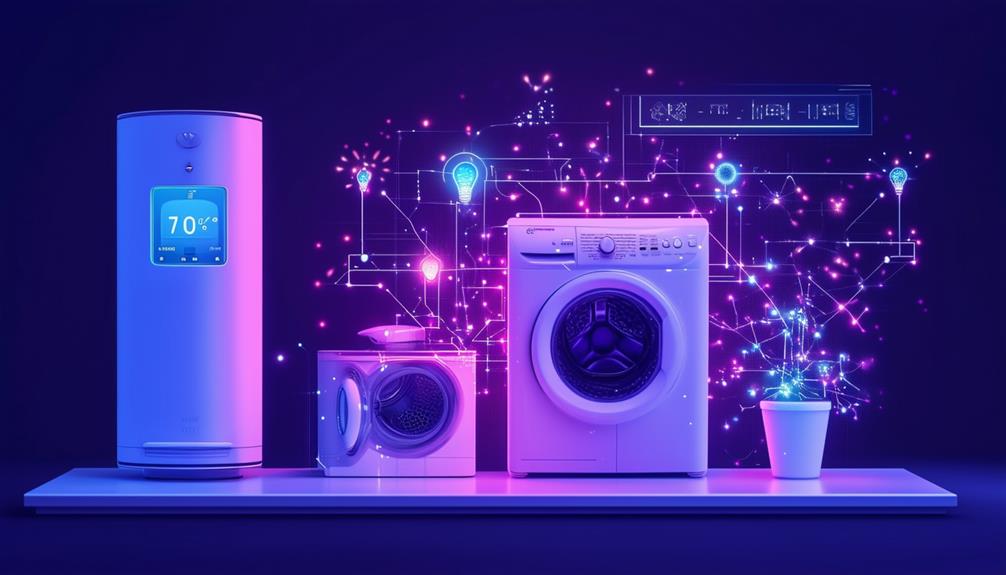
Leveraging AI algorithms, predictive maintenance for smart home devices anticipates potential issues before they become problematic. By analyzing historical data and usage patterns, AI can accurately predict when maintenance is needed to prevent system failures. This proactive approach ensures that your smart home devices operate smoothly, reducing the likelihood of unexpected breakdowns.
Imagine knowing that your smart thermostat or security system won't suddenly fail because AI has already identified potential issues. This not only extends the lifespan of your devices but also saves you time and money by addressing problems early. Emergency repairs or replacements become a thing of the past.
Predictive maintenance improves efficiency, allowing your smart home devices to function seamlessly. Well-maintained devices work better and last longer, directly enhancing your user experience. You can trust that your smart home system will be reliable and efficient, making your life easier and more convenient.
Incorporating AI for predictive maintenance in your smart home is transformative. It involves a proactive stance on maintenance, ensuring that your home runs smoothly without the stress of sudden failures. Adopt this technology to enjoy a smarter, more dependable home.
Energy Management
AI's proactive capabilities extend beyond predictive maintenance to optimizing energy management in smart homes, offering both cost savings and eco-friendly benefits. AI-driven systems analyze your energy consumption patterns and adjust usage in real-time to maximize energy efficiency. For example, smart thermostats employ AI algorithms to regulate heating and cooling based on your preferences and daily routines.
Real-time energy monitoring provides actionable insights to help you reduce utility bills. By understanding your energy usage, you can make informed decisions to optimize consumption. Additionally, integrating renewable energy sources like solar panels with AI-powered devices fosters sustainability and minimizes environmental impact.
Here's how AI enhances energy management in your home:
- Smart Thermostats: Automatically adjust temperatures based on your habits and preferences.
- Energy Consumption Patterns: AI analyzes usage to recommend optimizations.
- Real-time Monitoring: Track energy use and receive instant feedback.
- Renewable Energy Integration: Seamlessly incorporate solar or wind power.
- Actionable Insights: Receive practical tips to lower your energy bills.
Enhanced Security
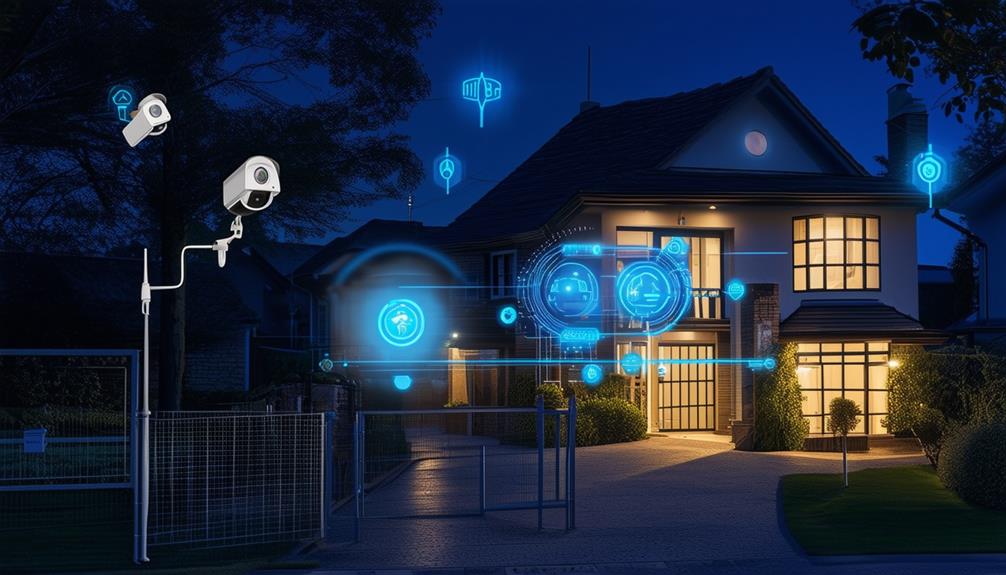
AI-powered security systems in smart homes offer real-time alerts and notifications to keep you informed of potential threats. These systems utilize smart sensors and AI-driven surveillance cameras to detect unusual activities and unauthorized access. By leveraging AI's predictive capabilities, your smart home can take proactive measures to prevent security breaches before they occur.
One significant security feature of AI in smart homes is its ability to reduce false alarms. AI can accurately distinguish between actual threats and false positives, ensuring you receive alerts only when necessary. Additionally, historical data analysis allows the security system to identify patterns and predict potential threats, enhancing your home's safety over time.
| Security Feature | Benefit |
|---|---|
| Real-time alerts and notifications | Keeps you informed of potential threats |
| AI-driven surveillance cameras | Detects unusual activities |
| Predictive capabilities | Enables proactive measures |
| Historical data analysis | Predicts and prevents potential threats |
Personalized Experiences
AI-powered smart home devices analyze your preferences and habits to offer a customized living experience. By understanding your daily routines, these devices make user-specific adjustments to enhance your comfort and convenience. AI algorithms in smart devices adapt to your lifestyle, creating settings that fit seamlessly into your daily activities.
Here are some ways AI-powered smart home devices provide tailored experiences:
- Personalized lighting: Adjusts brightness and color based on your activities and preferences.
- Smart thermostats: Modify temperature settings according to your habits and preferred comfort levels.
- Customized entertainment: Recommends shows, movies, and music based on your viewing and listening history.
- Voice assistants: Provide responses and suggestions tailored to your past interactions and preferences.
- Security systems: Adapt to your routines, ensuring your home is secure when you're away and accessible when you're home.
Overcoming Challenges
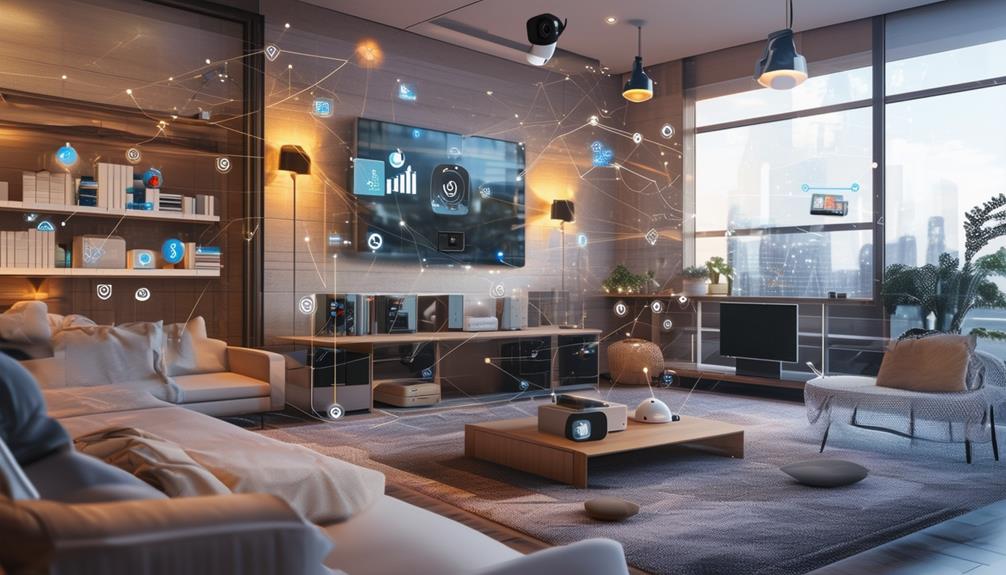
In AI for smart homes, you'll encounter significant challenges, especially regarding privacy and security. Ensuring seamless device communication without compromising sensitive data is critical. Addressing these issues requires robust encryption and regular software updates.
Privacy and Security Concerns
Addressing privacy and security issues in smart homes requires the implementation of robust encryption protocols and secure storage practices. As AI-driven smart home systems evolve, they collect and process sensitive data, raising significant privacy concerns. Ensuring user data protection necessitates strong security measures to prevent unauthorized access and data breaches. Fundamental to safeguarding data privacy is the use of robust encryption protocols that secure information both in transit and at rest.
Incorporating secure storage practices further enhances the protection of sensitive data, ensuring that only authorized individuals can access it. By proactively addressing these challenges, you can maintain the integrity and confidentiality of the data collected by your smart home devices.
Here are some key measures to consider:
- End-to-End Encryption: Ensure data is protected from the point of collection to its final destination.
- Regular Software Updates: Keep smart home devices updated to protect against known vulnerabilities.
- Strong, Unique Passwords: Use complex passwords for all devices to minimize the risk of unauthorized access.
- Two-Factor Authentication: Add an extra layer of security for accessing your devices and data.
- Data Anonymization: Reduce the risk of data breaches by anonymizing sensitive information where possible.
Device Interoperability Issues
While safeguarding privacy and security is paramount, addressing device interoperability issues is equally essential for creating a cohesive smart home experience. Interoperability problems often arise from compatibility challenges between different brands and systems, resulting in a fragmented experience. Overcoming these challenges involves adopting universal communication protocols like Zigbee and Z-Wave, which facilitate better compatibility.
The lack of standardization among smart home devices hinders seamless integration, making it difficult for devices from different manufacturers to communicate effectively. When devices can't speak the same language, creating a unified smart home ecosystem becomes an uphill battle. By focusing on interoperability solutions, the goal is to establish a universal ecosystem where smart home devices work together effortlessly.
Addressing interoperability issues improves user experience and optimizes the benefits of smart home technology. As you integrate more devices into your home, the need for seamless communication becomes evident. By championing standardization and adopting reliable communication protocols, you can overcome these interoperability challenges and enjoy a truly interconnected smart home environment.
Future Trends
In the coming years, AI will revolutionize smart home devices by optimizing energy use, enhancing security, and improving health monitoring. The role of artificial intelligence in energy management systems will become more pronounced, enabling households to reduce energy wastage and lower costs. Predictive maintenance will ensure that devices remain in optimal condition, preventing breakdowns before they occur. Health monitoring will also see significant advancements, offering personalized insights to help maintain a healthier lifestyle.
Furthermore, the integration of AI into advanced security systems will provide enhanced protection against potential threats. As part of the IoT ecosystem, these smart home devices will communicate seamlessly with each other, creating a more cohesive and efficient living environment.
Here are some future trends to look out for:
- Optimized Energy Management Systems: AI will enhance energy efficiency, making homes more eco-friendly.
- Predictive Maintenance: Devices will self-diagnose and alert you to potential issues before they arise.
- Advanced Security Systems: AI will enable real-time surveillance and threat detection.
- Seamless Health Monitoring: Continuous health data will provide actionable insights for better health management.
- IoT Ecosystem Integration: Devices will work together seamlessly, offering a unified smart home experience.
With AI's growing impact, your smart home will become smarter and more intuitive, significantly increasing convenience and security in day-to-day living.
Conclusion
AI is transforming smart home devices, enhancing convenience, efficiency, and security. From virtual assistants to energy management, AI customizes your home experience. It also predicts maintenance issues before they escalate. While challenges persist, ongoing advancements ensure a promising future. Embrace AI in your smart home for a more personalized, sustainable, and secure environment.