
Basics of AI in Predictive Maintenance
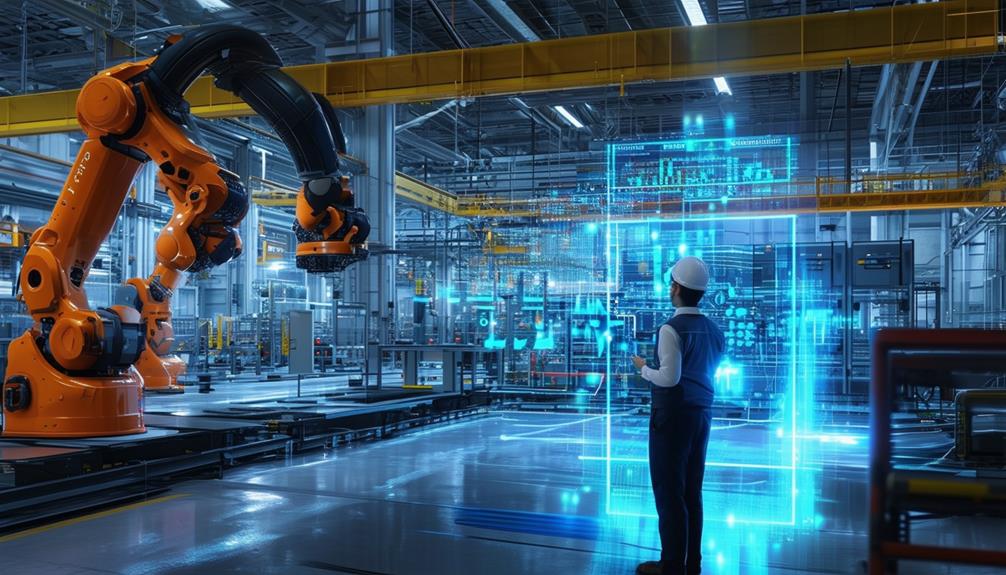
Traditional machinery maintenance often relies on reactive or scheduled interventions. However, AI-driven predictive maintenance offers a transformative solution. By leveraging AI to analyze both historical and real-time data, it becomes possible to predict equipment failures before they occur. This proactive approach minimizes downtime and reduces repair costs. Imagine being able to accurately determine when a machine requires maintenance, thereby optimizing your maintenance schedules. But how exactly does AI enable this, and what are the key techniques involved?
Understanding Predictive Maintenance

Predictive maintenance leverages AI and machine learning to forecast equipment failures before they happen. These technologies analyze both historical and real-time data, enabling you to anticipate issues and take preventive actions.
Rather than waiting for machinery to fail, AI and machine learning continuously monitor equipment performance. These systems identify patterns and anomalies in the data, providing insights into when and why equipment might fail. This allows you to address potential problems before they escalate, thereby reducing downtime and avoiding costly repairs.
The benefits of predictive maintenance are substantial. By minimizing unexpected breakdowns and extending equipment lifespan, you can significantly cut costs. Proactive maintenance also enhances the overall efficiency and performance of your operations. This strategic shift from reactive to proactive maintenance optimizes resources and ensures smoother operations.
Integrating predictive maintenance into your operations means you're preventing problems rather than just fixing them as they occur. This not only boosts productivity but also provides peace of mind, knowing your equipment is consistently in optimal condition.
The Role of AI
Artificial Intelligence (AI) plays a pivotal role in predictive maintenance by analyzing operational data to forecast equipment failures before they occur. By comparing current machine performance with historical data, AI can identify deviations and potential issues, providing early warnings. This proactive approach minimizes unplanned downtime and enhances equipment reliability.
AI employs machine learning algorithms to continually learn from data, uncovering patterns that human operators might miss. These predictive maintenance models are essential for making accurate maintenance forecasts. When AI tools alert maintenance teams, they can make timely decisions to replace specific parts before they fail, thereby optimizing maintenance schedules.
Here's how AI enhances predictive maintenance:
| Role | Function | Benefit |
|---|---|---|
| Data Analysis | Examines operational and historical data | Early detection of anomalies |
| Pattern Recognition | Discerns patterns from ongoing operations | Accurate failure predictions |
| Proactive Alerts | Issues alerts for potential equipment issues | Reduction in unplanned downtime |
| Recommendations | Offers maintenance advice | Optimal scheduling of maintenance |
Key AI Techniques

Predictive maintenance leverages key AI techniques such as supervised learning to detect anomalies and forecast equipment failures. By employing machine learning algorithms, both historical and real-time data can be analyzed to identify patterns indicative of potential issues. These algorithms continuously improve their accuracy over time, enabling timely interventions to prevent problems from escalating.
AI's capability in anomaly detection is particularly valuable as it identifies deviations from normal operating conditions that often precede equipment failures. For instance, if a machine starts exhibiting atypical behavior, AI can flag this anomaly, prompting further investigation. This proactive approach minimizes downtime and prevents costly repairs.
Additionally, AI frameworks facilitate the collection and utilization of extensive datasets, which are crucial for effective predictive maintenance strategies. They streamline the process of gathering and analyzing data, making it easier to implement and refine maintenance plans. By integrating these advanced AI techniques, operations can become more reliable and efficient, ultimately leading to improved productivity and cost savings.
Data Collection
Effective data collection is fundamental to AI-powered predictive maintenance, providing the critical information necessary for precise analysis. To ensure comprehensive data for accurate predictions, gather data from three core sources: sensors, historical maintenance records, and real-time equipment performance metrics.
- Sensors: These devices are indispensable for constant machine condition monitoring. They collect diverse data points such as temperature, vibration, and pressure, transmitting this information for immediate analysis. Without sensors, the continuous data stream required for real-time decision-making would be unavailable.
- Historical Maintenance Records: These records provide essential insights into past issues, repairs, and maintenance activities. Analyzing these records allows for the identification of patterns and trends, aiding in the prediction of future failures. This historical data enhances the predictive models, improving their accuracy.
- Real-Time Equipment Performance Metrics: Monitoring current machine health is crucial. Real-time data collection enables rapid identification of deviations from normal operating conditions. This immediate feedback loop is vital for early anomaly detection, thereby preventing unexpected breakdowns.
Machine Learning Models

Machine learning models play a crucial role in predictive maintenance by analyzing vast amounts of historical data to anticipate equipment failures. These models utilize advanced algorithms to detect patterns and predict when equipment might fail. There are two primary types of machine learning models used in predictive maintenance: supervised and unsupervised learning models.
Supervised learning models require labeled data for training, meaning historical data where the outcomes (failures or non-failures) are known. By analyzing this information, the model learns to associate specific patterns with equipment failures, enabling it to predict future failures with high accuracy.
In contrast, unsupervised learning models do not require labeled data. They excel at identifying anomalies within the data, which often indicate potential issues or failures that have not been explicitly labeled. These models continuously learn and adapt to new data, improving their predictions over time and offering a dynamic approach to predictive maintenance.
Anomaly Detection
Anomaly detection enables the identification of unusual patterns in machinery performance. By leveraging real-time data analysis, it helps detect potential issues early, preventing them from escalating into major problems. This proactive approach enhances maintenance planning and operational efficiency, ensuring greater reliability and reduced downtime.
Identifying Unusual Patterns
Anomaly detection employs AI to identify unusual patterns in machine behavior, signaling potential equipment issues before they escalate. By analyzing data deviations, AI algorithms can detect abnormalities in equipment operation that may indicate potential failures. Recognizing these anomalies early allows for proactive maintenance strategies, preventing major breakdowns and reducing unplanned downtime.
Here's how anomaly detection enhances predictive maintenance:
- Early Detection: AI algorithms can identify subtle changes in machine behavior that might go unnoticed by human operators. Early detection enables addressing issues before they become critical.
- Cost Savings: Avoiding unexpected equipment failures saves on emergency repair costs and minimizes the financial impact of production halts. Proactive maintenance based on anomaly detection extends machinery lifespan.
- Operational Efficiency: Continuous monitoring and analysis of machine data ensure optimal equipment performance. This boosts productivity and ensures that maintenance activities are well-planned and executed.
Incorporating anomaly detection into your predictive maintenance strategy offers substantial advantages, enabling seamless operations and avoiding costly disruptions.
Real-Time Data Analysis
Real-time data analysis leverages AI to continuously monitor equipment, detecting anomalies that may indicate potential issues before they escalate. By utilizing AI-based anomaly detection algorithms, deviations from normal operating conditions can be identified in real time. This proactive approach is crucial for predicting equipment failures and addressing problems early.
AI-based anomaly detection systems provide early warnings, enabling proactive maintenance planning. This allows for the scheduling of repairs or parts replacements before minor issues become major failures, thereby reducing downtime and maintenance costs.
Here's a quick comparison of traditional methods and AI-based anomaly detection:
| Traditional Method | AI-Based Anomaly Detection |
|---|---|
| Periodic inspections | Continuous real-time monitoring |
| Reactive maintenance | Proactive maintenance planning |
| Higher downtime risk | Reduced downtime |
Real-time data analysis empowers you to maintain peak equipment performance by providing continuous monitoring instead of relying on scheduled inspections or reacting to breakdowns. AI-based systems monitor your machinery 24/7, offering insights that enable informed decision-making. This ensures smooth and efficient operations, making predictive maintenance strategies both reliable and cost-effective.
Feature Extraction Methods

Feature extraction methods are essential in predictive maintenance for converting raw sensor data into actionable insights. By recognizing pertinent data patterns, these methods enhance the accuracy of predictive maintenance models. Feature extraction helps reduce data dimensionality, facilitating easier analysis and anomaly detection, which can signal potential equipment failures.
To begin, consider these three prevalent feature extraction techniques:
- Time Domain Analysis: This technique involves evaluating raw data over time to spot trends and patterns. Common metrics include mean, variance, and root mean square.
- Frequency Domain Analysis: This method transforms time-based data into the frequency domain using tools like Fast Fourier Transform (FFT). It is particularly effective for identifying periodic signal components and diagnosing mechanical issues.
- Statistical Methods: These methods involve calculating statistical properties such as skewness, kurtosis, and entropy. They summarize the data's overall behavior and identify outliers.
Predictive Algorithms
Leveraging machine learning, predictive algorithms analyze historical data to accurately forecast equipment failures. By identifying patterns and anomalies in machine performance, these algorithms provide critical insights for maintenance teams, allowing them to address potential issues proactively, thereby preventing costly downtime.
Predictive algorithms continuously learn from new data, refining their predictions. This ongoing learning process ensures that your predictive maintenance strategies become increasingly effective, optimizing maintenance schedules and resource allocation.
Here are the key aspects of predictive algorithms:
| Key Aspect | Description | Benefit to Maintenance Teams |
|---|---|---|
| Historical Data | Analyzes past performance data | Identifies failure patterns and trends |
| Machine Learning | Utilizes ML models to detect anomalies | Enhances predictive accuracy |
| Continuous Learning | Updates models with new data | Maintains current and relevant predictions |
Benefits of AI

Incorporating AI in predictive maintenance can significantly reduce operational downtime by up to 50%. This technology also extends the lifespan of your equipment, optimizing your investments. Additionally, AI assists in creating cost-efficient maintenance schedules, thereby maximizing budget efficiency.
Reduced Operational Downtime
Imagine reducing your operational downtime by up to 30%—that's the transformative power of AI-driven predictive maintenance. By leveraging artificial intelligence, you can proactively identify and address potential equipment failures before they disrupt your operations, ensuring a smoother and more efficient workflow.
AI-driven predictive maintenance enhances your operations by analyzing data patterns to predict equipment issues. Here's how it translates to reduced downtime:
- Early Failure Detection: AI algorithms can detect potential equipment failures well in advance, providing ample time to address issues before they lead to unplanned downtime.
- Fewer Breakdowns: Implementing AI-based predictive maintenance can result in up to 70% fewer breakdowns, ensuring seamless operations.
- Increased Efficiency: Businesses using AI for predictive maintenance experience a 25-30% improvement in Overall Equipment Effectiveness (OEE), leading to more uptime and enhanced productivity.
Enhanced Equipment Lifespan
AI-driven predictive maintenance can significantly extend the lifespan of your equipment by identifying and addressing issues before they become major problems. By leveraging predictive models and analyzing real-time maintenance data, AI helps anticipate potential equipment failures, allowing for timely intervention and preventing premature wear and tear.
With AI, maintenance schedules can be optimized based on real-time data and historical trends. Predictive models analyze patterns to ensure your equipment receives maintenance precisely when needed, thus avoiding unexpected breakdowns and extending the operational life of your assets.
Proactive maintenance through AI reduces the frequency of breakdowns by predicting component failures before they occur. This foresight helps avoid costly repairs and replacements, ensuring continuous monitoring and timely intervention, which translates to longer equipment lifespan and improved efficiency. Incorporating AI in predictive maintenance strategies ensures your equipment operates at peak performance, minimizes unnecessary stress and damage, and enhances both lifespan and reliability.
Cost Efficiency Maximized
Leveraging AI extends the lifespan of equipment and significantly enhances cost efficiency, leading to substantial savings. AI-driven predictive maintenance can reduce maintenance costs by up to 40% through proactive strategies. By predicting potential equipment failures, maintenance can be scheduled at optimal times, minimizing unexpected breakdowns and costly downtime.
Here are three key ways AI-driven predictive maintenance enhances cost efficiency:
- Reduction in Maintenance Costs: AI implementation can achieve a 25% reduction in maintenance costs. Machine learning algorithms analyze operational data to identify potential issues early, allowing for cost-effective interventions.
- Decrease in Downtime: AI enables a 35% reduction in downtime by predicting failures and scheduling maintenance during non-peak hours. This proactive approach ensures equipment is almost always operational, directly boosting productivity.
- Extended Equipment Lifespan: AI-driven predictive maintenance can enhance equipment uptime by up to 20% and extend asset lifespan by 10-20%, resulting in fewer replacements and lower capital expenditures over time.
Future Trends
Looking ahead, future trends in AI-based predictive maintenance will see the integration of IoT and AI for even more efficient service management. This IoT integration facilitates real-time data collection, empowering AI to provide predictive maintenance solutions that excel in proactive problem-solving. The result is reduced downtime and optimized resource utilization, making predictive maintenance strategies increasingly precise and effective.
Furthermore, the adoption of Kaizen and Lean Manufacturing principles will enhance manufacturing processes. Integrating AI-driven predictive maintenance with these methodologies can minimize waste and improve production quality. This synergy not only streamlines operations but also ensures machines and processes operate at peak efficiency.
In healthcare, connected medical devices represent another area where predictive maintenance is making a significant impact. Continuous monitoring of device performance allows AI to predict and prevent failures, thereby enhancing the overall quality of patient care. This transformation leads to fewer unexpected breakdowns and more reliable medical services.
Conclusion
By embracing AI for predictive maintenance, you set yourself up for long-term success. Leveraging machine learning models and predictive algorithms allows you to detect issues early, optimize maintenance schedules, and minimize downtime. This leads to reduced repair costs and enhanced operational efficiency. The future of predictive maintenance is promising, with continuous advancements in AI offering increasingly precise and reliable solutions. Take the leap and let AI transform your maintenance strategy.