
Andrew Viterbi: The Viterbi Algorithm and Its Role in AI

When considering the pioneers of artificial intelligence, Andrew Viterbi might not be the first name that comes to mind, yet his contributions are undeniably profound. Developed in 1967, the Viterbi Algorithm began as a method for error correction in communication systems but has since become a fundamental tool in AI. Its applications span far beyond its original purpose, impacting fields such as speech recognition and bioinformatics due to its versatility and efficiency. How did an algorithm designed for a specific task come to influence so many aspects of modern technology? The journey of the Viterbi Algorithm is as intriguing as its widespread impact.
Early Life and Education

Andrew Viterbi was born in 1935 in Bergamo, Italy. Due to the enactment of racial laws against Jews, his family relocated to the United States in 1939, seeking safety and new opportunities. This move would prove to be transformative for Andrew's future.
Viterbi's academic journey began at the Massachusetts Institute of Technology (MIT), where he pursued Electrical Engineering, drawn by the department's strong focus on applied mathematics. By 1957, he had earned both his Bachelor's and Master's degrees in Electrical Engineering from MIT.
Attracted by the burgeoning tech industry in California, Viterbi moved west and started his career at the Jet Propulsion Laboratory in 1957. This was an exciting time, as leading companies in the state were heavily involved in the missile and space race. His early education and career experiences laid a solid foundation for his future contributions to telecommunications and other fields.
Development of the Algorithm
In 1967, Andrew Viterbi transformed digital communication by developing the Viterbi Algorithm for decoding convolutional codes. Published in the IEEE Transactions on Information Theory, this breakthrough significantly enhanced error correction in communication systems.
The Viterbi Algorithm addressed errors occurring during data transmission, boosting the reliability of digital communication. It was pivotal for decoding cellphone calls, enabling voice recognition technologies, and ensuring the high-quality transmission of audio and video signals, especially via satellite communication.
Viterbi's innovation extended beyond digital communication, influencing various fields such as artificial intelligence and modern communication technologies. The Viterbi Algorithm remains fundamental in these areas, underscoring its lasting significance and versatility.
Key Features

The Viterbi Algorithm is renowned for its ability to efficiently determine the most probable sequence of hidden states in a Markov model. Developed by Andrew Viterbi, this dynamic programming algorithm has become a cornerstone in digital communications and information theory. By calculating the maximum likelihood state sequence based on observations and transition probabilities, it is indispensable in fields where accuracy and efficiency are crucial, such as wireless communications.
Key features of the Viterbi Algorithm include:
- Efficient Computation: It significantly reduces computational complexity compared to brute force methods, making it suitable for real-time applications.
- Scalability: The algorithm can be optimized for faster computations, essential for handling large datasets in AI.
- Accuracy: By maximizing the likelihood of the state sequence, it ensures high accuracy in sequence prediction tasks.
- Versatility: Applicable in a wide range of fields from speech recognition to bioinformatics sequence analysis.
- Robustness: Demonstrates reliable performance in noisy environments, which is critical for digital and wireless communications.
These features underscore why the Viterbi Algorithm is not just a theoretical construct but a practical tool that has revolutionized various domains. Its ability to navigate the complexities of Markov chains with precision and speed highlights its enduring relevance.
Applications in AI
The Viterbi Algorithm plays a crucial role in AI, excelling in tasks such as part-of-speech tagging, speech recognition, and sequence analysis in bioinformatics. In computational linguistics, it is indispensable for determining the most probable sequence of states, making it essential for part-of-speech tagging. By effectively parsing sentences, it enhances natural language processing systems, thereby contributing to the development of more accurate language models.
In speech recognition, the Viterbi Algorithm meticulously decodes speech into text, making it vital for applications like virtual assistants, transcription services, and real-time translation. Its ability to optimize probability sequences ensures high accuracy in recognizing spoken words and phrases.
In bioinformatics, the algorithm proves its worth in sequence analysis, playing a pivotal role in DNA sequencing by identifying the most likely arrangements of nucleotides. This capability extends to protein identification, aiding researchers in understanding genetic information more thoroughly.
The applications of the Viterbi Algorithm in AI extend beyond these areas. It is also instrumental in tasks such as speech synthesis and speaker diarization, where its ability to determine the most likely sequence of observations enhances both precision and efficiency across various domains.
Sequence Alignment
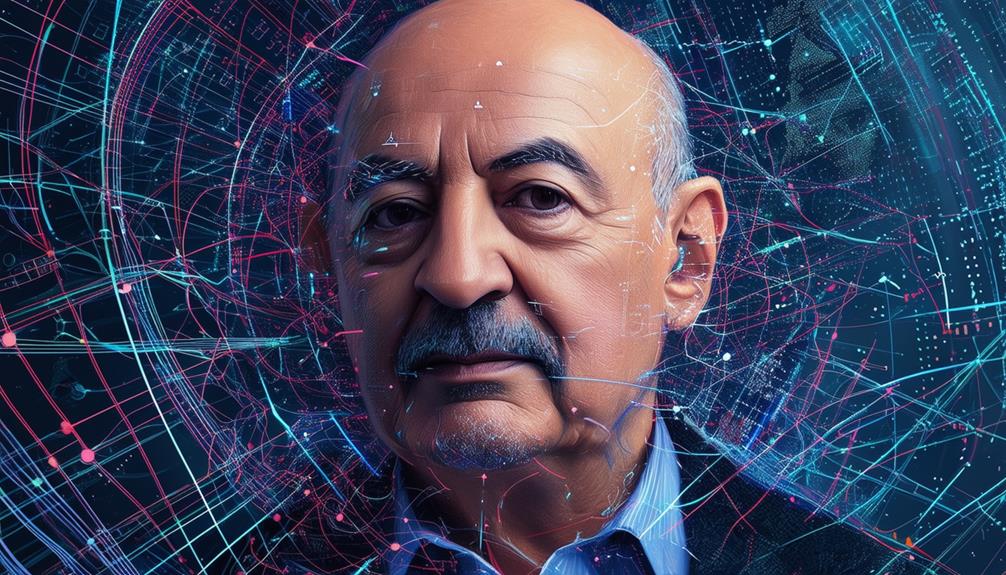
In bioinformatics, sequence alignment is crucial for identifying similarities and differences in genetic sequences. The Viterbi algorithm plays a key role in this process. Additionally, understanding sequence alignments enhances the accuracy of language models in speech recognition.
Importance in Bioinformatics
In bioinformatics, the Viterbi Algorithm is essential for precise sequence alignments in DNA sequencing and protein structure prediction. By identifying the most probable sequence of states in hidden Markov models, the algorithm allows for efficient analysis of biological sequences and the extraction of critical information.
Using the Viterbi Algorithm in bioinformatics offers several key advantages:
- Accurate Sequence Alignment: Provides high precision in aligning DNA and protein sequences.
- Genetic Variation Identification: Detects mutations and variations crucial for understanding genetic diseases.
- Protein Structure Prediction: Assists in predicting protein structures, which is vital for drug development and biological research.
- Evolutionary Relationship Analysis: Determines evolutionary links between species by analyzing genetic sequences.
- Data Efficiency: Manages large datasets effectively, making it suitable for large-scale genomic studies.
Enhancing Speech Recognition
The Viterbi Algorithm significantly enhances speech recognition by aligning spoken words with their most probable sequence of phonemes. When you speak, your words are transformed into acoustic signals that need to be decoded into text. This is where the Viterbi Algorithm excels. It efficiently maps observed acoustic features to phonetic units, ensuring accurate transcription of spoken language into text data.
In the realm of speech recognition, the alignment provided by the Viterbi Algorithm identifies the best match for each sound, which is crucial for converting spoken words into coherent text. This process goes beyond recognizing isolated sounds; it involves understanding the entire sequence to ensure the text accurately reflects what was said.
Additionally, the algorithm plays a pivotal role in speech synthesis. By precisely aligning phonetic units, it can generate natural-sounding speech from text, enhancing the human-like quality of virtual assistants and other AI-driven speech applications. The Viterbi Algorithm's decoding capabilities ensure that transcribed spoken language retains its intended meaning, thereby improving user experience across various AI applications.
Speech Recognition
Harnessing the Viterbi Algorithm, speech recognition systems excel at converting spoken language into accurate text representations. By analyzing audio signals, the Viterbi Algorithm identifies the most probable sequence of words or phonemes. This process, known as Viterbi decoding, is crucial for transforming spoken words into text. Here's why the Viterbi Algorithm is essential for speech recognition:
- Decoding Accuracy: It decodes audio signals with high precision, aligning spoken words with known language patterns.
- Efficiency: Speeds up the conversion of speech to text, enabling real-time applications.
- Reliability: Enhances the reliability of voice-controlled technologies by accurately predicting phoneme sequences.
- Scalability: Adapts to various languages and dialects, improving global usability.
- Integration: Seamlessly integrates with other AI technologies to provide a cohesive user experience.
When you use a voice assistant or dictate a message, the Viterbi Algorithm works silently in the background. It decodes the phonemes from your speech, matches them with the most probable words, and delivers an accurate text representation. This sophisticated decoding process ensures that speech recognition systems are efficient and reliable, revolutionizing how we interact with technology in our daily lives.
Error Correction

The Viterbi Algorithm, widely known for enhancing speech recognition accuracy, also plays a crucial role in error correction for digital communication systems. In noisy environments, signal interference is inevitable, making reliable data transmission challenging. The Viterbi Algorithm excels in such scenarios by decoding messages through probability evaluation of incoming bits, effectively filtering out transmission errors.
In digital communication, ensuring reliable transmission is critical. The Viterbi Algorithm aids this process by correcting errors in received signals. Whether you're on a mobile phone call or watching satellite TV, the algorithm operates in the background, verifying and correcting voice signals and data to ensure accuracy. By continuously analyzing the likelihood of different bit sequences, it identifies and rectifies discrepancies caused by noise and interference.
This capability of the Viterbi Algorithm to handle error correction in noisy environments guarantees high-quality communication, even under suboptimal conditions. From simple text messages to complex data packets, the algorithm ensures the integrity of the information received, maintaining the robustness of digital communication systems.
Impact on Wireless Communication
Pioneering wireless communication, the Viterbi Algorithm significantly improves data transmission reliability, even in noisy environments. This groundbreaking algorithm has been instrumental in transforming how we share data wirelessly. When Qualcomm implemented the Viterbi Algorithm in CDMA technology, it enabled multiple users to share the same bandwidth efficiently, revolutionizing mobile communication.
By enhancing data speeds and network capacity, the Viterbi Algorithm played a crucial role in the development of 2G and 3G networks. This technological leap not only improved signal quality but also ensured data reliability, making mobile connections more stable and faster. Key impacts include:
- Increased Network Capacity: Allowed multiple users to share the same bandwidth without interference.
- Improved Data Transmission: Increased reliability of data transmission, even in noisy environments.
- Enhanced Mobile Technology: Facilitated advancements in smartphones and mobile internet.
- Better Signal Quality: Significantly improved the quality of signals received by devices.
- Reliable Connectivity: Made wireless communication more dependable and consistent.
Thanks to the Viterbi Algorithm, we experience seamless and robust wireless communication today. Its integration into Qualcomm's CDMA technology set the stage for modern mobile networks, ensuring continuous connectivity regardless of location.
Extensions and Variants

Building on the original Viterbi Algorithm, several extensions and variants have emerged to address diverse challenges across various fields. One notable variant is the Max-sum algorithm, which is essential for tasks in machine learning and AI, as it identifies likely assignments in graphical models. This extension enhances the ability to work with complex probabilistic models more effectively.
Iterative Viterbi decoding is another significant advancement. It refines the original algorithm by iteratively improving the best subsequence matching a hidden Markov model, making it invaluable for applications such as speech recognition and bioinformatics. Meanwhile, the Lazy Viterbi algorithm offers a faster alternative, optimizing performance in real-world scenarios where speed is crucial.
For applications requiring soft decisions, the Soft Output Viterbi Algorithm (SOVA) is particularly useful. SOVA modifies the path metrics to provide soft output, improving the reliability of decoded messages in communication systems. An integral part of SOVA is survivor path selection, which accumulates cost over a sliding window to further enhance performance.
These extensions and variants of the Viterbi Algorithm illustrate its adaptability and ongoing relevance in solving complex problems across different domains, including AI, bioinformatics, and communications.
Legacy and Influence
Andrew Viterbi's algorithm has profoundly impacted artificial intelligence by revolutionizing the decoding and prediction of sequences in hidden Markov models. His pioneering work has established a foundation for numerous AI applications that depend on sequence analysis and maximum likelihood estimation. The Viterbi Algorithm is not merely a tool; it has become a cornerstone in fields such as speech recognition, computational linguistics, and bioinformatics.
Viterbi's contributions are pivotal in:
- Speech Recognition: Enhancing natural language processing and enabling voice-activated technologies.
- Computational Linguistics: Improving language decoding and translation systems.
- Bioinformatics: Analyzing DNA sequences and advancing genomic research.
- Target Tracking: Optimizing radar and sonar systems.
- Digital Communications: Enhancing error correction in data transmission.
The influence of the algorithm extends beyond these applications, touching various domains that rely on probabilistic modeling. Viterbi's work continues to shape machine learning algorithms, making them more robust and efficient. By providing a reliable method for accurate sequence prediction, the Viterbi Algorithm has become integral to modern AI systems. Its legacy is a testament to the transformative power of innovative thinking in translating theoretical concepts into practical, impactful technologies.
Conclusion
Andrew Viterbi's profound impact on AI is evident through the Viterbi Algorithm, which has revolutionized fields such as speech recognition, bioinformatics, and digital communications. Its efficiency and accuracy in sequence prediction tasks have made it indispensable. Modern AI systems often incorporate the principles of the Viterbi Algorithm, showcasing his lasting influence on technology and innovation.