AI in Healthcare: From Diagnosis to Drug Discovery
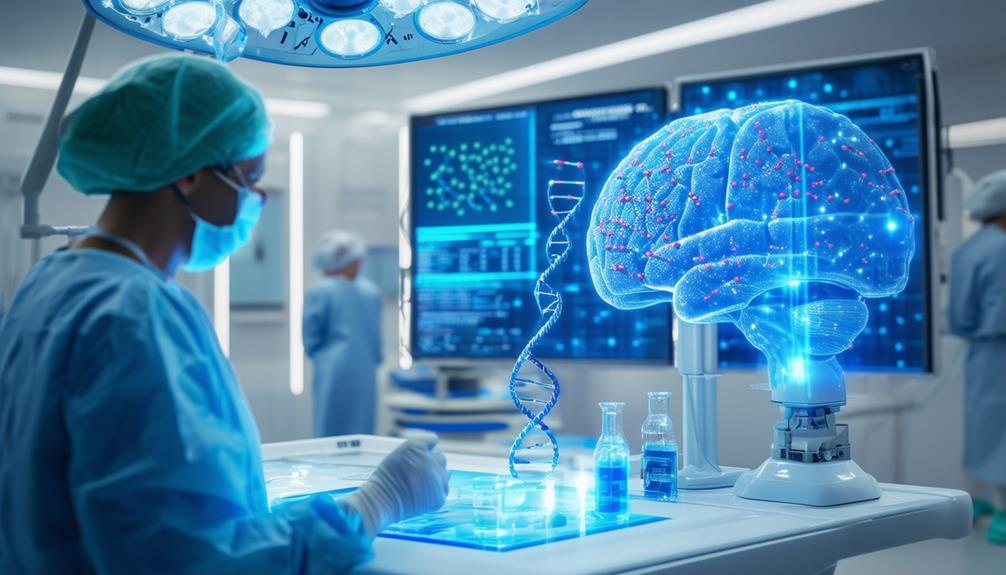
You are witnessing a transformative shift in healthcare, where AI is playing an essential role from diagnosis to drug discovery. Imagine AI enhancing medical imaging to detect diseases at their earliest stages or creating personalized treatment plans through the analysis of your genetic profile. Furthermore, AI accelerates drug discovery by identifying targets and potential compounds more swiftly than traditional methods. This integration promises more precise and efficient medical interventions. But how does it all work, and what does the future hold for AI in healthcare? Let's explore these groundbreaking advancements and consider what lies ahead.
Early Disease Detection

AI algorithms analyzing medical images and data enable earlier detection of diseases, improving patient outcomes. These advanced systems can identify anomalies in medical imaging that might be overlooked by the human eye, facilitating quicker diagnoses and earlier treatment initiation, which enhances recovery prospects.
AI tirelessly scans vast amounts of medical data to detect potential health issues before they become severe. This proactive approach allows for more effective condition management, potentially preventing complications. Early detection isn't just about identifying diseases; it's about catching them early enough to significantly impact treatment options and overall prognosis.
AI in Medical Imaging
AI in medical imaging leverages deep learning algorithms to analyze complex images such as MRIs, CT scans, and X-rays with high precision. These AI systems can identify abnormalities, tumors, fractures, and other medical conditions more swiftly than traditional methods. By automating image analysis, AI allows radiologists to concentrate on critical cases, leading to more timely and accurate diagnoses. This not only minimizes diagnostic errors but also enhances efficiency and improves patient outcomes.
A notable advantage of AI in medical imaging is its capability for early disease detection, which is crucial in the drug discovery process. Early identification of diseases enables more effective development of drug molecules, thereby optimizing the entire AI-driven drug discovery pipeline.
Impact of AI on Medical Imaging:
| Feature | Traditional Method | AI Technology |
|---|---|---|
| Speed of Analysis | Slower | Faster |
| Diagnostic Accuracy | Variable | High |
| Focus for Radiologists | Manual Review | Automated Insights |
| Early Disease Detection | Challenging | Enhanced |
| Integration with Drug Discovery | Limited | Significant |
The incorporation of AI in medical imaging is revolutionizing healthcare, enabling not only early disease detection but also facilitating more effective treatments and advancing new drug discoveries.
Personalized Treatment Plans

Harnessing advanced algorithms, personalized treatment plans transform patient care by tailoring therapies to individual genetic profiles, thereby reducing adverse reactions and enhancing treatment efficacy. With AI's assistance, precision medicine customizes treatments to meet your unique needs, ensuring targeted solutions that significantly improve the chances of successful outcomes.
AI plays a crucial role in developing these personalized treatment plans, making healthcare delivery more efficient and effective. By analyzing vast amounts of patient data, AI identifies the optimal therapies for you, minimizing the trial-and-error methods that often cause delays and complications. This precision medicine approach leads to better patient outcomes, as treatments are specifically designed to align with your genetic makeup.
The integration of AI and quantum computing accelerates the creation of personalized plans, ensuring you receive the most advanced and suitable care promptly. Early disease detection complements this by enabling proactive interventions, ensuring personalized treatment plans are implemented at the most opportune time. Ultimately, these personalized treatment plans represent a significant advancement in healthcare, guaranteeing care that is as unique as you are.
Predictive Analytics in Healthcare
Predictive analytics in healthcare enables early disease detection and customized treatment plans for patients. Leveraging AI to analyze extensive patient data, it forecasts health outcomes and personalizes care strategies. This approach not only enhances patient health but also optimizes resource utilization and reduces overall healthcare costs.
Early Disease Detection
Imagine being aware of a potential health issue long before it manifests any symptoms, thanks to advanced algorithms analyzing your medical data. Early disease detection through predictive analytics is transforming healthcare. By examining electronic health records, genetic tests, and other medical data, AI can forecast disease progression and identify individuals at high risk. This enables proactive interventions and the creation of personalized treatment plans, significantly improving patient outcomes.
Predictive analytics can detect conditions like diabetes, heart disease, and cancer in their early stages. By identifying these diseases early, treatment can commence sooner, thereby increasing the chances of successful management and even prevention. AI's capability to analyze vast amounts of data ensures that you receive the most precise and timely care.
Here's how AI impacts early disease detection:
| Disease | AI Application | Benefits |
|---|---|---|
| Diabetes | Analyzing blood sugar levels | Early lifestyle changes |
| Heart Disease | Monitoring heart rate and patterns | Preventive medications |
| Cancer | Imaging scans analysis | Early treatment initiation |
| Alzheimer's Disease | Genetic data and brain scans | Delaying progression |
| Chronic Kidney Disease | Urine and blood test analysis | Timely dietary adjustments |
Personalized Treatment Plans
AI-driven predictive analytics in healthcare create personalized treatment plans by analyzing your genetic and health data, ensuring therapies are tailored to your unique needs. By leveraging predictive analytics, healthcare providers can better understand your specific health profile, leading to customized treatment plans that minimize adverse reactions and enhance treatment efficacy.
Predictive analytics examines vast amounts of patient data, including genetic information, to deliver targeted and effective personalized treatments. This approach enables healthcare providers to anticipate potential health issues and intervene promptly, significantly improving patient outcomes. With personalized treatment plans, you receive therapies designed specifically for your condition, rather than a generic one-size-fits-all approach.
The integration of predictive analytics in healthcare allows for proactive care delivery, ensuring timely interventions that can prevent complications and improve prognoses. This shift towards personalized treatment plans leads to more efficient and reliable healthcare practices. As a result, your care experience is enhanced, leading to better health outcomes and a higher quality of life.
AI-Assisted Surgery

AI-assisted surgery offers unparalleled precision and accuracy, significantly reducing human error and enhancing patient outcomes. Real-time data analysis empowers surgeons to make informed decisions instantly, while advanced algorithms facilitate comprehensive surgical planning. This innovation transforms the surgical field by increasing efficiency, minimizing complications, and ensuring safer procedures.
Precision and Accuracy
AI-aided surgery significantly enhances the precision and accuracy of complex procedures, resulting in improved patient outcomes and shorter recovery times. By incorporating surgical robots equipped with AI, real-time data can be analyzed to provide predictive insights during operations, leading to fewer errors and more efficient procedures. This advancement means that precision and accuracy are greatly improved, facilitating minimally invasive surgeries and quicker recoveries.
AI algorithms help minimize human error by meticulously planning and executing each incision and movement. These intelligent systems enhance visualization and navigation, enabling surgeons to see exactly what they need to during procedures. AI technology offers real-time feedback, which helps avoid complications and improves patient safety.
The integration of AI in surgery not only eases the surgeons' tasks but also significantly enhances the overall healthcare experience. Improved surgical decision-making processes lead to fewer complications and smoother recoveries. With AI, each step of the surgery is optimized for maximum precision and accuracy, ensuring the best possible outcomes for patients.
Real-time Data Analysis
Surgeons now rely on real-time data analysis during procedures to enhance precision and make informed decisions. By utilizing AI-assisted tools, they can analyze patient data, including vital signs and imaging results, directly in the operating room. This immediate access to critical information strengthens their ability to make quick, accurate decisions, ultimately improving patient outcomes.
AI algorithms process vast amounts of data swiftly, offering valuable insights and support during complex surgical procedures. For instance, if a patient's vital signs indicate an unexpected change, AI can provide instant alerts, enabling surgeons to respond promptly and appropriately. This real-time analysis minimizes the risk of surgical errors and reduces complications, making surgeries safer and more efficient.
Incorporating AI in surgery empowers surgeons to achieve higher precision. With AI's real-time data analysis, they can navigate intricate anatomical structures more effectively, ensuring each movement is deliberate and accurate. This advanced technology not only boosts their confidence but also enhances the overall efficiency of the surgical process.
Ultimately, the integration of AI in surgery transforms patient care, making it more personalized and technologically advanced. By leveraging AI, surgeons are equipped to deliver the best possible outcomes for their patients.
Enhanced Surgical Planning
Leveraging AI in surgical planning allows for more precise and personalized procedures by analyzing pre-operative imaging data to optimize every aspect of the operation. This approach ensures unparalleled precision in incision placement and procedure execution, ultimately enhancing patient care. AI algorithms offer real-time guidance during complex surgeries, reducing the risk of errors and increasing the likelihood of successful outcomes. This technology not only makes surgeries safer but also smarter and more efficient.
AI takes into account your unique anatomy, pathology, and surgical history to create a tailored treatment plan. This personalized approach reduces operation time and lowers complication rates, leading to quicker recovery and better outcomes. Additionally, AI-assisted surgery is revolutionizing minimally invasive techniques, making them more accessible and effective.
The benefits extend beyond the operating room. By reducing complication rates and enhancing recovery times, AI in surgical planning complements other advancements in healthcare, such as drug discovery and clinical development. The integration of these technologies is transforming the healthcare landscape, making it more efficient and patient-centered. So, when considering the future of surgery, remember that AI is not just a tool—it's a game-changer for precision and patient care.
Drug Target Identification
Artificial intelligence is revolutionizing drug target identification by rapidly decoding disease mechanisms and accurately predicting protein structures. AI's ability to understand disease pathways and model 3D protein structures with high precision enables researchers to identify key proteins involved in diseases, thereby streamlining the process of discovering new drug targets. This significantly reduces both time and costs, making drug discovery more efficient.
Utilizing AI allows for the prioritization of potential drug targets more effectively, concentrating efforts on those with the highest success probability. This is transformative in precision medicine, where personalized therapies are crucial. AI facilitates the design of treatments tailored to the unique biological makeup of individual patients, resulting in more effective and less toxic therapies.
Predicting 3D protein structures is vital for creating effective therapeutics, and AI excels in this domain. By offering detailed molecular insights, AI aids in developing drugs that interact precisely with their targets, enhancing both efficacy and safety. In summary, AI's role in drug target identification is a pivotal advancement, setting the stage for the next generation of medical treatments.
Lead Compound Discovery

Lead Compound Discovery with AI
Building on AI's success in drug target identification, the technology now accelerates lead compound discovery by efficiently pinpointing potential drug candidates. AI platforms streamline this process, significantly reducing the time and resources required, enabling quicker identification of promising lead compounds.
AI aids in predicting the properties and behavior of lead compounds, which is crucial for their optimization. These AI-driven approaches allow researchers to focus on the most promising candidates, ensuring a more targeted and effective drug development process. Collaboration between AI platforms and pharmaceutical companies plays a pivotal role in this streamlined approach, as AI provides invaluable insights that enhance efficiency.
Here's a quick comparison table to visualize the benefits:
| Benefit | Description |
|---|---|
| Speed | Accelerates the identification of potential candidates. |
| Efficiency | Reduces the time and resources required. |
| Predictive Power | Accurately predicts lead compound properties and behavior. |
| Targeted Development | Focuses on promising candidates for further research. |
| Collaboration | Enhances efforts between AI platforms and pharma companies. |
The integration of AI in lead compound discovery is transforming the drug discovery landscape, making the process faster and more efficient.
AI in Clinical Trials
Integrating AI into clinical trials revolutionizes efficiency and cost-effectiveness. By identifying unknown flaws in trial designs early, AI can save significant time and money, potentially reducing costs by billions.
Recruiting participants is a major challenge, often causing delays. AI can streamline this process, reducing participant identification costs by up to $13 billion. It addresses patient awareness gaps, a common reason why 86% of trials miss enrollment deadlines. Enhanced patient monitoring and engagement through AI ensure better-informed participants, improving trial efficiency.
Additionally, AI enhances patient monitoring throughout the trial, ensuring adherence to protocols and higher data quality. This results in more reliable outcomes, accelerating the drug discovery process. By optimizing recruitment and monitoring, AI not only reduces costs but also shortens clinical trial timelines, facilitating faster market entry for new drugs.
Incorporating AI in clinical trials is transformative, offering a cost-effective means to boost efficiency, patient engagement, and the overall success of drug discovery efforts.
Future of AI in Healthcare
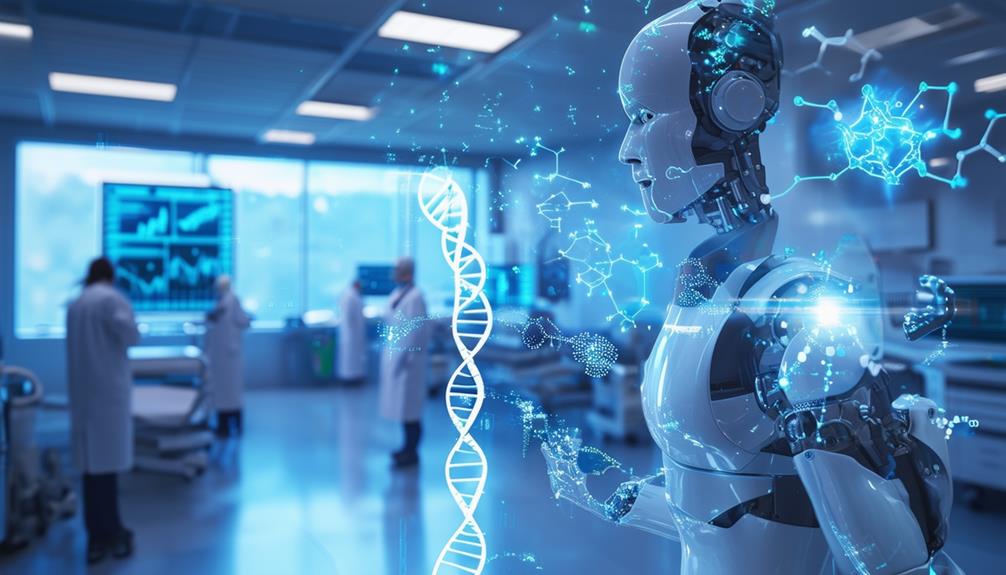
As AI continues to evolve, the future of healthcare promises groundbreaking advancements in patient care and cost reduction. AI technology is set to transform traditional healthcare practices, from diagnosis to drug discovery, making treatments more efficient and personalized. This transformation is already in motion with substantial investment in AI-driven solutions.
AI-enabled drug discovery exemplifies this impact. Investment in this area doubled annually, reaching over $5.2 billion in 2021. This surge underscores AI's potential to lower costs, shorten drug development timelines, and increase accessibility to new medications. Faster, more accurate drug discoveries could save lives and reduce healthcare spending.
AI technology is also making significant strides with chatbots, robotics, and telemedicine, enhancing patient care. These innovations are revolutionizing interactions with healthcare services, offering more immediate, accurate, and personalized care. Exchange-Traded Funds (ETFs) like GNOM, EDOC, AIQ, and BOTZ are capitalizing on these trends, focusing on digital health, genomics, and AI advancements, thereby providing exposure to the future of AI in healthcare. The horizon looks promising, with AI leading the way.
Conclusion
AI is transforming healthcare by enhancing early disease detection, improving diagnostic accuracy, and accelerating drug discovery. This technology enables personalized treatment plans and fosters groundbreaking advancements in medical research. Beyond increasing efficiency, AI aims to deliver tailored care that addresses individual patient needs. As AI technology progresses, expect more innovative changes that make healthcare smarter and more responsive. The future of medicine is now, driven by the power of AI.
Related posts