Advances in Robotic Hands: Mimicking Human Dexterity
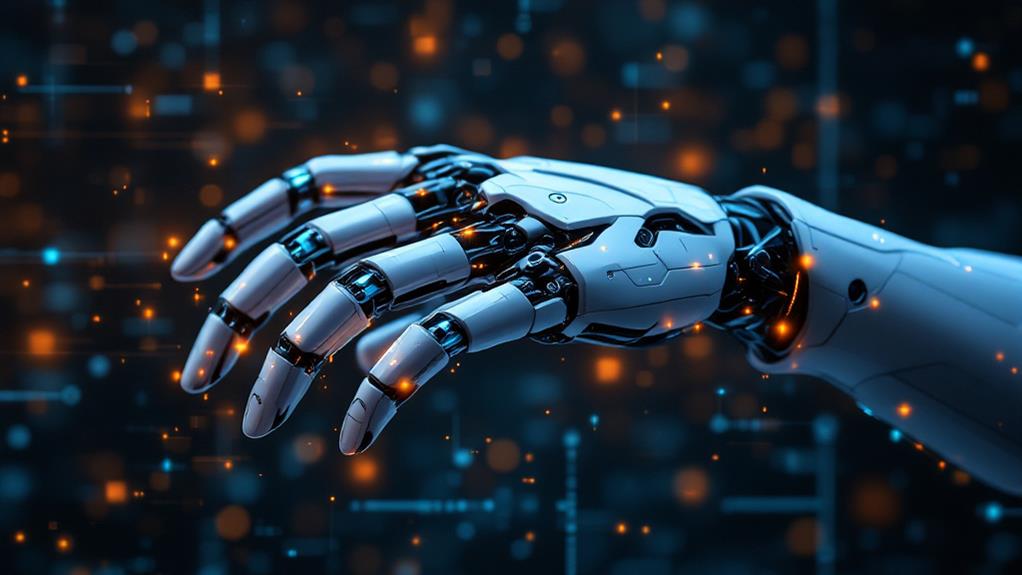
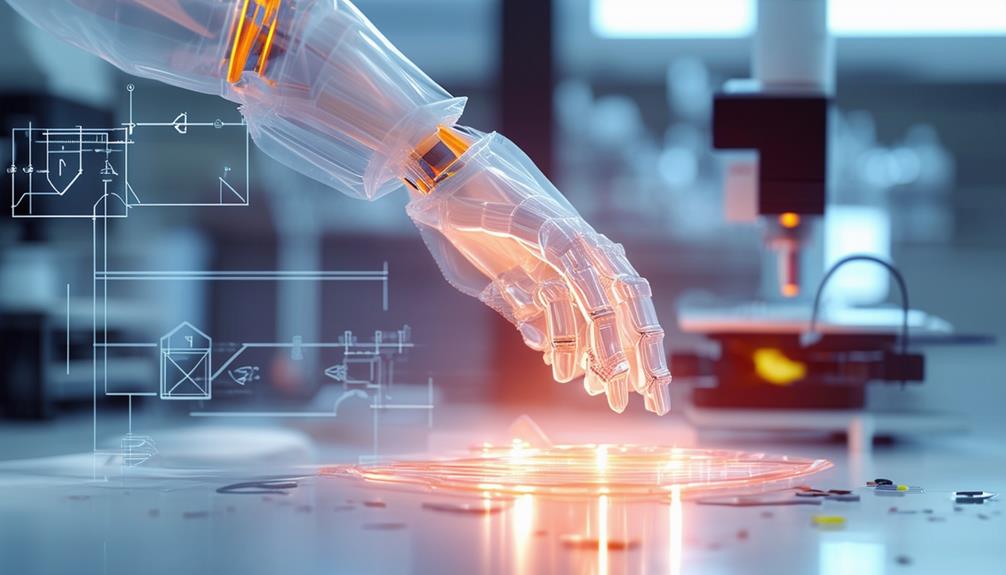
You're witnessing a remarkable period where robotic hands are evolving to replicate the dexterity and precision of human hands. Early designs started with simple grippers, but now they've progressed to having articulated fingers with embedded tactile sensors. This lets robots feel textures and adjust their grip dynamically. Machine learning plays a significant role, enabling hands to adapt and refine their movements constantly. From performing delicate surgical procedures to assembling fragile products, these hands excel across different industries. With ongoing advancements, they're inching closer to human-like abilities, offering even more exciting possibilities to investigate.
Evolution of Robotic Hand Design
The evolution of robotic hand design has been marked by groundbreaking progress, driven by the relentless pursuit of mimicking human dexterity. As you investigate this expedition, you'll uncover a series of historical milestones that have shaped today's advanced models. One of the earliest milestones was the creation of simple grippers in the mid-20th century, which laid the groundwork for more sophisticated designs. These initial versions, though basic, were essential in understanding the complexities involved in replicating human hand functions.
As technology advanced, so did the ambition to overcome design challenges. You'll notice how designers had to grapple with issues like achieving the right balance between flexibility and strength. In the 1980s, the introduction of articulated fingers was a major leap forward, allowing for more nuanced movements. However, this also brought new challenges, such as miniaturizing components without losing functionality.
Innovations in Sensor Technology
Imagine a world where robotic hands flawlessly sense and adapt to their environment, a capability made possible by innovations in sensor technology. These advancements are transforming how robotic hands interact with their surroundings. Tactile sensors are at the forefront, enabling robots to feel textures and pressure variations similar to human touch. By embedding these sensors in flexible materials, robotic hands achieve a more natural and responsive interaction, essential for tasks requiring precision.
You might wonder how these hands know how firmly to hold an object. That's where grip strength comes into play. Innovations in sensor technology provide real-time haptic feedback, allowing the robotic hand to adjust its grip strength dynamically. This guarantees that fragile objects aren't crushed while heavy items are held securely.
Integrating flexible materials with advanced tactile sensors means robotic hands can perform delicate operations with ease, regardless of whether it's handling soft fruits or assembling intricate components. By leveraging these innovations, robotic hands are coming closer to mimicking the dexterity of human hands. As they continue to evolve, the potential applications in different fields, from medicine to manufacturing, are vast and promising. You're witnessing the dawn of a new age in robotics.
Role of Machine Learning
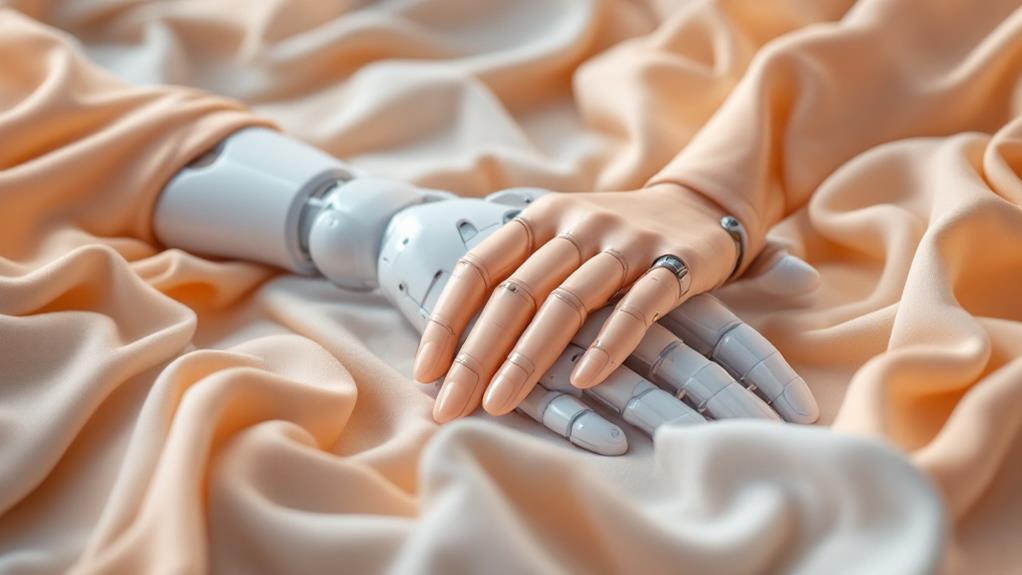
As robotic hands become more adept at physical interactions, machine learning plays a significant role in improving their capabilities. You'll find that these systems rely heavily on data driven control to mimic the subtleties of human dexterity. By analyzing vast amounts of data, machine learning algorithms help robotic hands understand and adapt to different tasks, from grasping delicate objects to manipulating complex tools with precision. This data driven approach allows robotic systems to recognize patterns and make real-time adjustments, improving their effectiveness in unpredictable environments.
Through adaptive learning, robotic hands can enhance their performance over time. When you introduce a new task or environment, these systems use feedback loops to refine their actions. This means that each interaction becomes a learning opportunity, allowing the robotic hands to adjust their strategies for better outcomes. As a result, these machines develop a form of "experience" that makes them more versatile and efficient. By continuously learning from their environment, robotic hands achieve a level of dexterity that was once exclusive to humans. Machine learning not only improves their physical abilities but also revolutionizes how you interact with robotic technology.
Applications Across Industries
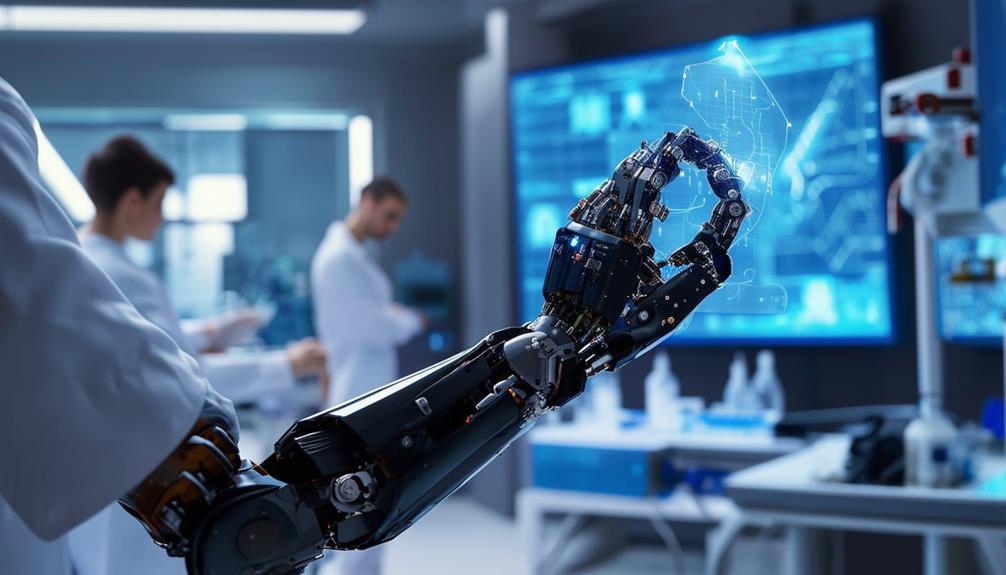
Transforming numerous sectors, robotic hands are finding applications across a multitude of industries. In industrial automation, they improve efficiency and precision, handling tasks that are too hazardous or repetitive for humans. You'll see them assembling intricate electronics or manipulating delicate materials with ease. They're not just limited to factories—surgical robotics is another field where robotic hands excel. Surgeons use them for minimally invasive procedures, providing increased accuracy and control.
For individuals with limb differences, prosthetic devices featuring robotic hands offer significant advancements in daily life. These prosthetics mimic natural hand movements, allowing users to perform tasks that were once challenging or impossible. In virtual reality, robotic hands add a tactile dimension, letting users physically interact with digital environments. This creates a more engaging experience for gaming, training, or simulations.
Robotic hands also play an essential role in teleoperation systems, where they allow operators to perform tasks remotely. Think about how valuable this is in scenarios like deep-sea exploration or space missions. Ultimately, in the domain of assistive technology, robotic hands can empower individuals with mobility impairments, helping them achieve greater independence. Each application demonstrates the adaptable potential of robotic hands across numerous fields.
Future Prospects in Robotics
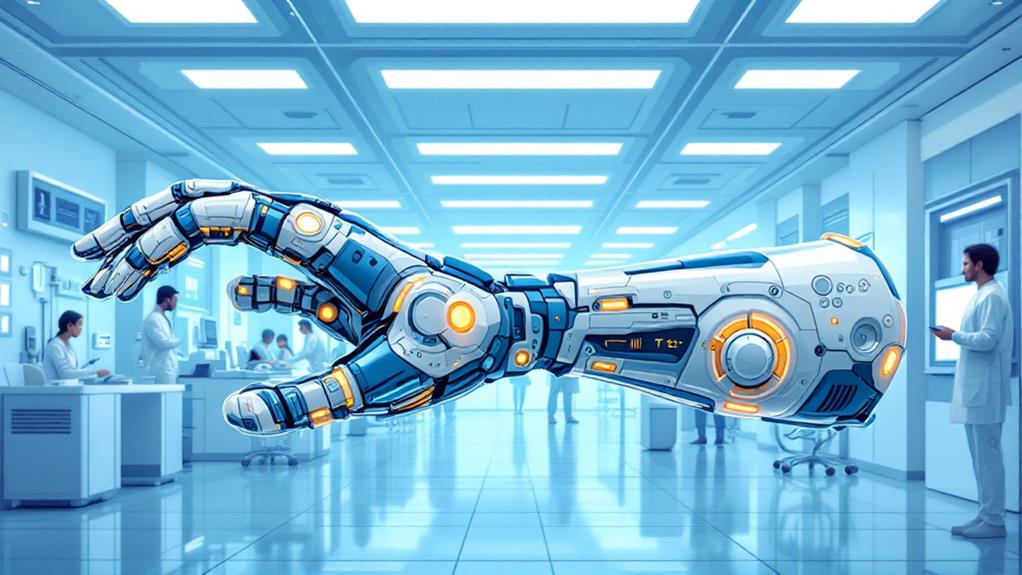
The future of robotics holds immense promise, with innovations poised to revolutionize how we interact with machines. As robotics technology advances, you'll see a profound shift in numerous aspects of life. Ethical considerations will play a significant role as we navigate the boundaries of human-robot interactions. Making sure that robots operate within ethical guidelines is imperative to prevent misuse and protect human rights.
You'll also need to reflect on the societal impacts of integrating advanced robots into daily life. As these machines become more common, they'll change how we work, learn, and socialize. Balancing automation with job creation is crucial to prevent economic displacement and make certain that everyone benefits from technological progress.
Economic implications are significant, too. The introduction of robotic hands with human-like dexterity could transform industries, leading to increased productivity and new business opportunities. However, you'll have to weigh these benefits against potential job losses and economic inequality.
User acceptance is another hurdle. For robots to become part of your everyday life, they'll need to be user-friendly and trustworthy. Building robots that people feel comfortable using and interacting with is fundamental to their successful integration into society.