Advancements in Swarm Robotics: Cooperation and Coordination

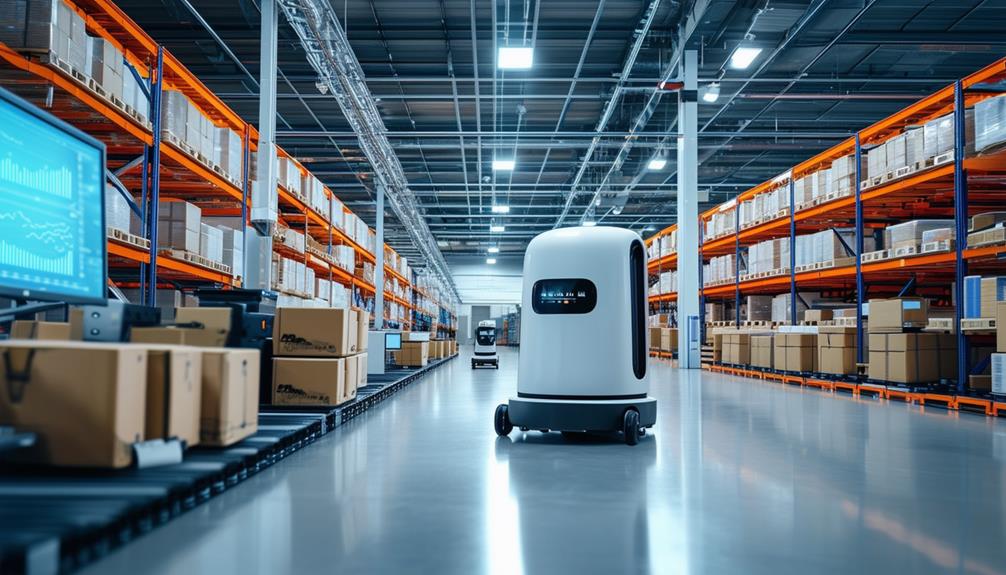
Exploring the latest advancements in swarm robotics reveals significant progress in cooperation and coordination among autonomous robots. Utilizing nature-inspired algorithms and robust communication systems, these swarms exhibit self-organizing behaviors that adapt fluidly to dynamic environments. Picture robots collaborating without a central command, employing local communication and stigmergy principles to efficiently allocate tasks and respond to changes. This decentralized methodology enhances scalability and boosts the performance of multi-robot systems. Interested in how these technologies are transforming efficiency and task management?
Nature-Inspired Algorithms
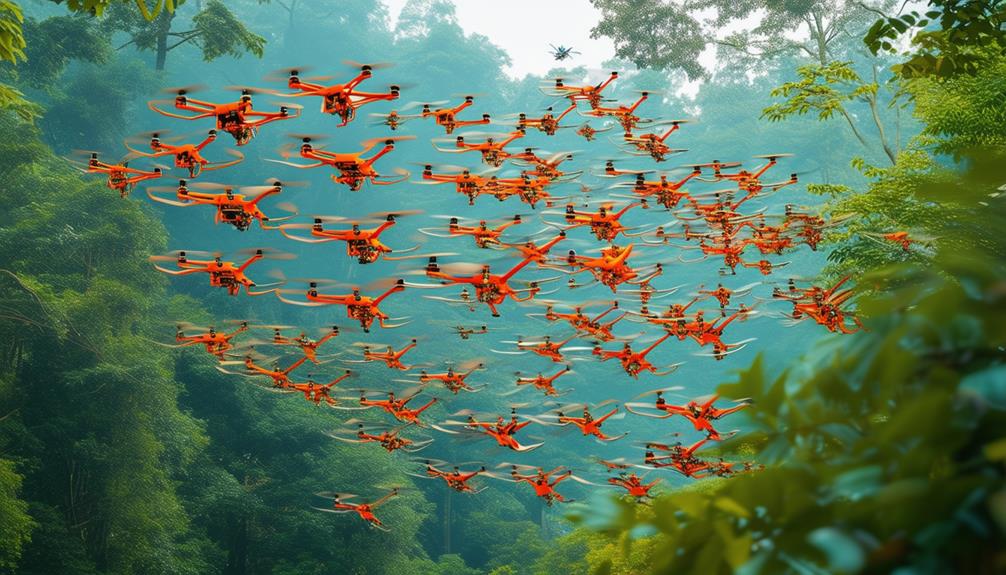
Nature-inspired algorithms play a pivotal role in guiding the behaviors and coordination of robot swarms. Observing the collaborative efforts of ants or bees reveals how they accomplish complex tasks without centralized control. Swarm robotics emulates these natural systems, utilizing such algorithms to promote collective behaviors among robots. This enables robots to communicate, retain task-related information, and coordinate actions effectively.
Consider a swarm of robots navigating a dense forest. Nature-inspired algorithms allow them to exhibit self-organizing behaviors, adapting to environmental complexities autonomously. These algorithms facilitate efficient cooperation, ensuring that each robot understands its role and interacts seamlessly with others.
Communication and memory are essential in swarm robotics. Nature-inspired algorithms mimic how insects leave trails or signals for others to follow. This form of communication enables robots to share information, update their memories, and collectively adjust their behaviors.
In essence, these algorithms form the foundation of swarm robotics, enabling robots to collaborate efficiently in intricate environments. The principles derived from nature not only enhance coordination but also drive innovation in robotic technology.
Robust Communication Mechanisms
To ensure your swarm robotics systems operate seamlessly, you'll need robust communication mechanisms such as wireless signal optimization and fault-tolerant protocols. These strategies are essential for preventing disruptions and enhancing coordination among robots, particularly in dynamic environments. By focusing on these aspects, you can significantly improve the reliability and efficiency of your robotic swarms.
Wireless Signal Optimization
Optimizing wireless signals is crucial for robust communication and coordination in swarm robotics systems. Enhanced communication efficiency directly translates to improved overall performance. Implementing continuous-time recurrent neural network (CTRNN) controllers can significantly bolster coordination strategies, particularly in multi-UAV (Unmanned Aerial Vehicle) monitoring scenarios. These controllers facilitate seamless communication among units within the swarm, thereby ensuring robust connectivity.
A noteworthy approach is the Local Charged Particle Swarm Optimization (LCPSO) algorithm. Drawing inspiration from flocking behaviors and Particle Swarm Optimization (PSO), LCPSO is engineered to enhance local communication and coordination. This algorithm excels in tracking moving targets, a frequent requirement in dynamic environments. Through these cooperative mechanisms, swarm robotics systems can achieve higher levels of efficiency and reliability.
To illustrate, here is a comparison of key aspects in wireless signal optimization for swarm robotics:
| Aspect | Benefit | Example Application |
|---|---|---|
| Wireless Signal Optimization | Enhances communication efficiency | Multi-UAV monitoring |
| CTRNN Controllers | Bolsters coordination strategies | Swarm robotics systems |
| LCPSO Algorithm | Optimizes local communication | Tracking moving targets |
| Cooperation Mechanisms | Ensures reliable communication | Dynamic environment tasks |
This structured approach ensures semantic accuracy, completeness, consistency, conciseness, relevance, interoperability, and trustworthiness, facilitating informed decision-making in the optimization of wireless signals for swarm robotics.
Fault-tolerant Protocols
Implementing vital fault-tolerant protocols is essential for maintaining reliable communication in swarm robotics, ensuring that the system continues to function smoothly even in the presence of individual robot failures. Robust communication mechanisms are necessary to guarantee reliable information exchange among all robots. Continuous-time recurrent neural network (CTRNN) controllers play a pivotal role in enhancing communication efficiency across the swarm.
To tackle tasks like tracking moving targets, the Local Charged Particle Swarm Optimization (LCPSO) algorithm, inspired by flocking algorithms and Particle Swarm Optimization (PSO), can be employed. Effective monitoring methods are crucial, especially in multi-UAV systems operating in dynamic environments. These methods optimize communication and coordination, ensuring that every unit remains synchronized.
When designing communication protocols, focus on creating fault-tolerant behaviors. This is key to ensuring efficient task execution, irrespective of any individual robot failures. Robust protocols enhance the swarm's resilience, enabling it to adapt and maintain performance even in challenging conditions. Prioritizing these elements improves the overall efficiency and reliability of your swarm robotics system, paving the way for more advanced and dynamic applications.
Foraging Behavior
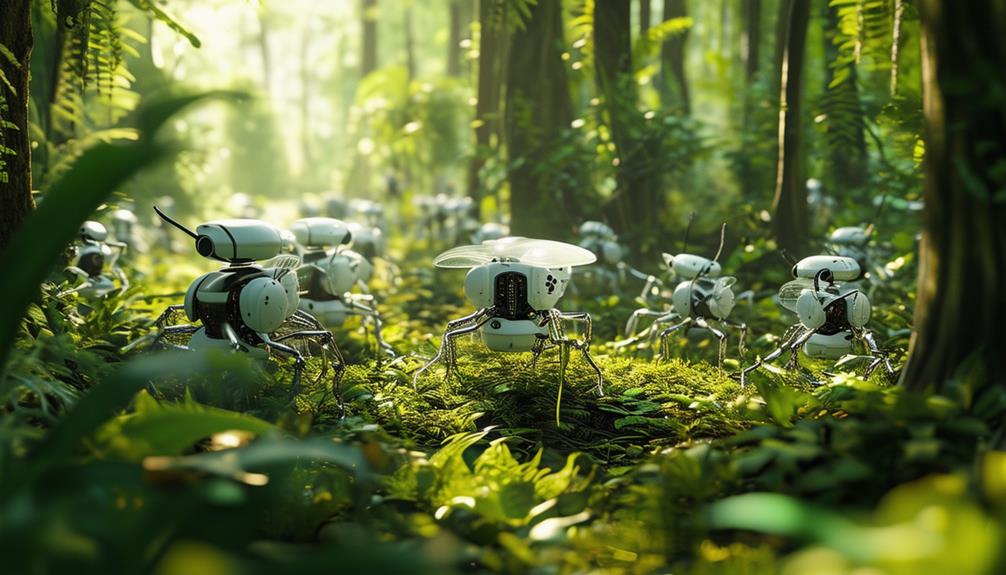
In recent years, advancements in swarm robotics have significantly transformed foraging behavior, enabling robots to relocate continuously and execute complex tasks with unprecedented efficiency. Swarm foraging utilizes multi-robot systems, where each unit works cohesively to ensure coordinated behavior and efficient task execution. These systems excel in foraging tasks due to their ability to distribute work among multiple robots, thereby optimizing overall performance.
Deep reinforcement learning plays a crucial role in enhancing swarm foraging behavior. It allows robots to learn and adapt to dynamic environments, making informed decisions based on previous experiences. Memory is essential, as it enables robots to recall and apply past strategies to current situations, vastly improving adaptability and efficiency.
Technological advancements in UAVs (unmanned aerial vehicles) have also greatly enhanced foraging capabilities. UAVs can quickly cover large areas, collect data, and relay information to ground robots, creating a synergistic approach to task execution.
Local Communication
In swarm robotics, local communication is crucial for enabling signal-based interactions and efficient sharing of proximity data among robots. These mechanisms support decentralized task allocation, allowing robots to coordinate and adapt effectively. Understanding these points underscores the importance of robust communication strategies in swarm intelligence.
Signal-based Interaction
Signal-based interaction enables robots in a swarm to communicate locally, facilitating effective task coordination and information sharing. Through local communication, each robot can send and receive signals, crucial for achieving collective goals and ensuring that every unit contributes to the overall mission.
This method allows robots to navigate complex environments, avoid obstacles, and adjust their actions based on real-time data from their peers. Such coordination is vital for the swarm's success, enabling robots to adapt to changing conditions and unexpected challenges, thereby enhancing the swarm's overall performance.
Local communication ensures that each robot understands its role and can work harmoniously with others, reducing the need for a central control system. This makes the swarm more resilient and flexible. Signal-based interaction transforms a collection of individual robots into a cohesive, intelligent unit capable of sophisticated cooperation and problem-solving, embodying the principles of swarm robotics.
Proximity Data Sharing
Proximity data sharing enables robots in a swarm to exchange crucial information directly with their neighbors, improving coordination and cooperation. Through local communication mechanisms, each robot can share sensor data with nearby robots, forming a robust network of information. This approach allows for decentralized decision-making, enabling the swarm to respond rapidly to environmental changes without relying on centralized control.
In swarm robotics, local sensor data sharing is essential for coordinating movements and actions, which is vital for accomplishing collective tasks. For example, if one robot detects an obstacle, it can immediately inform its neighbors, allowing the entire swarm to adjust their paths in real-time. Such coordination is crucial for the swarm's efficient and effective operation.
Additionally, proximity data sharing significantly enhances the scalability of swarm robotics systems. As the number of robots increases, the system avoids communication bottlenecks common in centralized control setups. Each robot only communicates with its immediate neighbors, ensuring the system remains scalable and robust. This local communication strategy allows the swarm to grow and adapt to diverse tasks and environments seamlessly.
Decentralized Task Allocation
Decentralized task allocation leverages local communication, enabling robots to independently share data and make decisions without relying on a central command. In swarm robotics, this approach ensures efficient coordination by reducing dependency on a single point of control. Each robot uses local communication to adapt to dynamic environments, effectively distributing tasks and enhancing the system's overall performance.
Implementing decentralized task allocation minimizes the need for global communication networks, significantly improving the scalability of swarm systems. This approach not only increases the system's resilience to failures but also boosts its robustness. If one robot fails, the others can continue to operate autonomously, redistributing tasks as necessary without causing disruption.
Local communication is crucial in this process, allowing each robot to convey its status and receive updates from its neighbors. This method supports a high degree of autonomy and flexibility, enabling the swarm to address various challenges in real-time. Effective coordination through decentralized task allocation ensures that swarm robotics applications remain efficient and adaptable, even in unpredictable scenarios. By adopting these strategies, you can achieve a more dynamic and responsive robotic swarm.
Stigmergy in Robotics

How does stigmergy transform the way robot swarms coordinate and communicate indirectly? Stigmergy, a fascinating concept, enables robot swarms to achieve remarkable coordination and cooperation without direct interaction. Instead, robots modify their environment to leave cues, which other robots can interpret and act upon. This mechanism is essential for efficient task allocation and collective decision-making.
Imagine a swarm of robots tasked with sorting objects. Rather than communicating directly, each robot leaves markers indicating completed tasks or areas needing attention. Subsequent robots interpret these markers and adjust their actions accordingly, leading to smooth and efficient processes. This indirect communication facilitates self-organization and emergent behaviors, where complex patterns arise from simple interactions.
Stigmergy is especially powerful in dynamic environments where traditional communication methods might fail. By continuously modifying and reading the environment, robot swarms can adapt to changes and still accomplish their goals. This method of indirect communication not only improves collaboration but also reduces the need for complex programming and direct oversight.
Through stigmergy, robot swarms can operate more autonomously, making collective decision-making more robust and adaptive. It's a game-changer in the domain of swarm robotics, pushing the boundaries of what's possible with self-organizing systems.
Advanced Monitoring Methods
Building on the concept of stigmergy, advanced monitoring methods significantly enhance the efficiency and coordination of robot swarms in dynamic environments. These methods are particularly useful for optimizing the performance of multi-UAV systems, enabling them to swiftly adapt to changing conditions.
One such method, the Local Charged Particle Swarm Optimization (LCPSO) algorithm, is inspired by flocking behavior and Particle Swarm Optimization (PSO). LCPSO is highly effective for tracking moving targets, thereby improving the responsiveness and accuracy of robot swarms.
Utilizing identical continuous-time recurrent neural network (CTRNN) controllers can further enhance intra-swarm communication. These controllers ensure seamless operation within the collective, allowing robots to make real-time adjustments based on shared information. Robust communication mechanisms are essential to maintain consistent information flow, which prevents breakdowns in coordination, even in complex and dynamic environments.
Deep reinforcement learning is another powerful tool for fostering advanced macroscopic swarm behavior. It enables the swarm to develop sophisticated foraging skills and other collective behaviors crucial for service robotics.
Multi-Robot Systems

Coordinating multiple robots to achieve collective goals requires efficient task allocation and resilient communication protocols, which are crucial for the success of multi-robot systems. These systems rely on local interactions and robust communication mechanisms to ensure seamless cooperation and coordination. In swarm robotics, optimizing the behavior and coordination of multi-robot systems is essential. Robots divide tasks based on their capabilities, ensuring that every robot contributes effectively to the collective goals.
Here are four key elements that highlight the importance of these systems:
- Enhanced Efficiency: Precise task allocation allows each robot to perform tasks it is best suited for, enhancing overall efficiency.
- Resilient Communication: Reliable communication protocols keep the swarm connected, even in challenging environments, ensuring continuous operation.
- Adaptability: Local interactions enable the system to quickly adapt to changes, maintaining smooth coordination.
- Scalability: Multi-robot systems can scale up efficiently, managing larger and more complex tasks as more robots are added.
Interdisciplinary Integration
Integrating control theory and statistical analysis into swarm robotics leverages interdisciplinary approaches to optimize collective robot behavior in unstructured environments. This integration is crucial for achieving emergent order, where simple individual rules culminate in complex, coordinated actions. For example, in UAV deployment, these principles ensure drones can navigate and complete tasks in unpredictable settings.
Control theory facilitates the development of algorithms that guide robot movements and interactions, while statistical analysis aids in understanding and predicting these interactions, allowing for parameter adjustments to enhance performance. This synergy is essential for effective swarm robotics.
Stigmergy, a key communication mechanism within swarms, enables robots to leave signals in the environment that inform others, leading to coordinated actions without direct communication. This method is particularly effective in realistic deployment scenarios requiring robust, indirect communication.
It is also critical to emphasize responsible practices in research and applications to prevent physical harm, in alignment with ethical standards set by organizations like MDPI. This focus on responsibility upholds the integrity and positive impact of advancements in swarm robotics.
Enhancing Efficiency

Optimizing communication mechanisms is crucial for enhancing efficiency in swarm robotics. Effective coordination depends on how well robots communicate and share information. Utilizing identical CTRNN controllers can significantly improve communication among robots, ensuring smoother coordination and better performance.
Consider these transformative advancements in swarm robotics:
- Local Charged Particle Swarm Optimization (LCPSO): This algorithm excels in tracking moving targets efficiently, making it invaluable for dynamic environments.
- Deep Reinforcement Learning: Leveraging this technology enables macroscopic swarm foraging behavior, essential for complex service robotics scenarios.
- Integration of Control Theory and Statistical Analysis: Combining these disciplines helps optimize order emergence, resulting in more predictable and reliable swarm behaviors.
- Improved Communication Mechanisms: Refining how robots in a swarm interact can lead to higher efficiency and better overall coordination.
These advancements are practical solutions that drive real-world improvements. By adopting these strategies, you are not just enhancing efficiency but revolutionizing how swarm robotics operate. Implement these innovations, and you'll witness your swarm systems achieving unprecedented levels of performance and coordination.
Conclusion
Advancements in swarm robotics have significantly enhanced cooperation and coordination, driven by nature-inspired algorithms, robust communication protocols, and decentralized decision-making processes. Leveraging local communication and stigmergy, these systems dynamically adapt and allocate tasks efficiently. The interdisciplinary integration of various technologies has improved the scalability and performance of multi-robot systems, making them more efficient than ever. Embracing these advancements allows robots to achieve collective goals with unprecedented autonomy and effectiveness. The future of robotics is promising, marked by increased autonomy and collaborative efficiency.
Related posts