Advancements in Robotic Prosthetics and Rehabilitation Devices
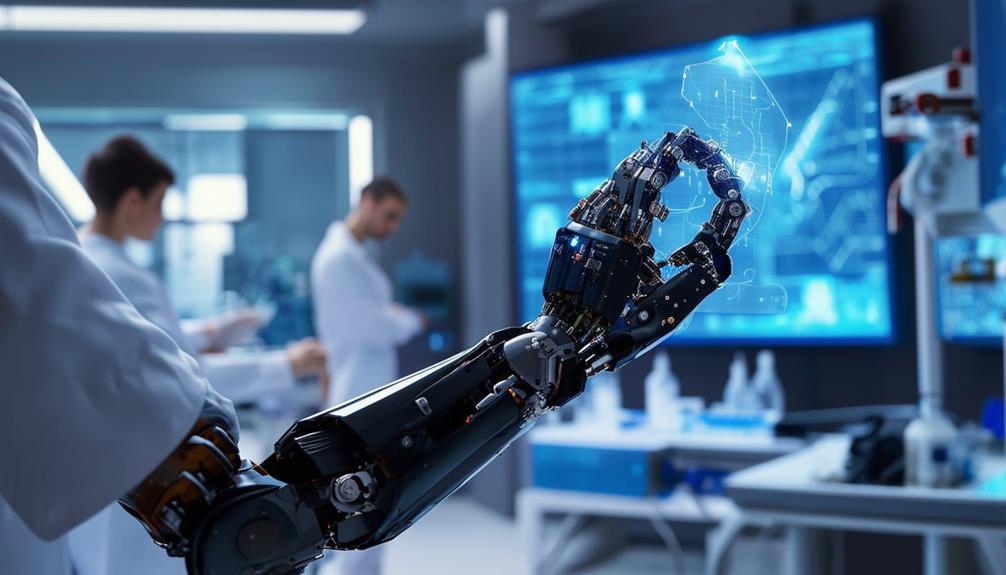
Imagine a world where robotic prosthetics not only replace lost limbs but also enhance your natural abilities. Advancements in haptic feedback and control mechanisms provide unprecedented levels of precision and comfort. Personalized user interfaces and user-centered designs ensure these prosthetics feel like a true extension of your body, significantly improving mobility and independence. However, integrating these high-tech solutions into everyday life requires careful attention to data privacy and security. Discover the innovations driving this field and explore what the future holds for robotic prosthetics and rehabilitation devices.
Enhanced Haptic Feedback
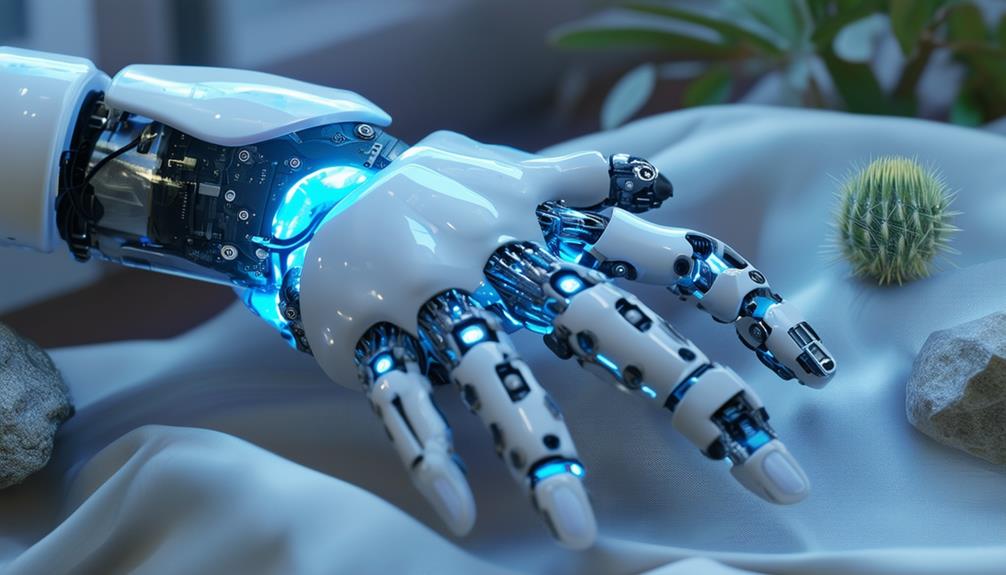
Advanced robotic prosthetics now enable users to experience pressure, texture, and temperature through enhanced haptic feedback. These sophisticated prosthetic limbs offer more than just mechanical function; they provide a genuine sense of touch. Haptic feedback technology has fundamentally transformed user interaction with the environment, delivering tactile sensations that closely mimic natural touch.
Imagine sensing the roughness of a surface or the warmth of a cup of coffee. This is the capability that haptic feedback provides. It enhances grip strength, dexterity, and precision, allowing you to handle delicate objects or heavy items with ease. The integration of haptic feedback into robotic prosthetics creates a more natural and immersive experience, making everyday activities more intuitive and less cumbersome.
Research indicates that haptic feedback significantly improves functionality and greatly enhances user satisfaction and overall quality of life. This technology fosters a deeper connection with your surroundings, promoting greater independence and confidence. By incorporating haptic feedback into advanced prosthetic designs, engineers are ensuring that users not only adapt to their prosthetics but also thrive with them.
Advanced Control Mechanisms
Cutting-edge control mechanisms in robotic prosthetics empower users with unprecedented precision and natural movement. Brain-machine interfaces (BMIs) allow users to control prosthetic limbs with their thoughts, making movements more intuitive. These interfaces read signals directly from the brain, translating them into seamless actions performed by the prosthetic.
The integration of sensor technology, such as gyroscopes and accelerometers, further enhances the functionality of these devices. These sensors provide real-time feedback on the limb's position and movement, allowing for more accurate and natural motion.
Actuators, including electric motors and shape memory alloys, play a crucial role in mimicking the natural movement of human limbs. They enable prosthetics to move smoothly and efficiently, making daily activities easier and more fluid.
Key benefits of advanced control mechanisms in robotic prosthetics include:
- Brain-machine interfaces: Control the prosthetic with your mind for intuitive use.
- Sensor technology integration: Obtain real-time feedback and improved movement precision.
- Actuators: Experience natural and efficient limb movements.
- Ultrasound-driven control: Achieve fine motor control for delicate tasks.
These advancements offer a level of functionality and ease of use that was previously unimaginable in prosthetic technology.
Personalized User Interfaces
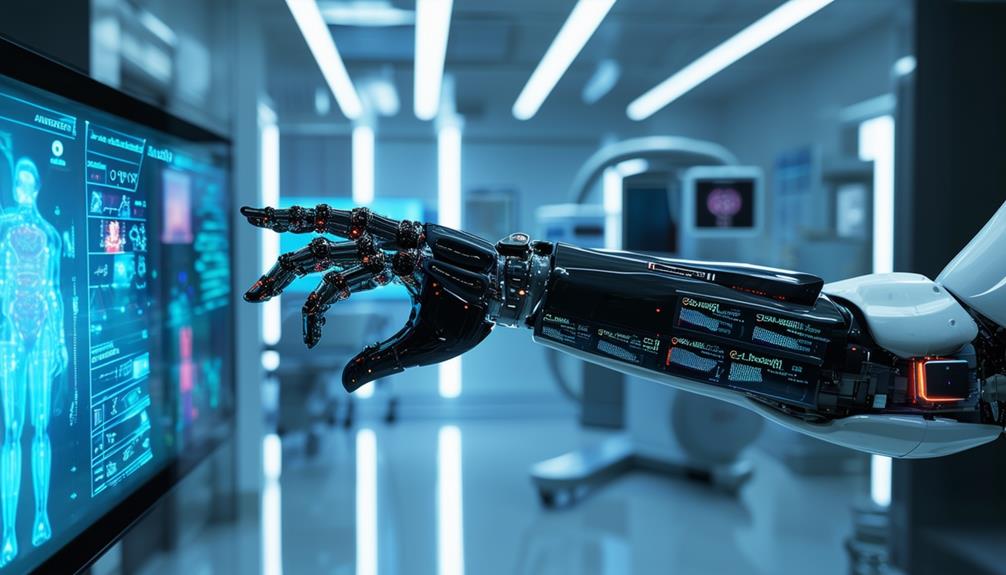
Enhance your experience with robotic prosthetics through personalized user interfaces tailored to your unique needs. Adaptive control systems and customizable sensory inputs provide optimal control and comfort. Integrating these features ensures your prosthetic device seamlessly becomes an extension of yourself, precisely aligned with your preferences and requirements.
Adaptive Control Systems
Integrating adaptive control systems into robotic prosthetics transforms user interaction, providing a personalized and intuitive experience. These systems leverage advanced prosthetic technology and artificial intelligence to learn and adapt to individual movements and preferences, making the prosthetic limb an extension of the user's body.
Adaptive control systems utilize sensory feedback to deliver real-time data on position, force, and movement. This data helps fine-tune system responses, resulting in smoother and more natural interactions. Imagine a prosthetic that adapts to your daily activities, optimizing comfort and functionality.
Key features of adaptive control systems include:
- Personalized User Interfaces: Customized to meet individual needs and preferences.
- Real-time Adaptation: Continuously adjusts based on sensory feedback.
- Enhanced Usability: Simplifies control of the prosthetic limb.
- Improved Comfort: Ensures a seamless experience through sensors and actuators.
With these capabilities, adaptive control systems in robotic prosthetics go beyond merely replacing lost functions; they significantly enhance quality of life. This technology is transformative, offering a more natural and efficient path to regaining independence.
Customizable Sensory Input
Leveraging adaptive control systems, customizable sensory input in robotic prosthetics provides a tailored user experience by integrating advanced touch sensors, accelerometers, and gyroscopes. These technologies enable prosthetic limbs to move with precision while delivering sensory feedback, making them feel more natural. Customizable interfaces allow you to adjust settings to meet your specific needs and preferences, enhancing both comfort and functionality.
Imagine regaining a sense of touch through your prosthetic hand. The embedded touch sensors enable you to feel textures and pressure, restoring a level of interaction with your surroundings that was once deemed impossible. Accelerometers and gyroscopes further enhance your control over movement and spatial orientation, allowing you to navigate your environment with greater confidence and ease.
Customizable sensory input interfaces don't just replicate natural sensory-motor capabilities; they enhance them. By providing tailored sensory feedback, these advanced robotic prosthetics improve control and proprioception, resulting in better mobility and a more satisfying user experience. This makes everyday activities more manageable and comfortable.
User-Centered Design
User-centered design is essential in developing prosthetic devices that genuinely address the needs and preferences of their users. Focusing on the real-world requirements of diverse user groups is crucial when creating new robotic prosthesis technologies. This approach ensures that prosthetic care encompasses not just functionality but also comfort, usability, and overall satisfaction.
By incorporating user perspectives from the outset, developers can emphasize features that are most important, such as pain reduction, enhanced mobility, and daily independence. The goal is not merely to create a functional device but to design one that integrates seamlessly into a user's daily life.
To achieve this, consider the following principles:
- Engage diverse user groups: Include users from various backgrounds and abilities to gather a wide range of insights.
- Focus on key needs: Prioritize pain reduction, improved mobility, and daily independence to maximize user satisfaction.
- Implement iterative feedback loops: Continuously refine the design based on user feedback to ensure the final product meets their evolving needs.
- Integrate policy considerations: Advocate for the inclusion of user perspectives in policy decisions to develop more effective and user-friendly prosthetic technologies.
Mobility and Independence
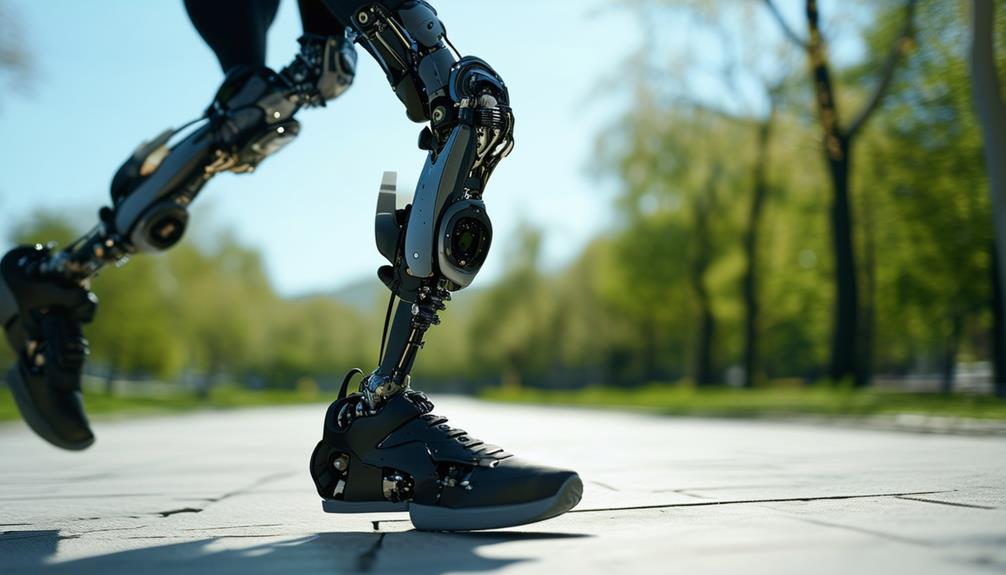
Robotic prosthetics significantly enhance your movement capabilities, simplifying daily activities. Equipped with advanced sensors and actuators, these devices offer precise, natural limb-like function. This seamless integration into everyday life boosts your independence.
Enhanced Movement Capabilities
Robotic prosthetics, equipped with advanced sensors and actuators, significantly enhance mobility and independence for users by enabling more natural and intuitive movements. Recent innovations, including brain-machine interfaces and neural control systems, have revolutionized the field, allowing for precise and responsive control of prosthetic devices.
Key features of these advancements include:
- Advanced Sensors: These sensors detect subtle muscle movements and user intentions, facilitating seamless interaction between the prosthetic and its user.
- High-Performance Actuators: These actuators mimic the complex movements of natural limbs, providing smoother and more precise actions.
- Brain-Machine Interfaces: These interfaces enable direct communication between the brain and the prosthetic, ensuring faster and more accurate responses.
- User-Centered Design: Focusing on individual needs ensures that prosthetics are not only functional but also comfortable and user-friendly.
Ongoing collaboration between researchers and technology companies continues to push the boundaries of what is achievable in terms of mobility and independence, driving the development of next-generation prosthetics.
Daily Life Integration
Advanced robotic prosthetics enable seamless integration of mobility and independence into daily life through intuitive control mechanisms and user-friendly designs. Cutting-edge sensors and control systems in these prosthetics allow natural interaction with the environment, making activities like walking, cooking, and engaging in sports more accessible.
Ongoing research aims to develop control mechanisms that make prosthetics feel like a true extension of the body. Imagine a prosthetic hand that responds to thoughts and movements as quickly as a natural one—this is now a tangible reality.
Improved designs focus on comfort, stability, and natural movement, allowing for a wide range of tasks without discomfort. User-centered design principles ensure these devices meet individual needs and lifestyles, resulting in prosthetics that aid rather than hinder, providing the freedom to live life on your terms.
Clinical Integration
Effective clinical integration of robotic prosthetics necessitates a coordinated approach to seamlessly incorporate these advanced devices into patient care routines. Optimizing rehabilitation outcomes requires focusing on key areas such as understanding EMG signals, collaborating with mechanical engineering experts, and mastering advanced limb prosthesis technologies. This strategy ensures that both healthcare professionals and patients can effectively utilize these devices.
Clinical integration involves several critical steps:
- Training Healthcare Professionals: Equip medical staff with the necessary knowledge and skills to handle, maintain, and troubleshoot robotic prosthetics.
- Educating Patients: Provide comprehensive instructions and support to patients, ensuring they are comfortable and confident in using their new prosthetics.
- Conducting Clinical Trials: Assess the effectiveness and safety of these devices in real-world settings through rigorous testing and evaluation.
- Collaborative Efforts: Foster collaboration among medical professionals, engineers, and patients to ensure the successful adoption and optimal functioning of robotic prosthetics.
This process ensures semantic accuracy, completeness, consistency, conciseness, relevance, interoperability, and trustworthiness in the integration of robotic prosthetics into clinical practice.
Data Privacy Considerations
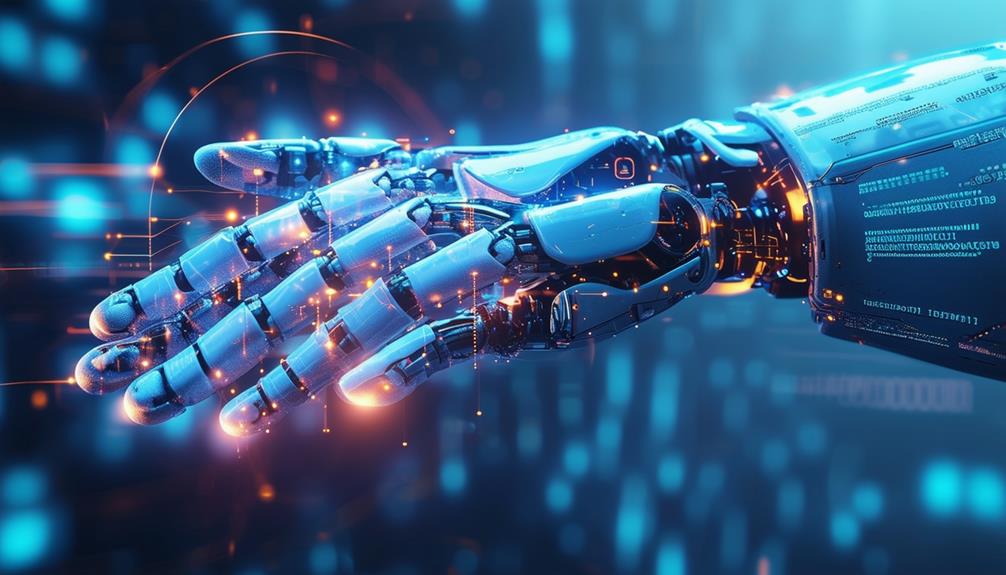
Protecting sensitive patient information in robotic prosthetics is crucial for maintaining trust and ensuring compliance with data protection laws such as HIPAA. Advanced prosthetic devices collect significant amounts of sensitive data, making data privacy a top priority.
To secure data transmitted from prosthetic devices to servers, robust encryption techniques must be employed. Encrypted data ensures that even if intercepted, it remains unreadable. Additionally, always use secure server connections to prevent unauthorized access to patient information.
Implementing two-factor authentication (2FA) adds an extra layer of security by requiring a second form of identification, thereby reducing the risk of unauthorized access. Regular security audits are essential for identifying and addressing vulnerabilities, ensuring the technology remains secure and compliant.
Ensuring data privacy in robotic prosthetics is not only about legal compliance; it is also about maintaining the trust and confidence of users who depend on these life-enhancing technologies. Prioritizing data privacy enables the provision of safer and more reliable prosthetic solutions.
Future Innovations
As we prioritize data privacy in robotic prosthetics, it's equally vital to explore future innovations that will revolutionize user experiences. The next generation of artificial limbs is set to incorporate advanced technologies, creating a more intuitive and effective user experience. One key area of development is haptic feedback, which allows users to feel sensations through their prosthetics. This innovation will significantly enhance the sense of touch and improve user interaction with their environment.
User-centered design is another pivotal aspect of future advancements. By focusing on the needs and preferences of users, developers can create prosthetics that are more comfortable and functional. Bridging the gap between clinicians and developers is crucial to establish effective ethical guidelines and ensure the technology meets real-world needs.
Here are some future innovations to watch for:
- Haptic feedback systems: Enhancing the sensory experience for users.
- Active power systems: Providing more strength and precision in artificial limbs.
- Machine learning: Personalizing prosthetic responses to individual user behaviors.
- User-centered design principles: Ensuring prosthetics meet diverse user needs.
These advancements not only promise to improve functionality but also aim to make prosthetics more accessible and user-friendly.
Conclusion
Advancements in robotic prosthetics and rehabilitation devices are revolutionizing lives. With enhanced haptic feedback, advanced control mechanisms, and personalized user interfaces, users experience unprecedented mobility and independence. User-centered designs ensure these innovations integrate seamlessly into daily routines. Ongoing collaborations between researchers and tech companies promise even more intuitive future experiences. Data privacy remains a top priority, allowing you to confidently embrace these transformative technologies.
Related posts